
ICBC / Vehicle-secured loans
Applying for a pledge loan, end to end
ICBC, one of the world’s largest banks, wanted to optimize one of its services in Argentina: Auto Pledge Loans. To do so, it had to address four well-defined fronts; the details are explained in greater context below.

Client
ICBC
Role
UX Designer Sr.
Time
8 months
Stakeholders
Product, Commercial, Operations, Credit
Executive view
The case at a glance
ICBC Argentina needed an end-to-end secured-loan service: dealerships, credit, commercial, and prospective customers operated in silos, with paper and outdated systems. The buyer had to go to a branch to find out whether they qualified for credit. As Senior UX Designer, I designed four interconnected platforms — a mobile app, a web app, a credit and operations back office, and a commercial back office — in 8 months. The project lasted more than 29 sprints; my involvement started in sprint 14.
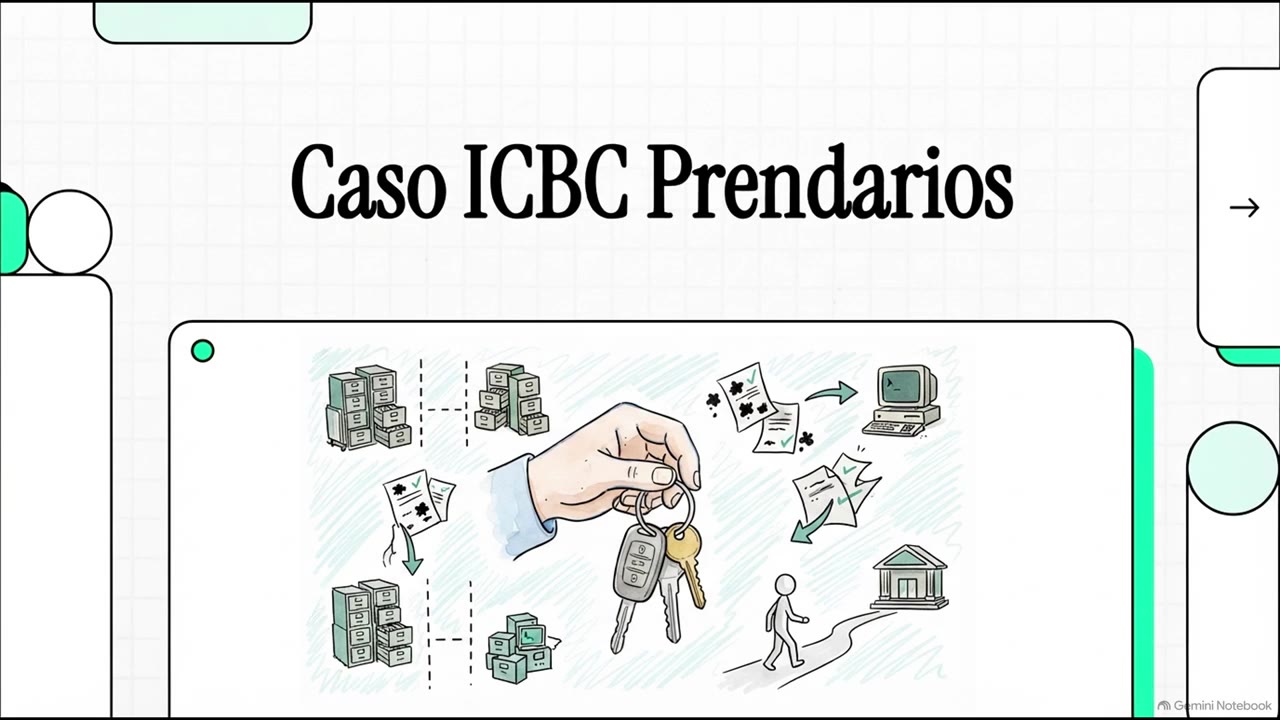
Summary
Choose a language to play
Generated with NotebookLM from an explanatory case brief. It does not include personal data, deeds, or sensitive client or signer information.
Conversion Rate
↑25%
From 15% to 25% TCR through 2022, measured on procedures, stages, and completed operations.
Procesamiento
↑30%
From one business month to 20 business days to close the process successfully.
Satisfaction
3,5 / 5
NPS from 2 to 3.5 on a five-point scale, through 2022.
01 — Context
Four fronts, one service
The bank needed an end-to-end integrated system so that dealerships, credit, commercial, and prospective customers would stop operating in silos.
Goals
Create an interconnected system so every user involved can manage the service end to end and facilitate a pledge loan.
Frente 01
Bank customers
Dealerships had major problems running simulations: the system was inefficient and built on obsolete technology. The buyer had to go to a branch to find out whether they could access credit, and for what amount or installments. The experience was bureaucratic: dealerships sold less and perceived a low-quality service.
Frente 02
Credit Department
Credit and Operations managed products in a system that was obsolete both technologically and functionally. Risk and credit analysts could not give fast answers either to buyers or to dealerships under pressure to close the deal.
Frente 03
Commercial Department
Commercial parametrizes promotions, insurance, and featured dealerships. The system did not allow adding plans fluently, and sometimes news never reached dealerships, even when the plan would benefit them.
Frente 04
Prospective customers
The bank wanted to bring in new customers. Without an efficient end-to-end service, many vehicle buyers dropped out of the credit process. Existing customers already had channels through payroll or savings accounts.
Challenges we hit
This is where it gets interesting. Connecting four experiences can be a real challenge — and it was. These were our main challenges:
01
Paper
Dependence on paper documents, which slowed the process and created friction for customers.
02
Forms
Complexity in the structure of forms and document presentation, which made them harder to understand.
03
Multi-device
Dealers who needed a multi-device tool to manage the entire life of the loan.
04
Confidentiality
Need to guarantee the security and confidentiality of customer data in a digital environment.

02 — Process
From strategy to prototype
We designed an end-to-end experience and validated it as we went: research, ideation, prototyping, and testing, in a cycle with development and stakeholders.
Our strategy
Together with the UX team we designed an end-to-end experience that fully reworked ICBC pledge loans, giving fluidity and a better experience to dealership sellers, bank operators and loan applicants.


Design process
The process combined business and user understanding, ideation, high-fidelity prototypes, and testing with stakeholders.

01
Needs
Understanding of user and business needs. Facilitation of research workshops. Mapping of expectations.
02
Ideation
Understanding the end-to-end experience. Exploration of alternatives. Sketching and wireframing.
03
Prototyping
Interactive high-fidelity prototypes, with IxD and motion patterns. Collaborative work with Development and the Core Team to improve components and usability.
04
Testing
Testing with stakeholders. Iteration based on user validations.
Framing the concepts
In this phase we immersed ourselves in a full understanding of requirements, both user and business, through understanding workshops and by analyzing the information provided, identifying key needs, desires and challenges.
We then used idea-generation techniques such as mind maps, two-way matrices, empathy maps, userflows, user journey maps, and other artifacts to explore a range of functional solutions.
Then we validated the selected concepts with stakeholders to get early feedback and confirm they were viable.
Next, we moved to high-fidelity prototyping, using the observations we had gathered to iterate and continuously refine our solutions.
Finally, before moving on, we confirmed the feasibility and viability of the built experience with development.
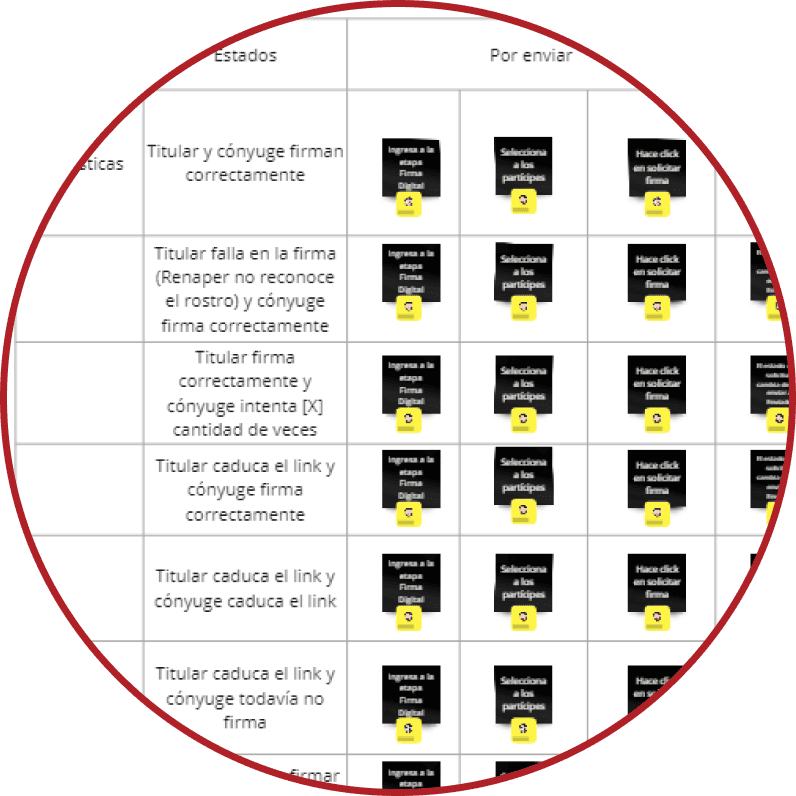
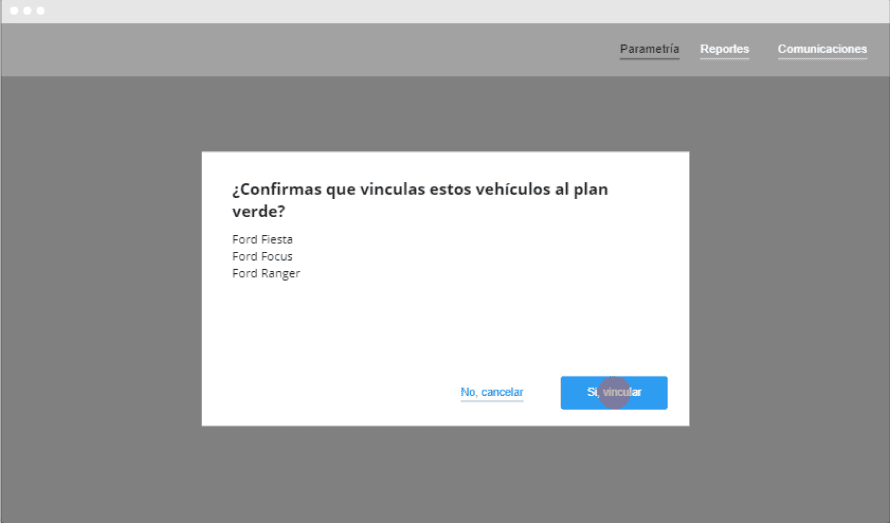
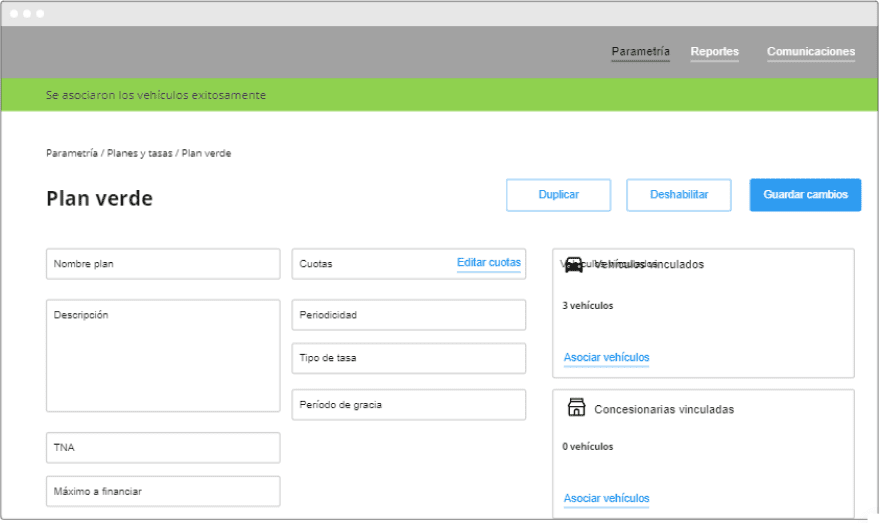
We refined the sketches
With the concepts validated, we refined sketches and wireframes to move to an interface consistent with the end-to-end service.
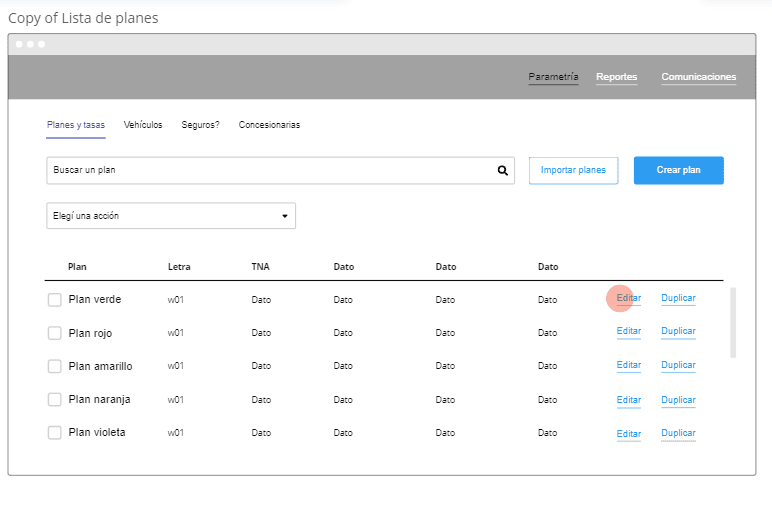
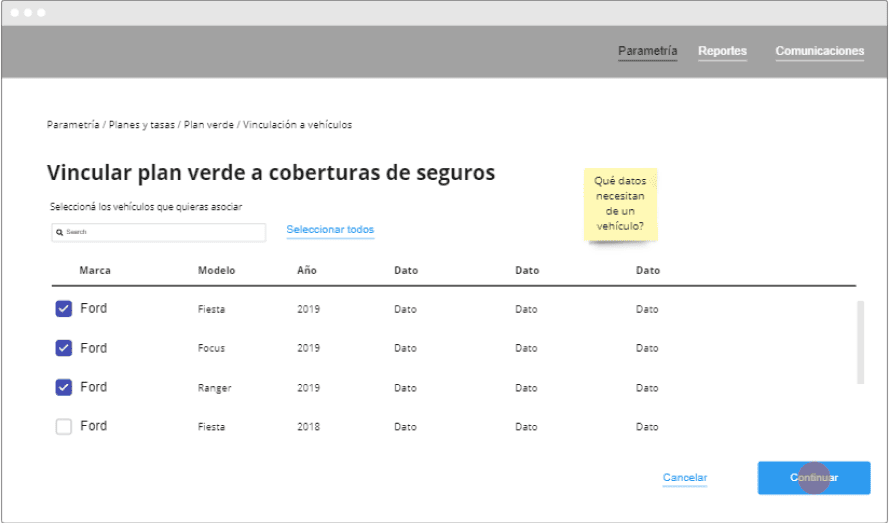
We worked on the final interface
After ideation we went fully into prototyping. That meant a careful selection and analysis of the components needed for the final prototype, keeping it aligned with project goals and user expectations.
We then presented and validated our proposal with stakeholders. This step was fundamental to ensure we were aligned with the needs and vision of the business, as well as with end users’ perspectives.
We test, learn, iterate
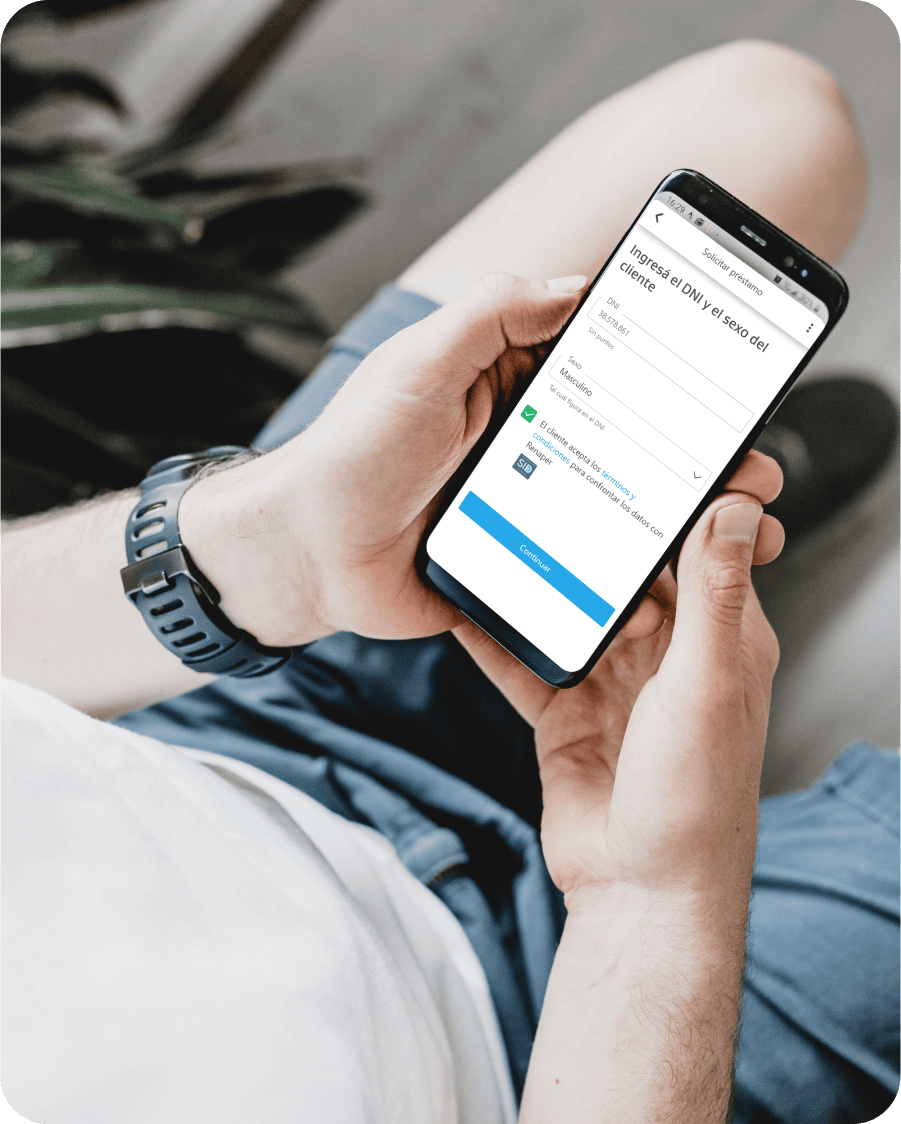
If the initial validation succeeded, we moved on to testing with real users. Those tests gave us an invaluable chance to evaluate the prototype’s usability and effectiveness in a practical setting. Every interaction with users was carefully analyzed and documented, helping us identify areas for improvement and refinement.
In cases where tests were unsuccessful or the proposal was not validated by stakeholders, we committed to iterating and improving the prototype accordingly.
Once we obtained satisfactory validation from both stakeholders and users, we proceeded to the handoff to the development team.
First MVP — Friends and Family
To see whether the MVP was enough for users, our UX team tested with a strategic group of dealerships. That feedback came straight from the field.
The feedback received was fundamental to identifying areas for improvement and optimization opportunities that might otherwise have gone unnoticed.
Maquinarias
Machinery dealership
«As a dealership specialized in selling machinery for the agricultural sector and related industries, we found that the MVP has a limitation, since it does not include the option to select companies as applicants for secured loans, especially when purchasing a fleet. It would be highly beneficial for the bank to consider adding the option of secured loans for companies.»
Fiat
Fiat dealership
«We noticed that some customers feel discouraged when they are asked for a large amount of information during the initial credit assessment. It would be useful to implement a more gradual process, where additional details are requested as the application progresses.»
Ford
Ford dealership
«The MVP has significantly improved our ability to provide our customers with a more agile experience. We still face challenges when customizing financing, especially when the customer comes with a co-holder.»
Confidentiality
For confidentiality, I do not name the dealerships: I only include the sponsor brand.
Handoff to development
Handoff to development is a crucial stage in a UX project: it makes sure validated design proposals are implemented correctly by engineering.
On our team, we run the handoff through technical and visual specification documentation, once stakeholders have validated the proposal.
Preparing this documentation meant detailing technical aspects, style guides, and documenting every possible flow and scenario. Then handoff sessions were organized with development to explain flows and edge cases, and design files were delivered with components and specifications.
03 — Product
An end-to-end experience
Four interconnected platforms: mobile app, web app, credit and operations backoffice, and commercial backoffice.
Facing the dealership
The process starts at the dealership, where the commercial advisor manages simulation, onboarding, signature and settlement with their customer.
Etapa 1
App Mobile
Seller biometric registration, login, and a new credit simulation from the sales floor.
Etapa 2
App Web
Onboarding the customer at the bank once the assessment is approved, with possible rejections or requests for a co-holder.
Etapa 3
Digital signature
Contract and terms and conditions. In 95% of cases it closes with parametric approval.
Etapa 4
Disbursement
Closing the case, legal pledge from the backoffice, and vehicle disbursement.
Stage 1 — Mobile app
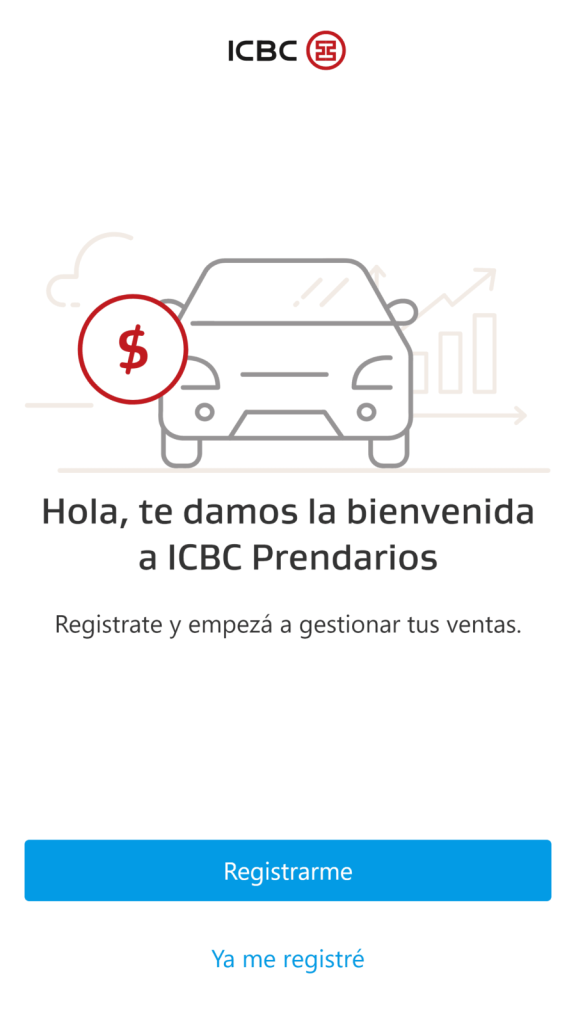
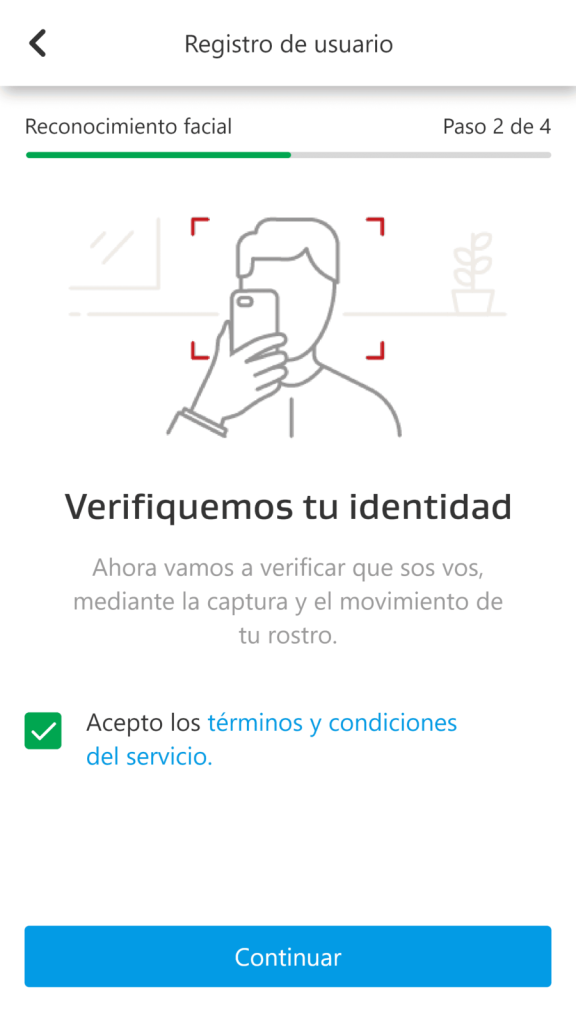
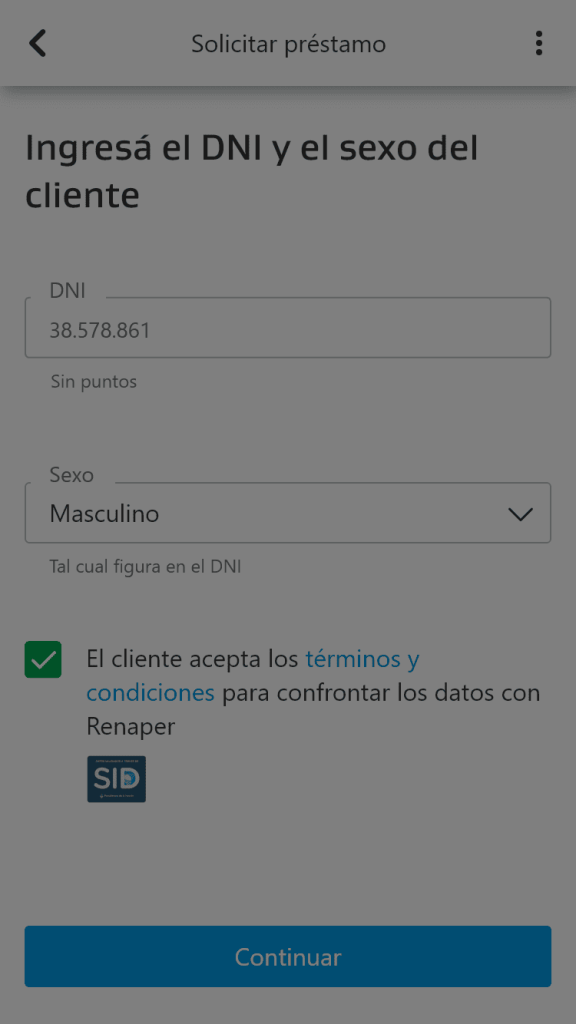
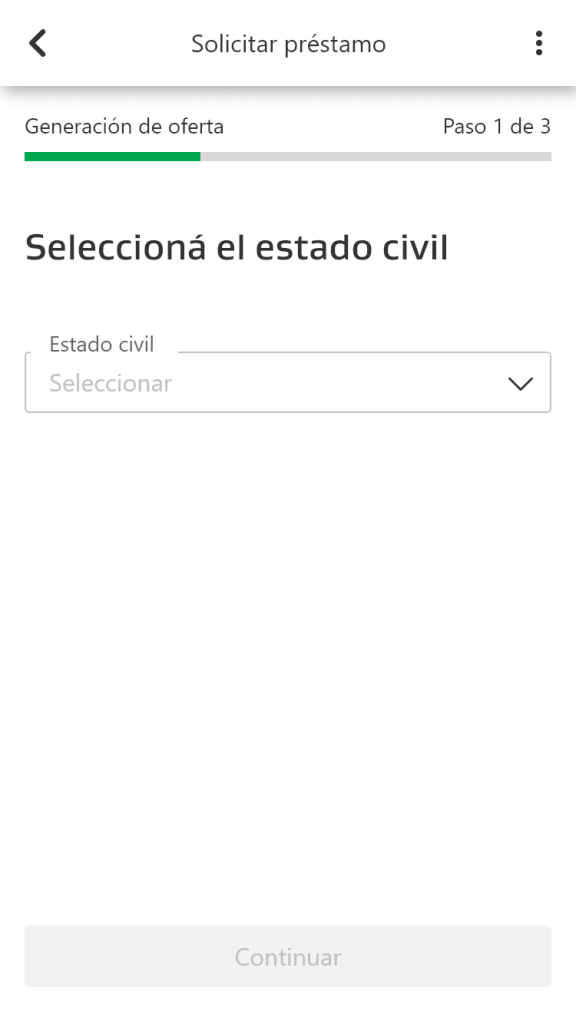
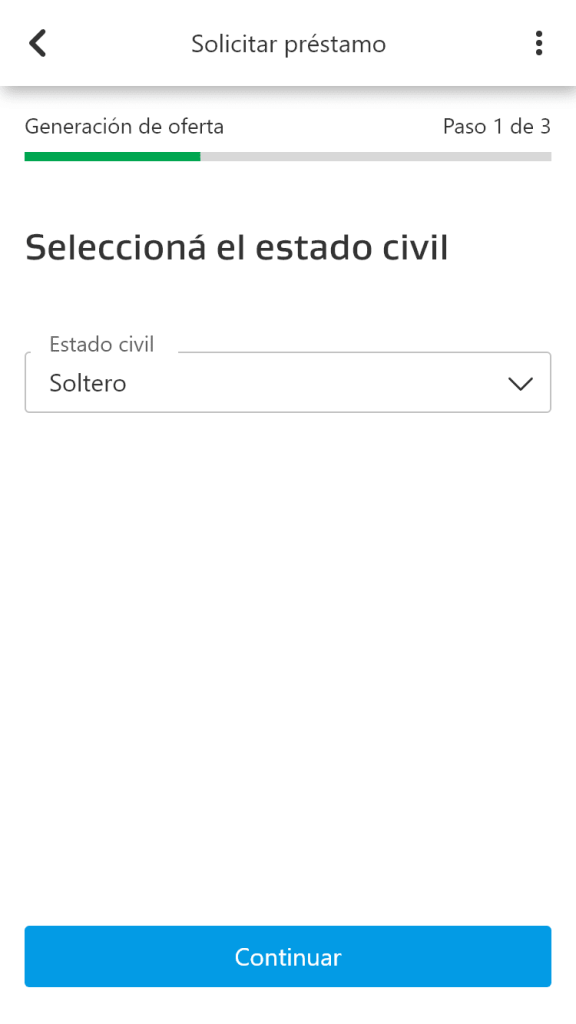
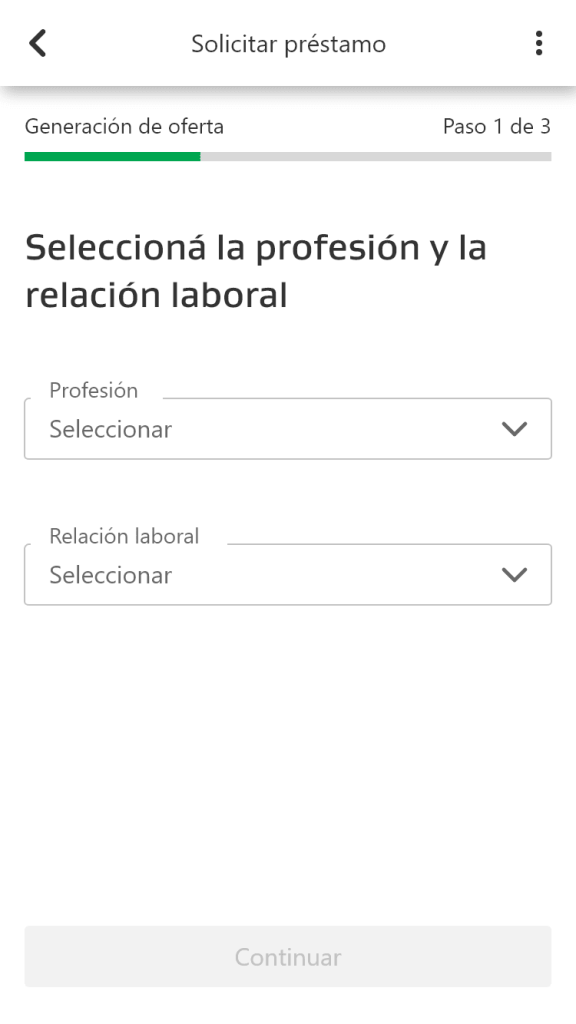
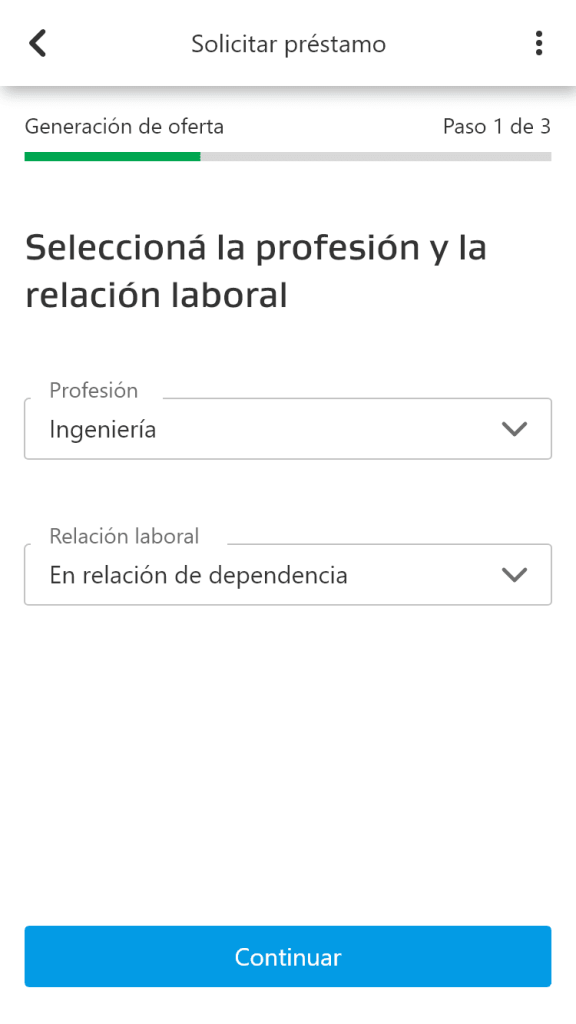
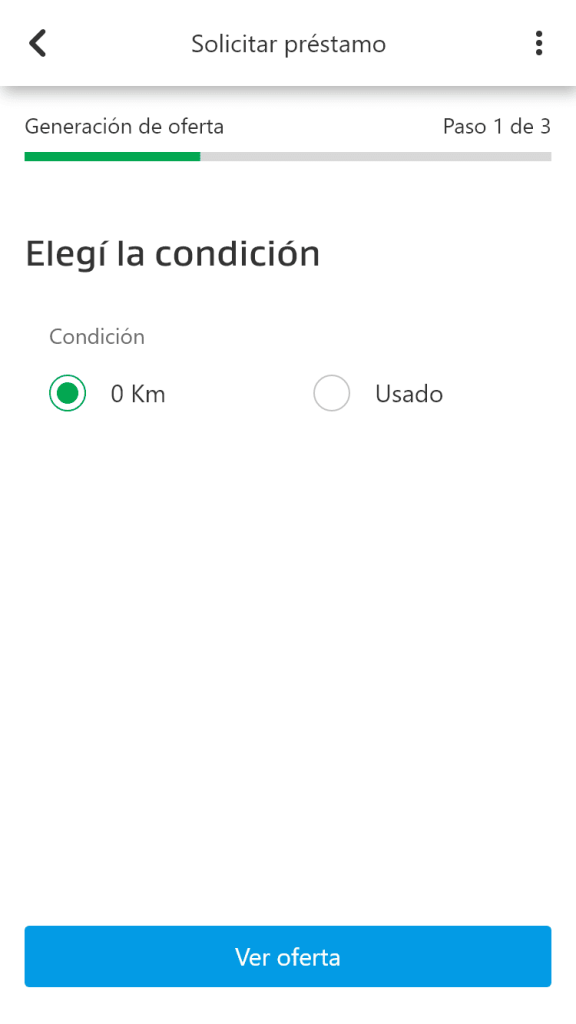
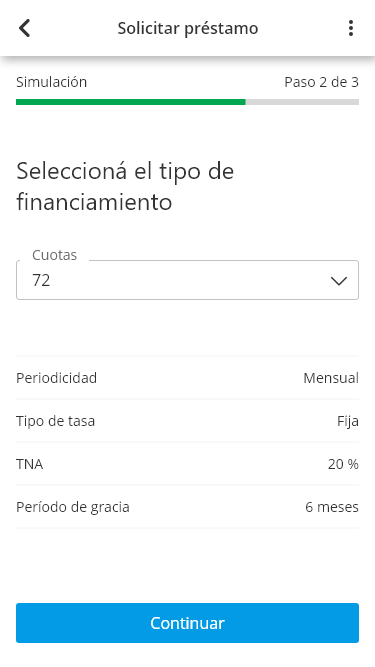
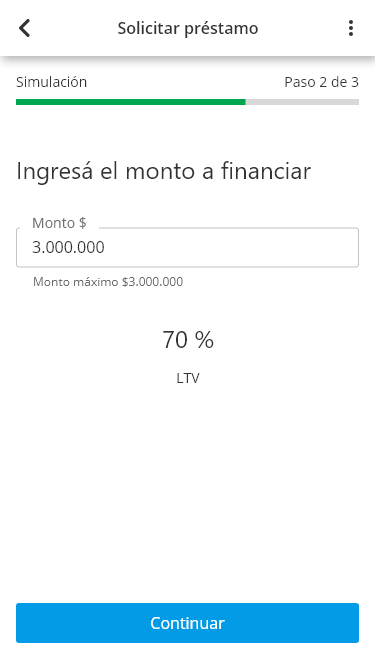
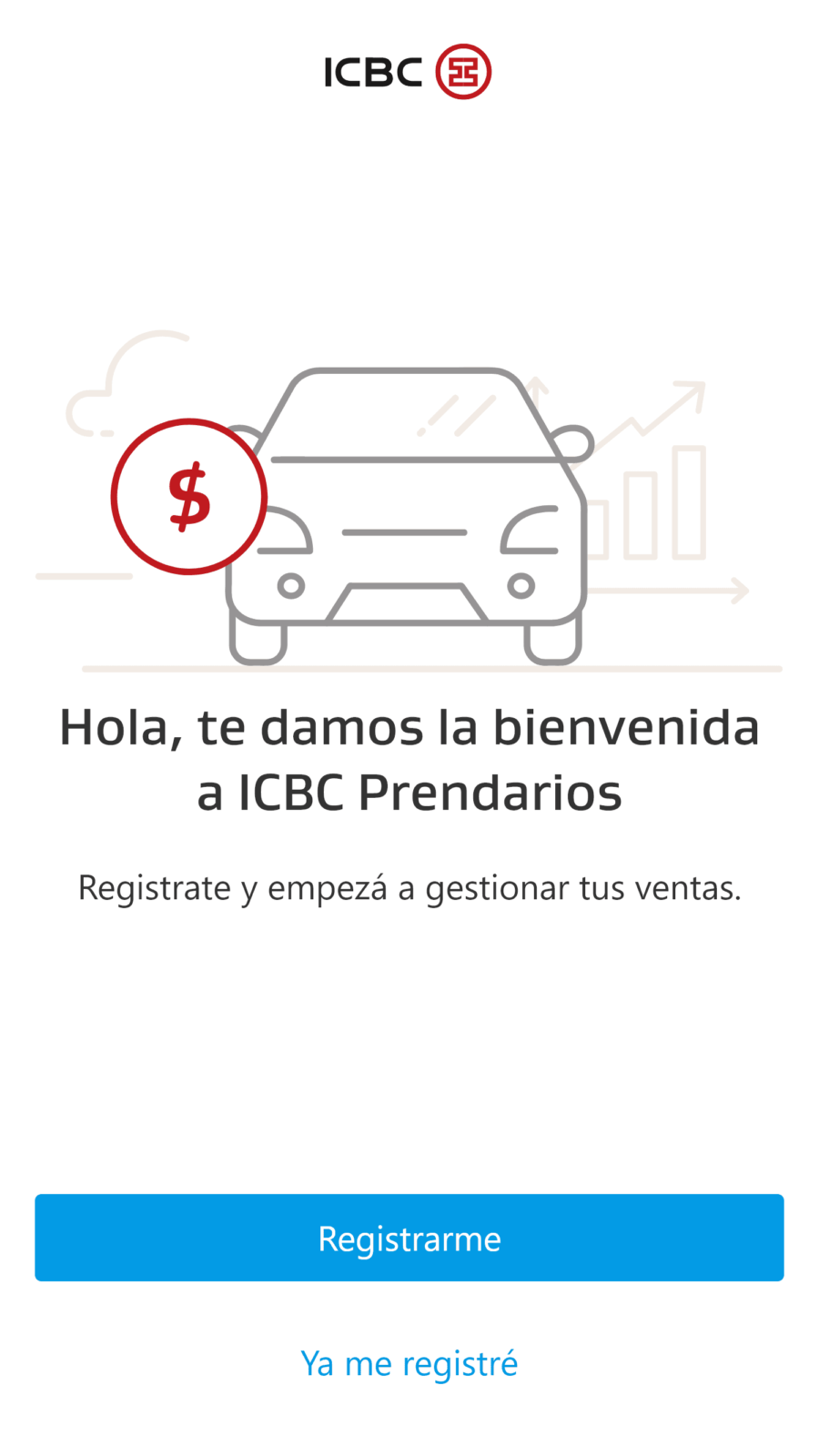
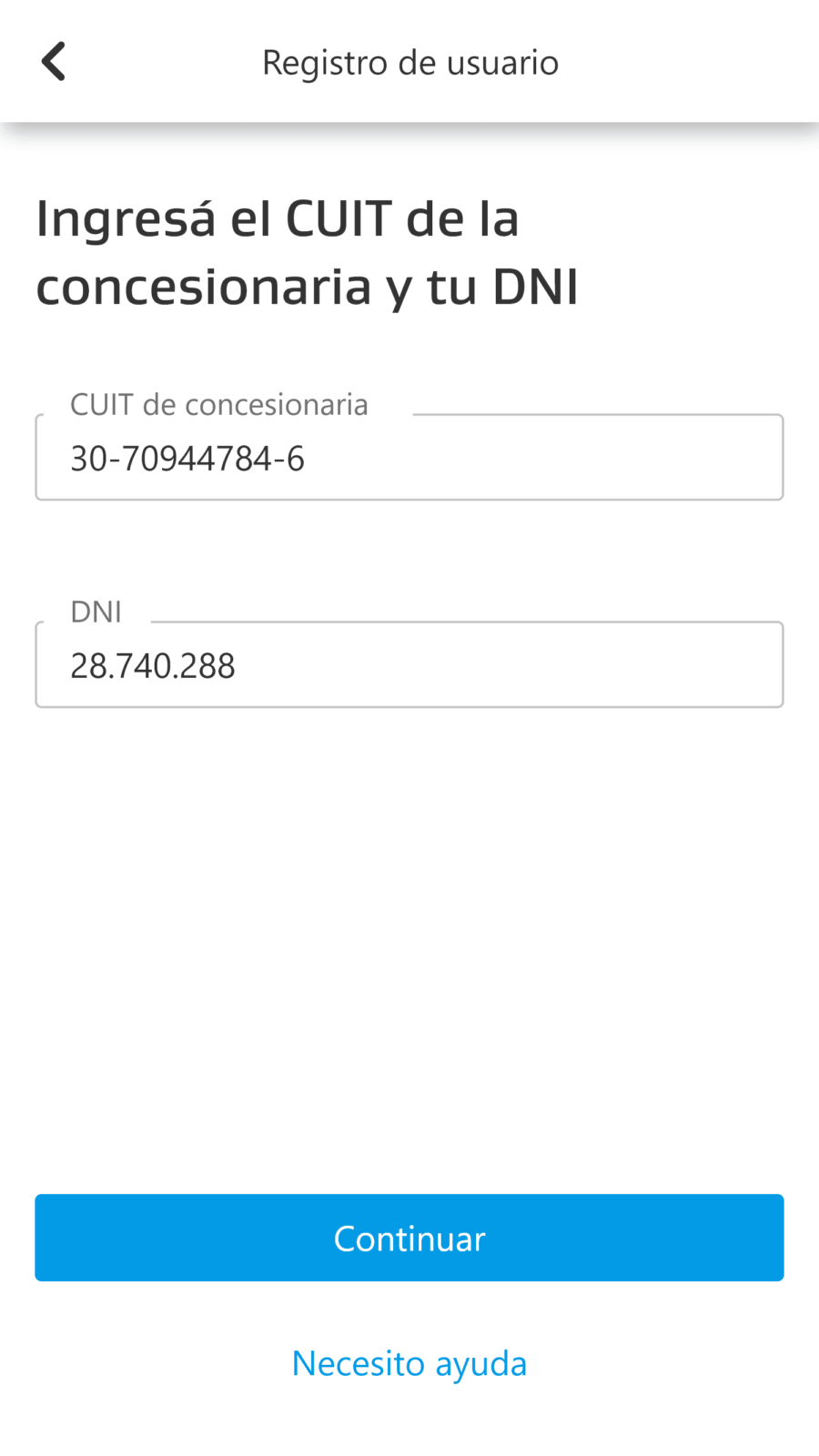
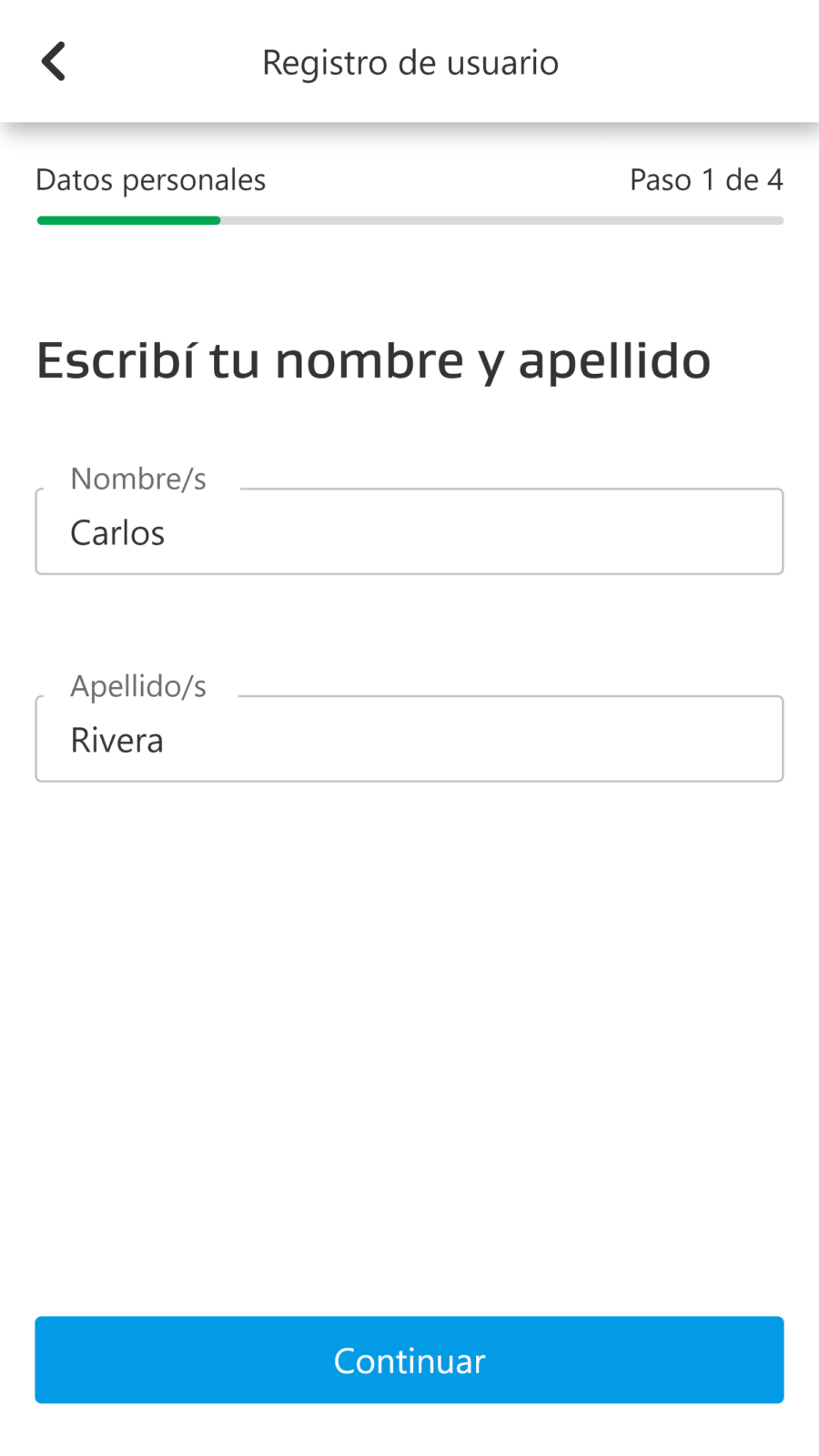
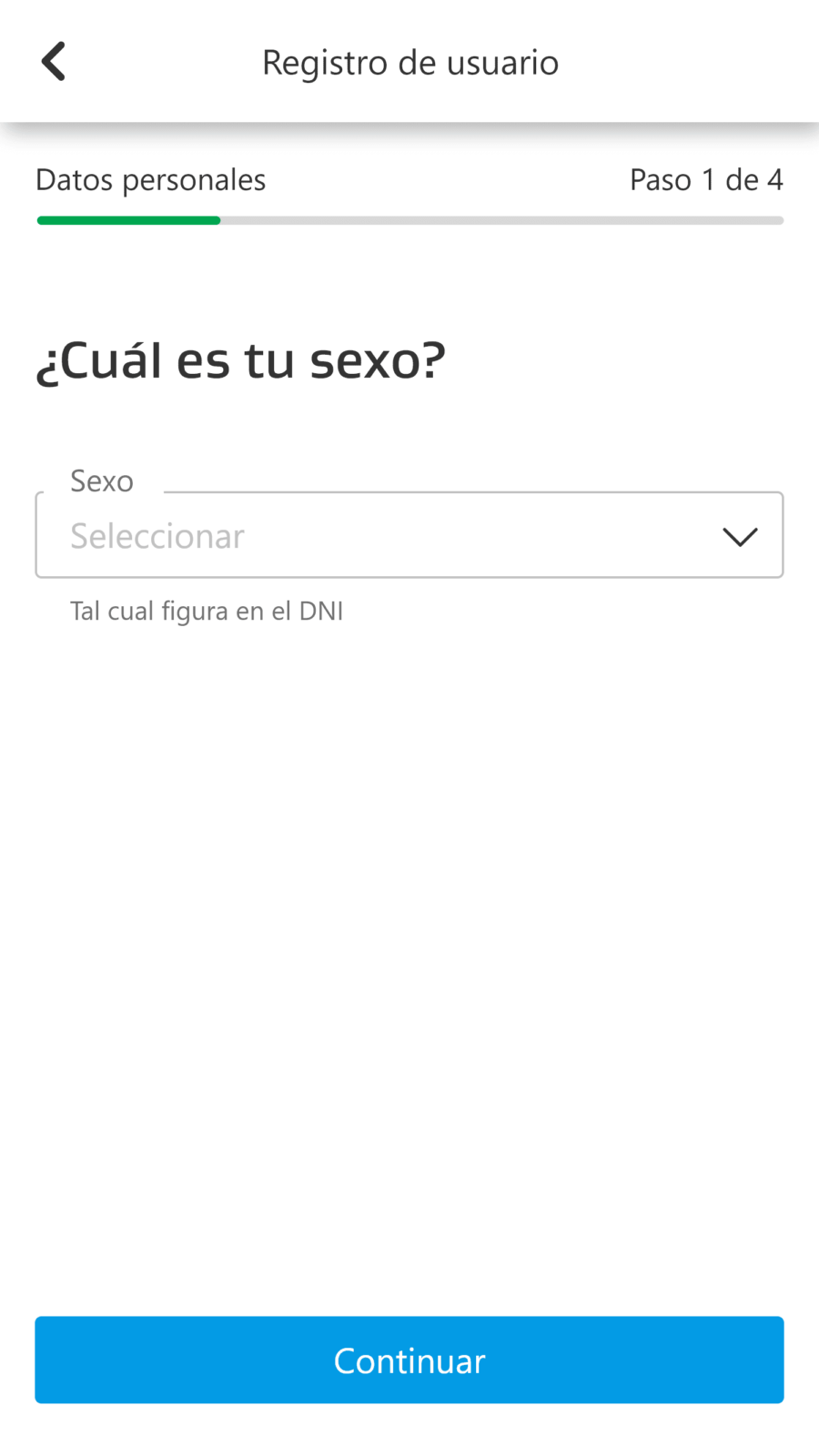
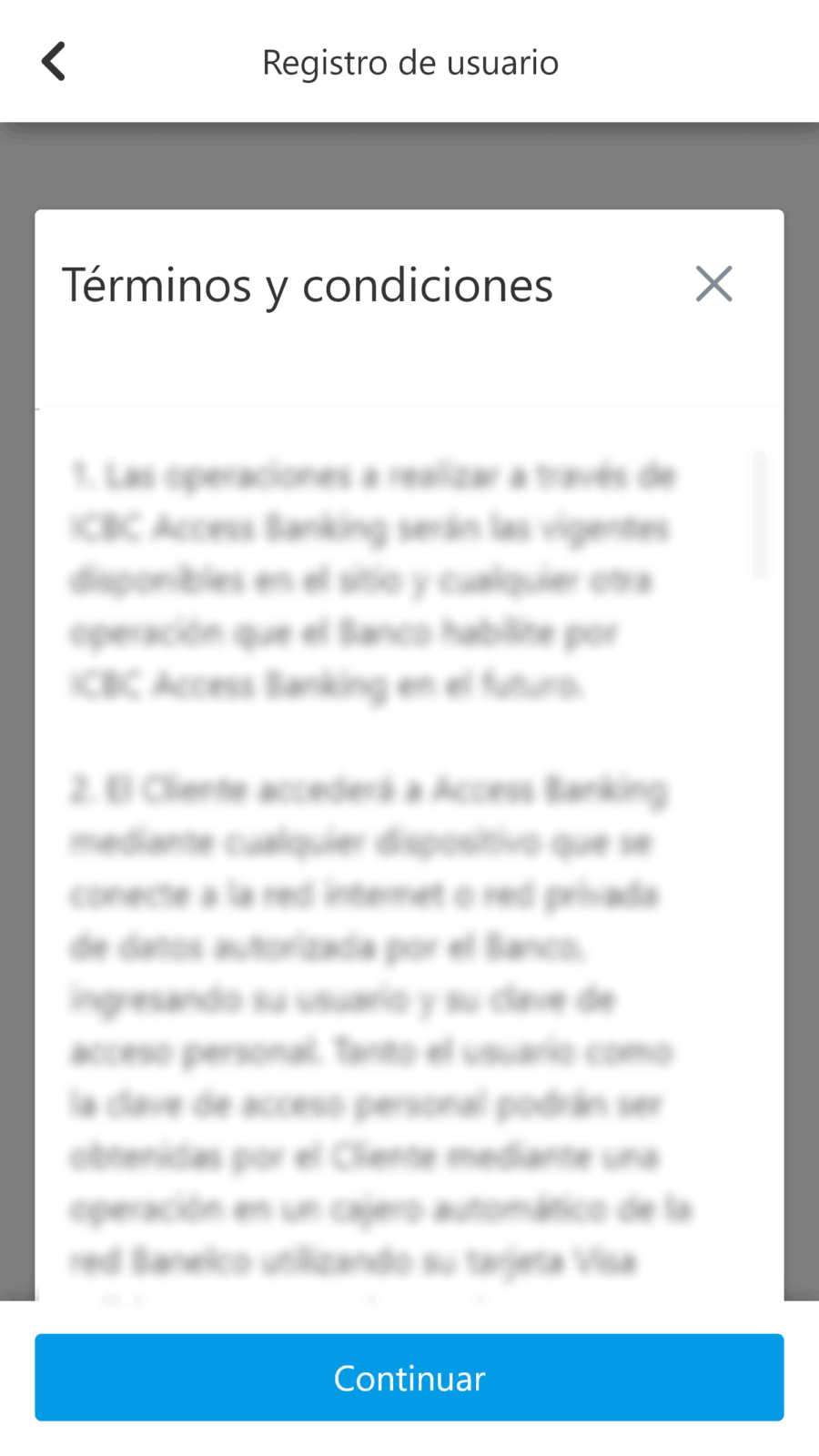
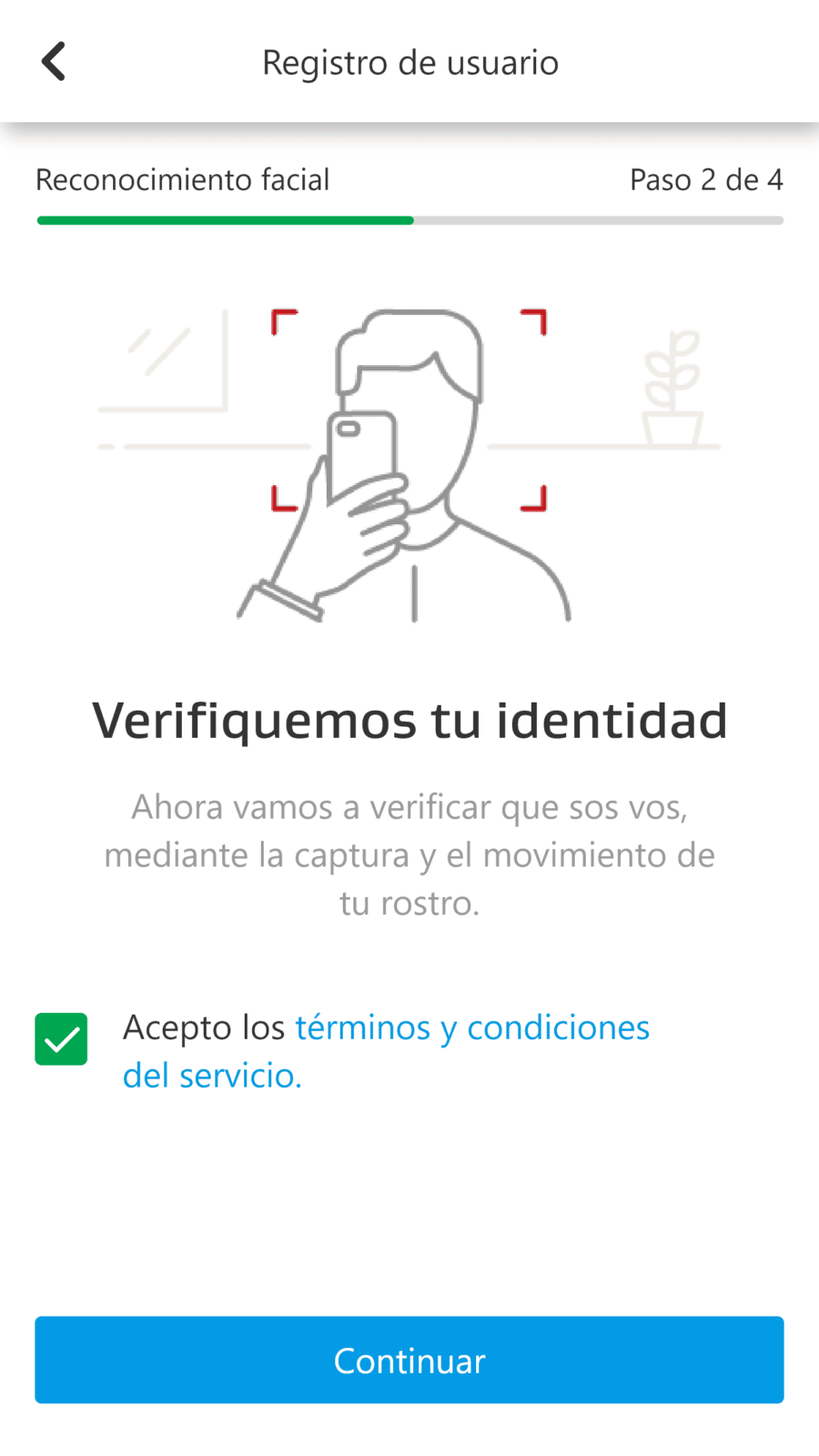
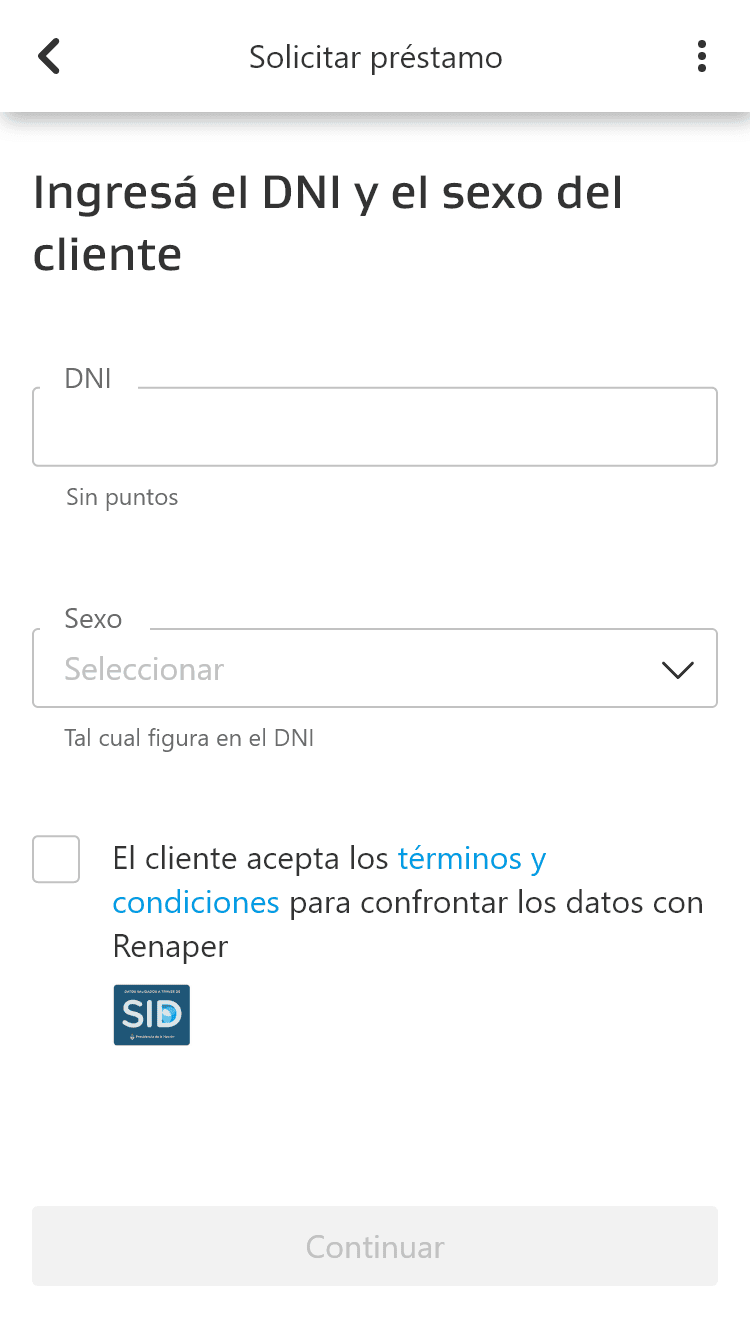
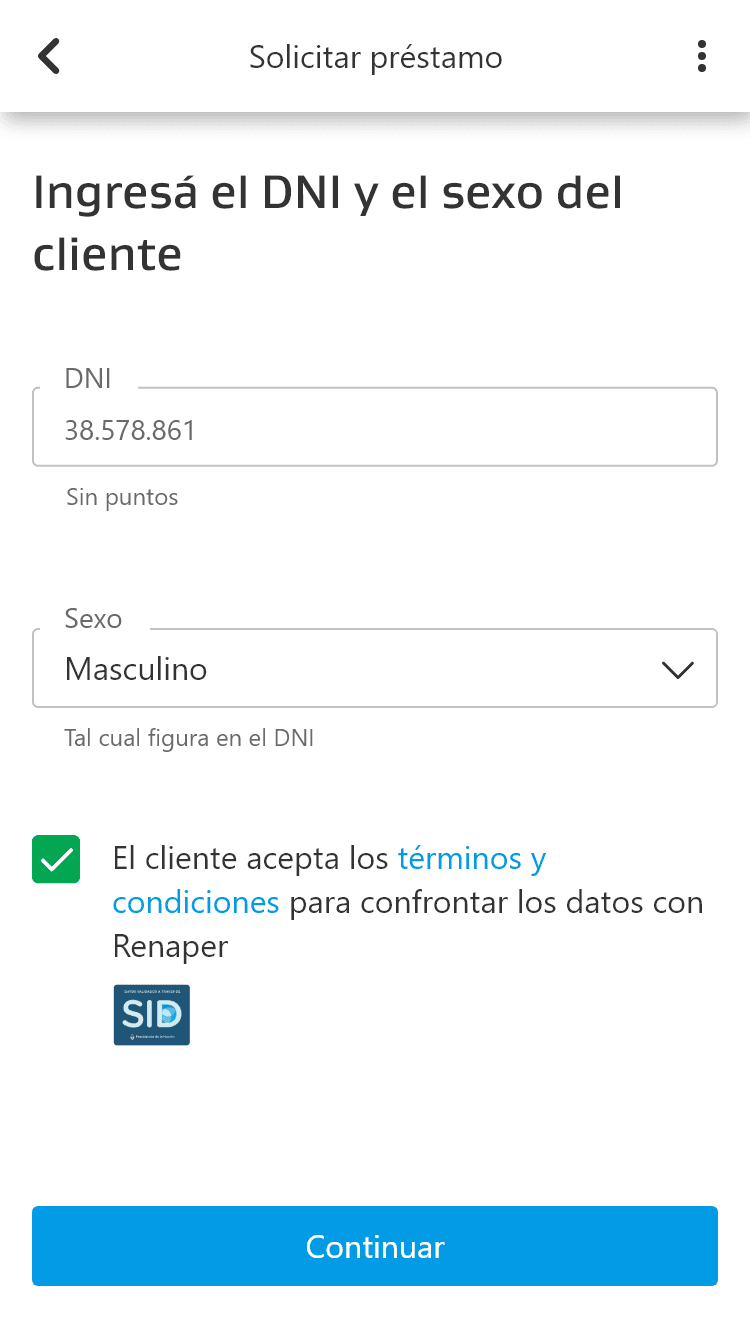
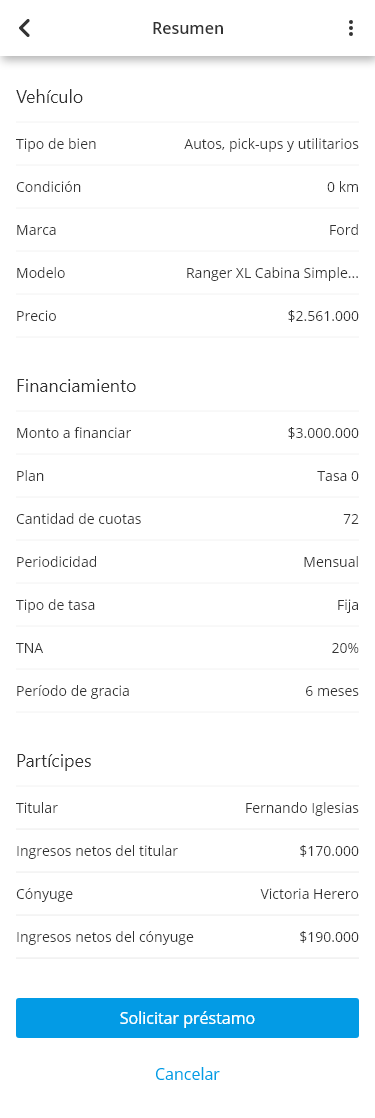
The process starts with the dealership salesperson downloading and registering. Once they complete onboarding in the app through a data request and biometrics, they access login and the start of the tool. From there, in addition to viewing key user information, they can start a new credit simulation.
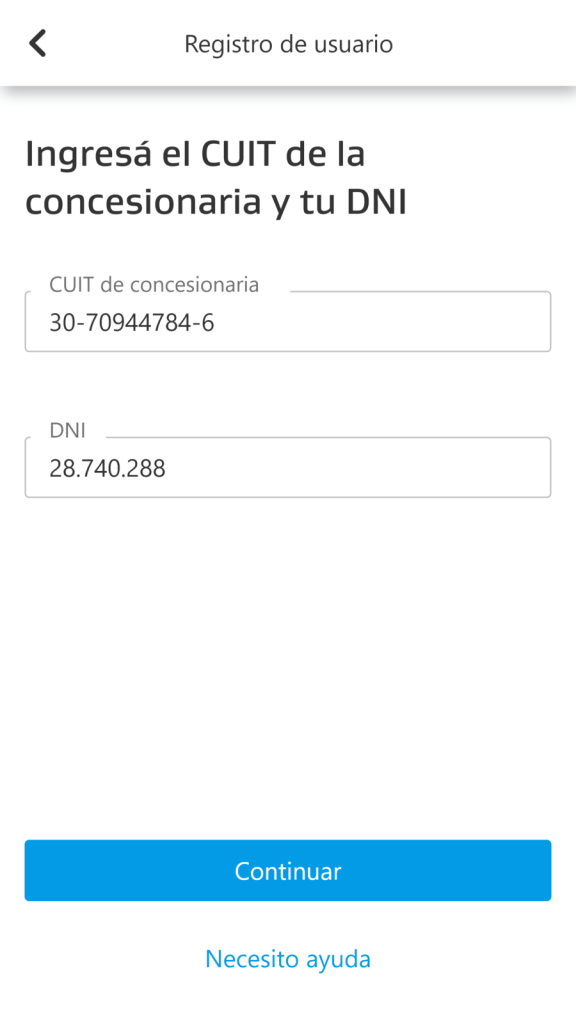
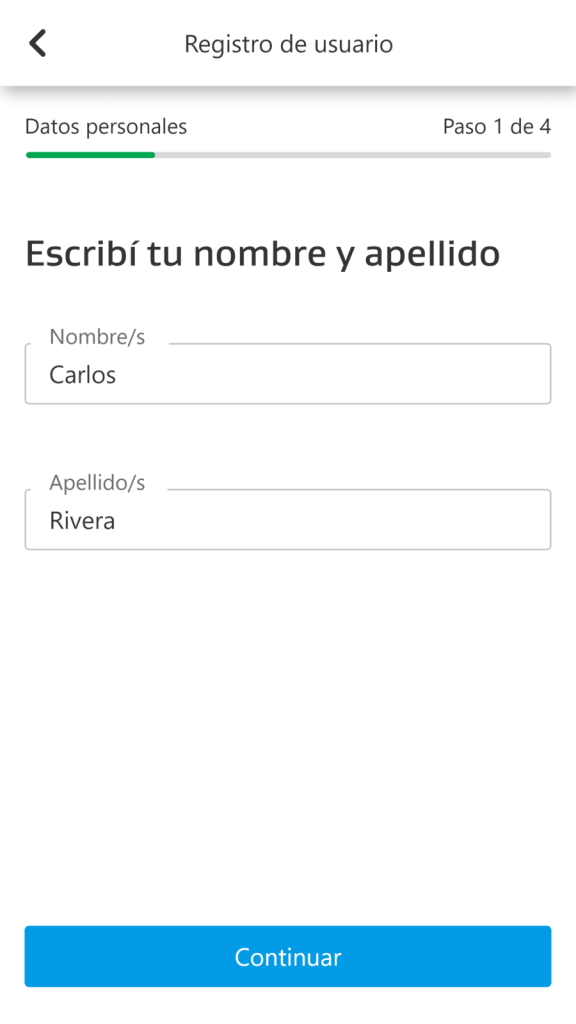
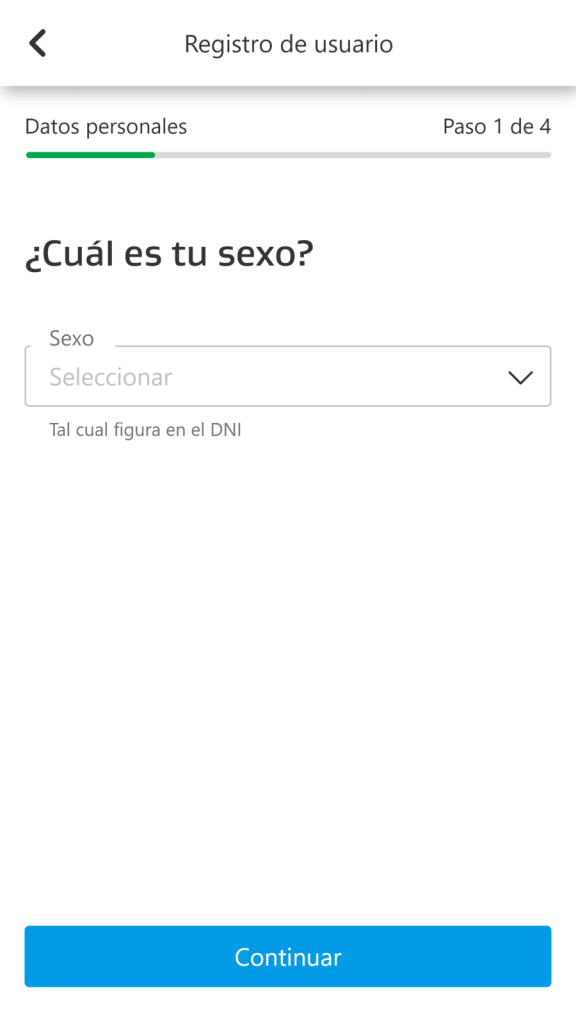
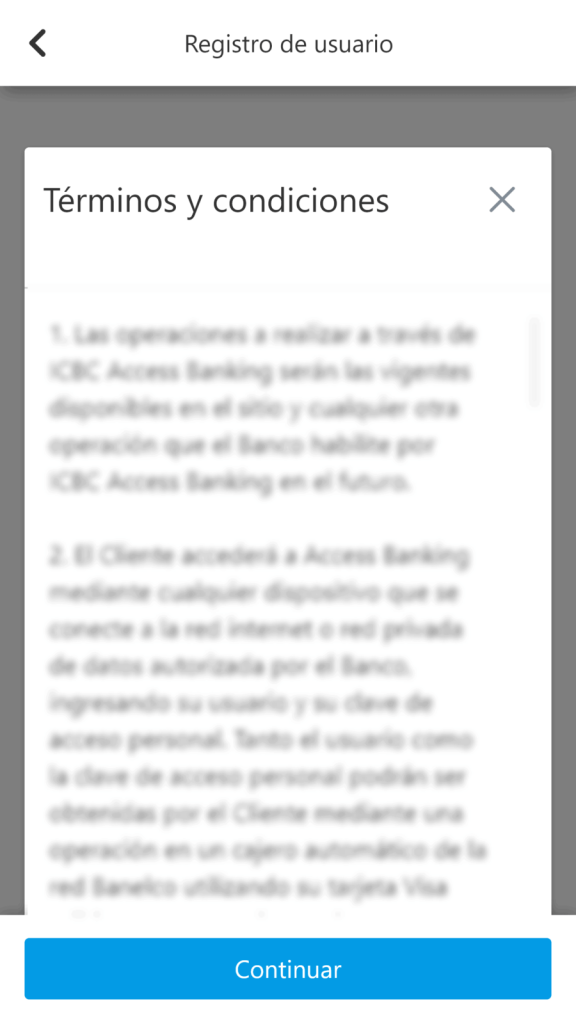
Credit assessment
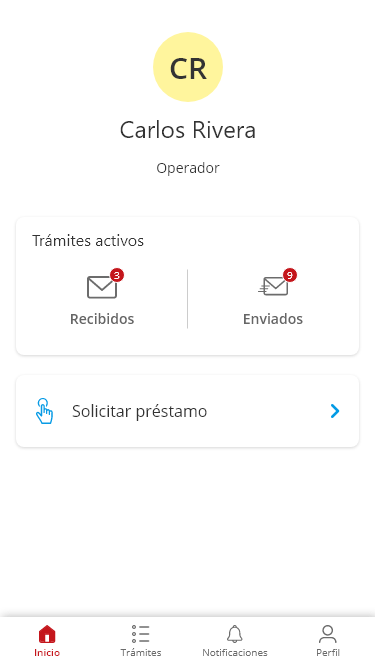
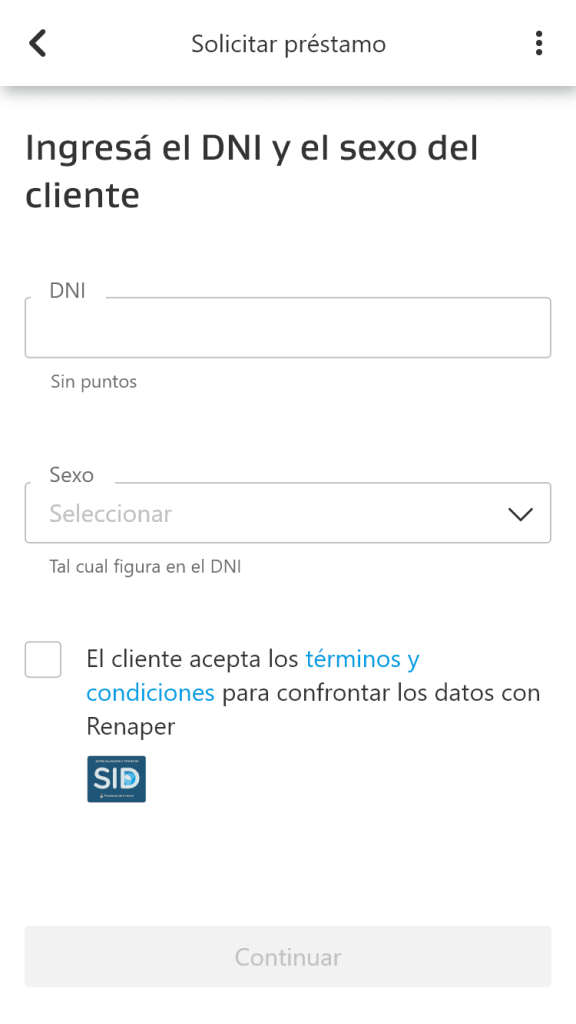
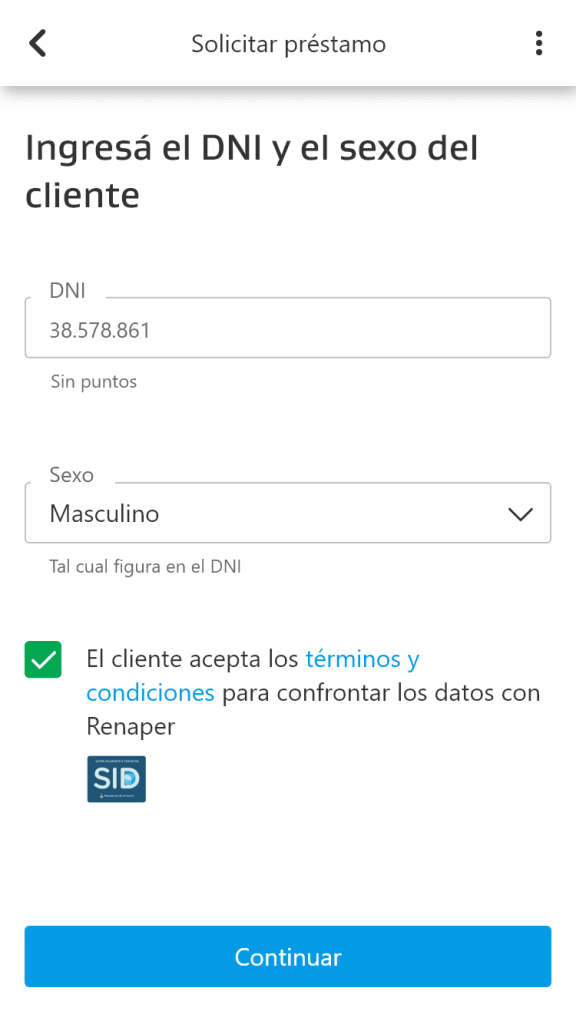
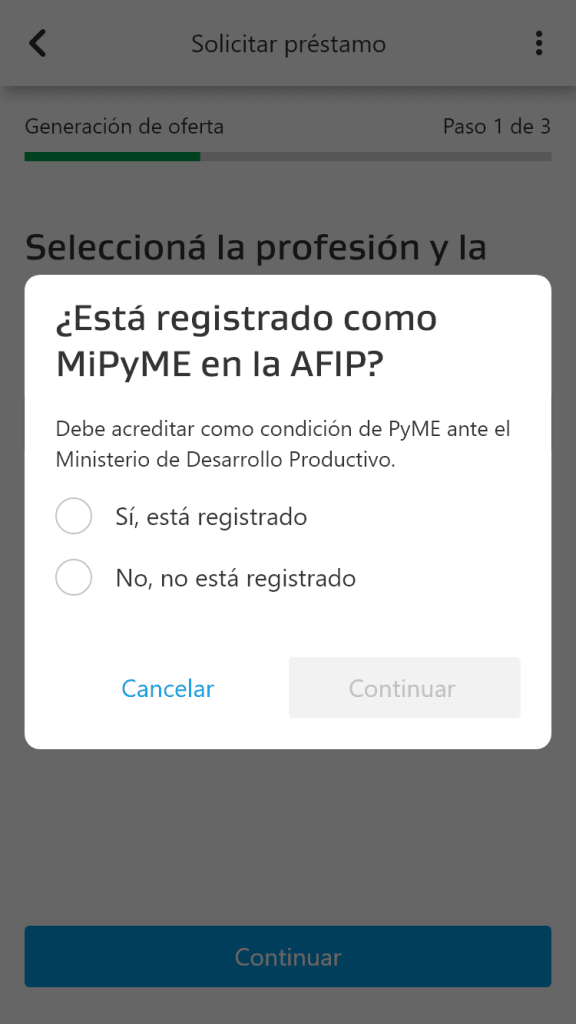
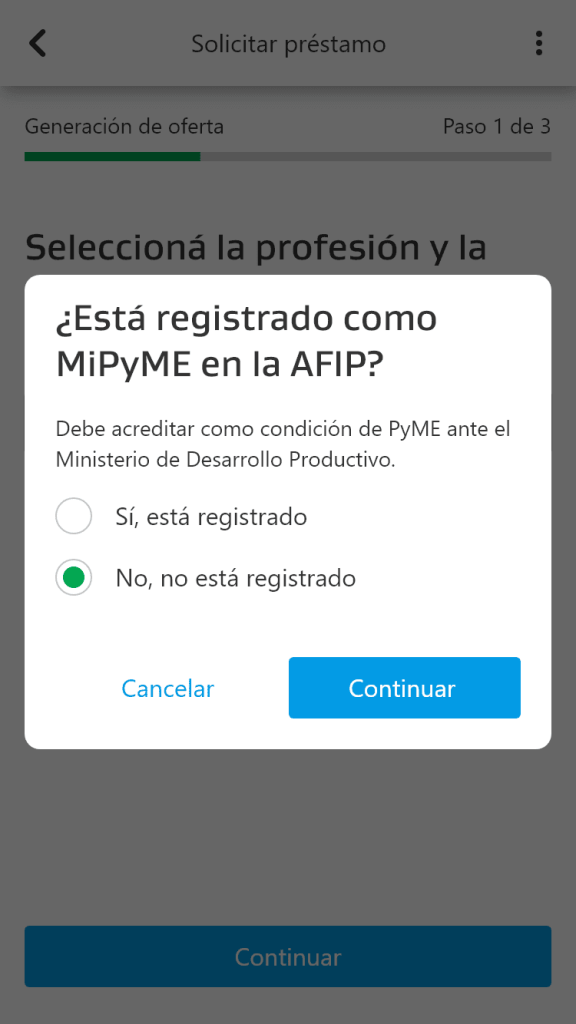
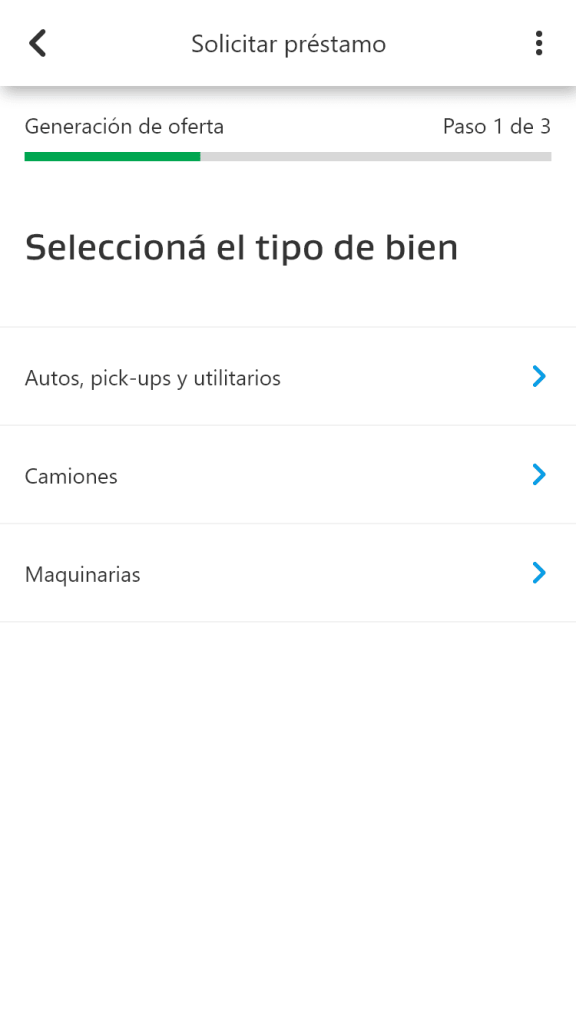
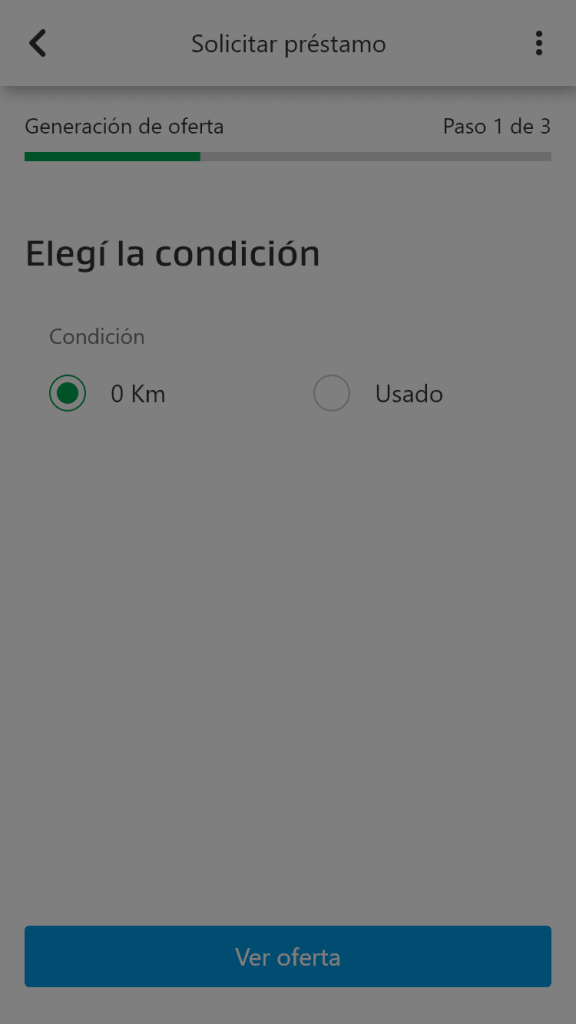
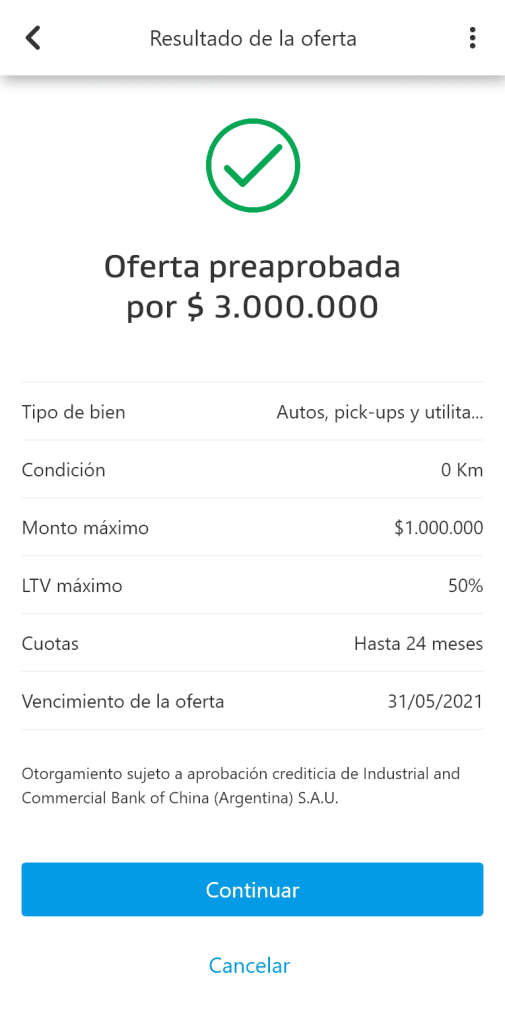
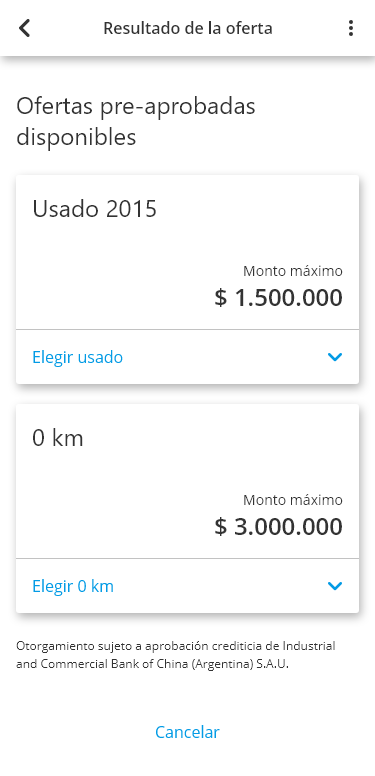
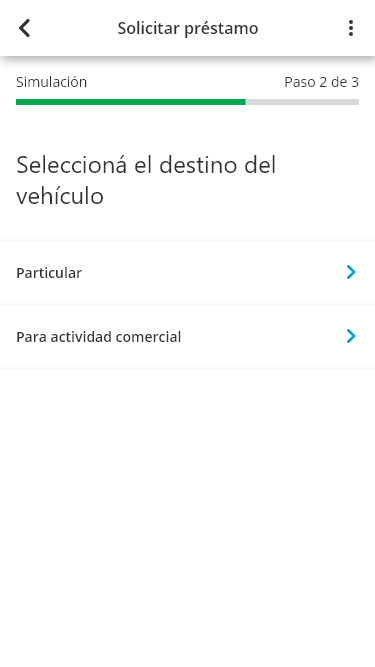
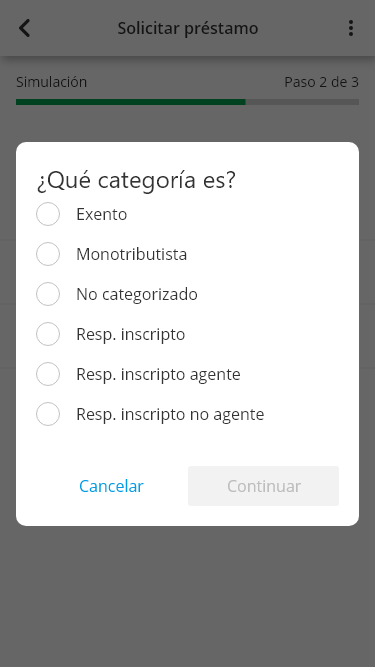
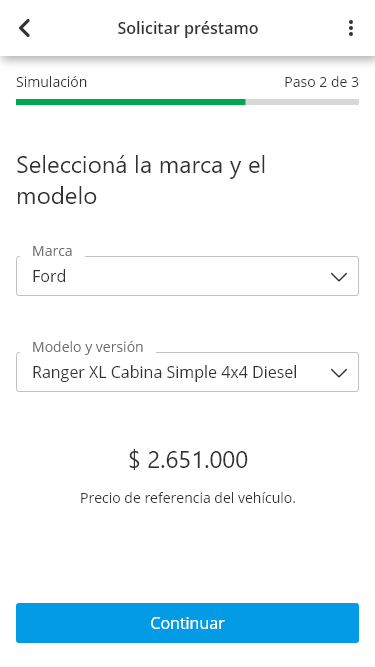
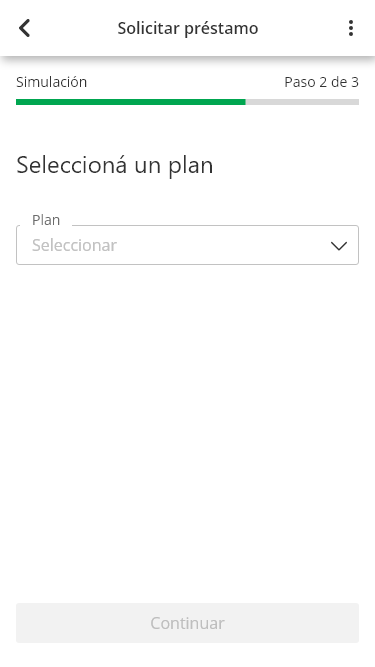
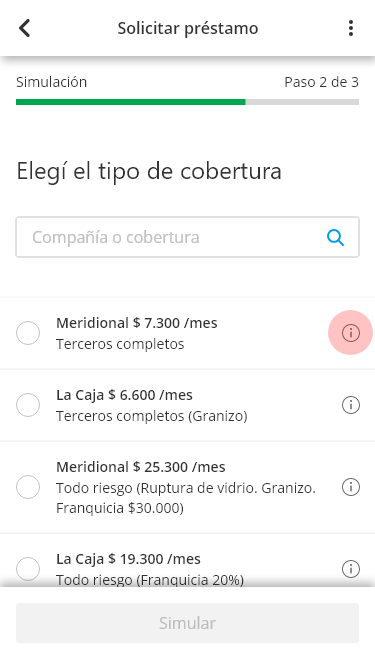
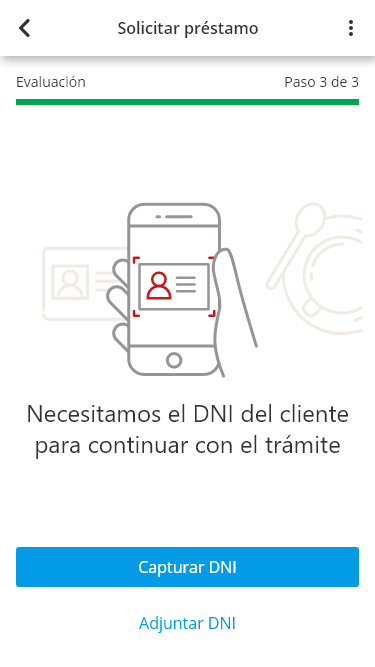
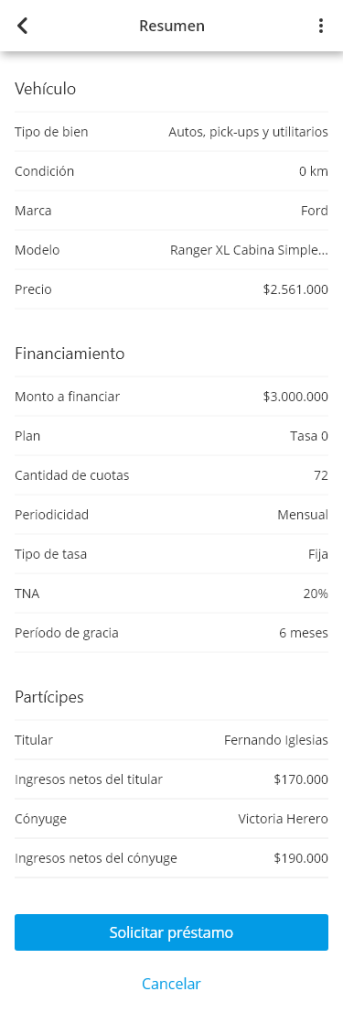
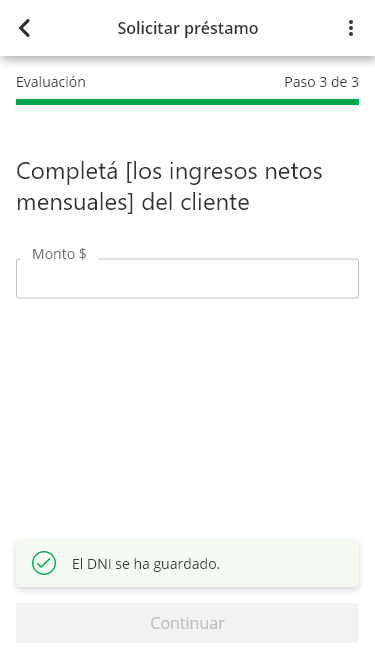
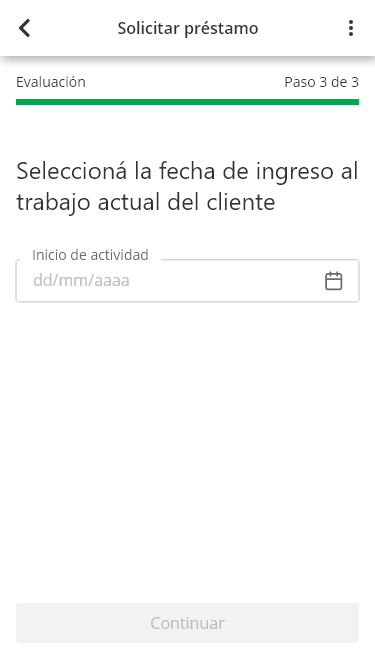
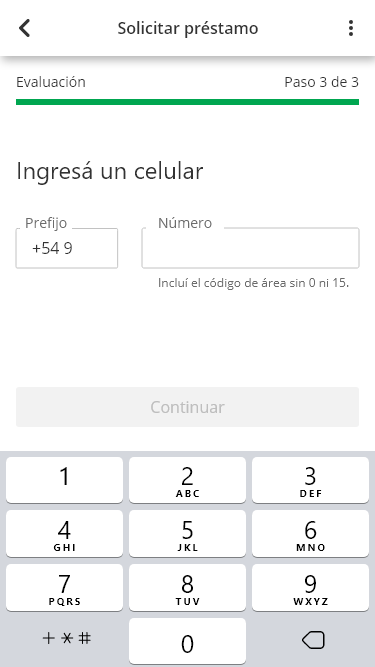
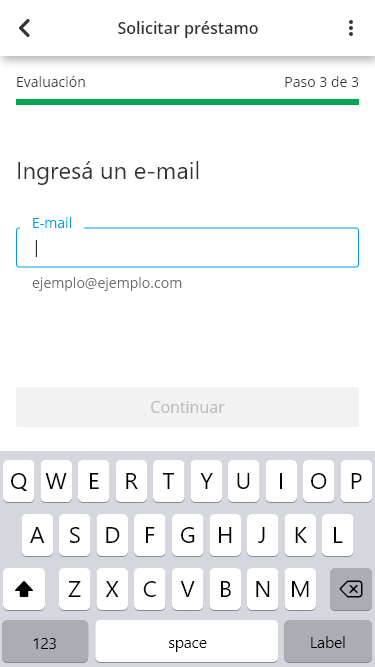
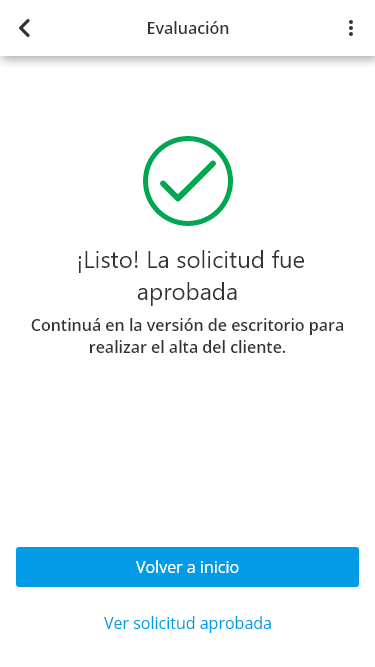
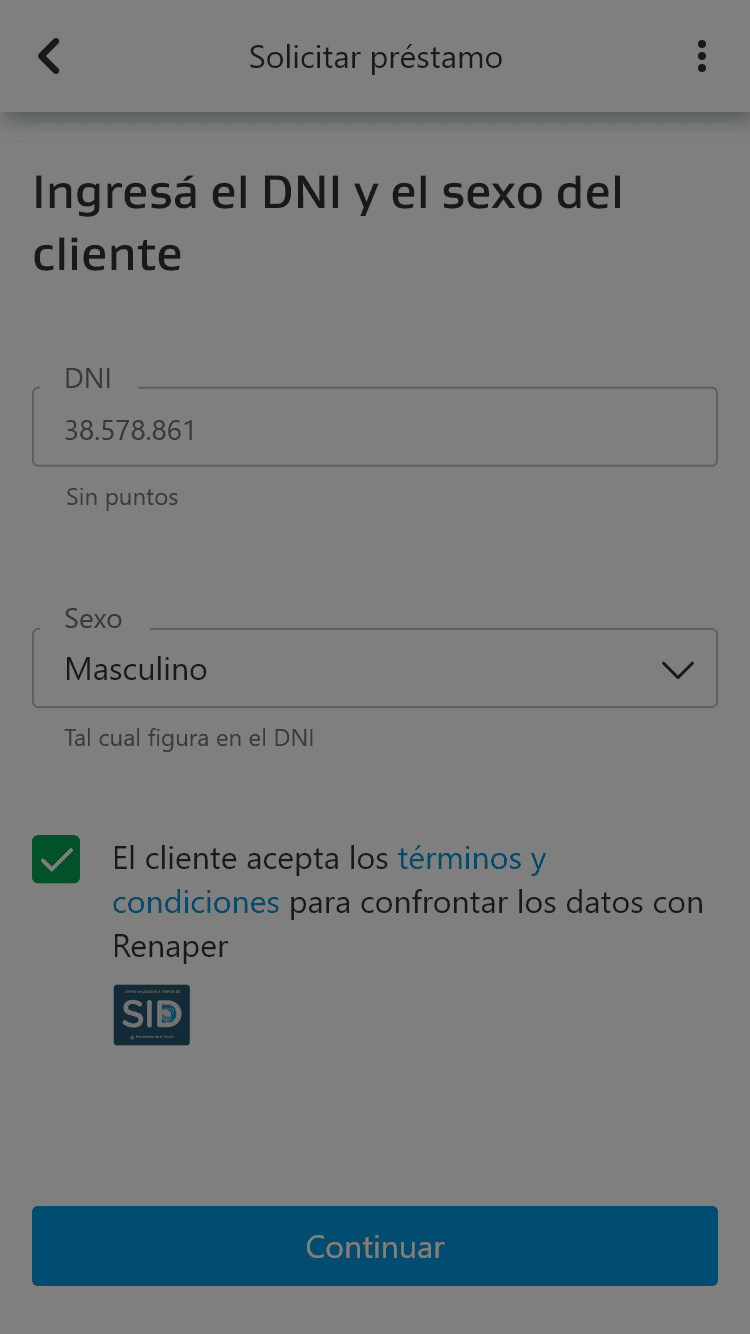
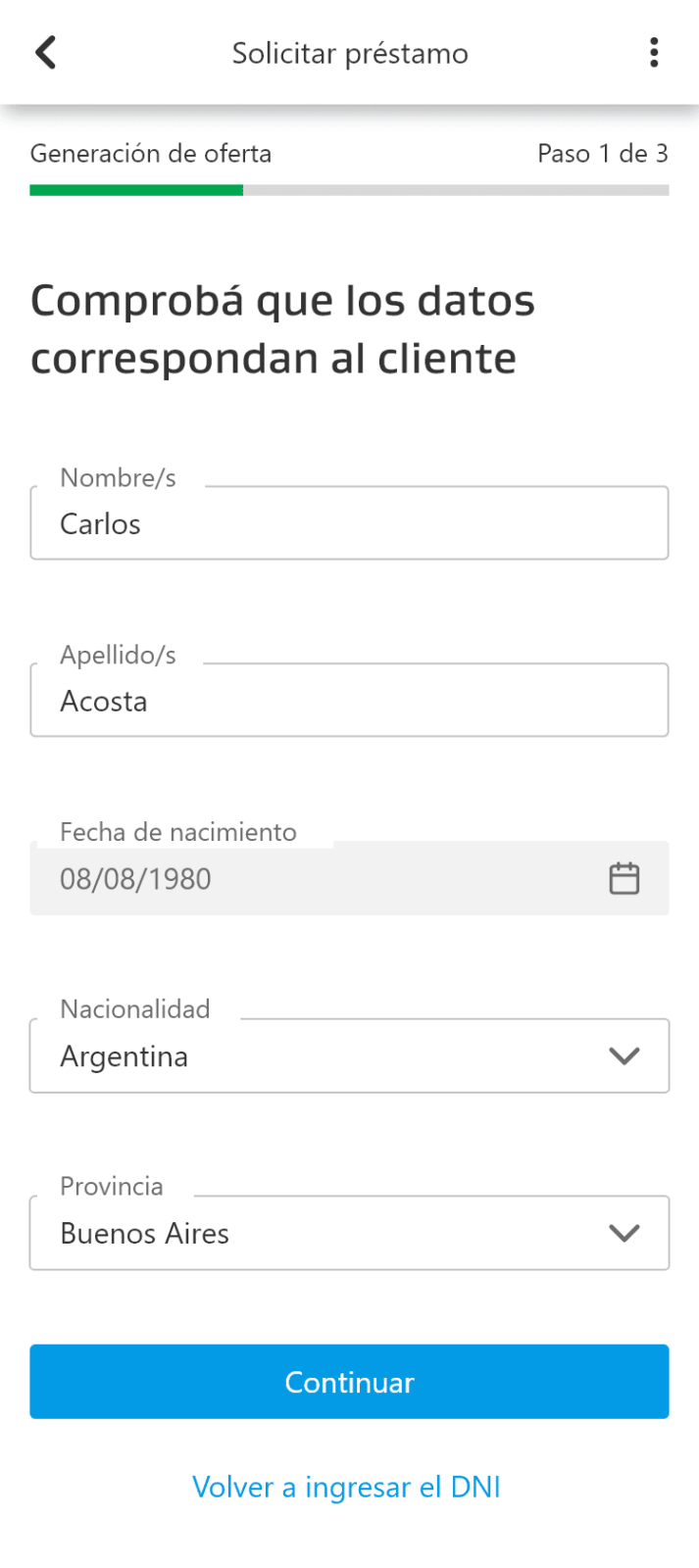
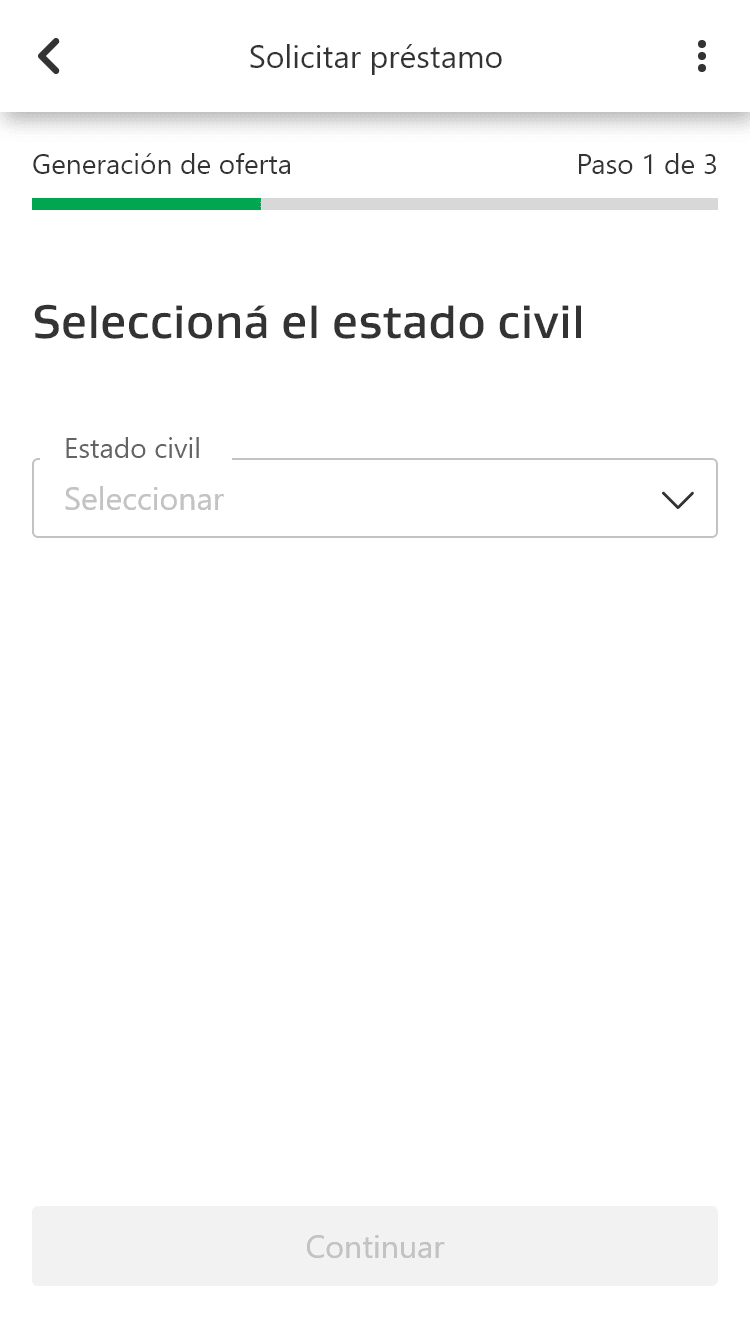
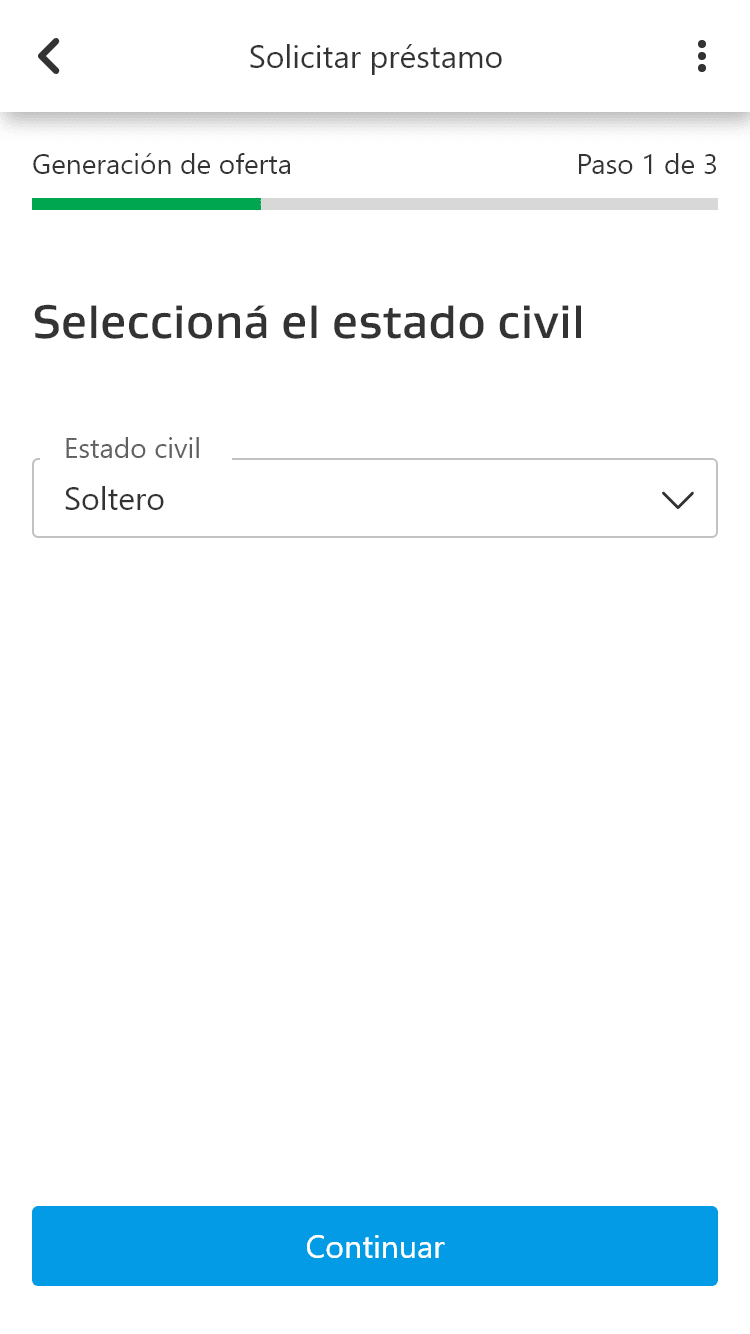
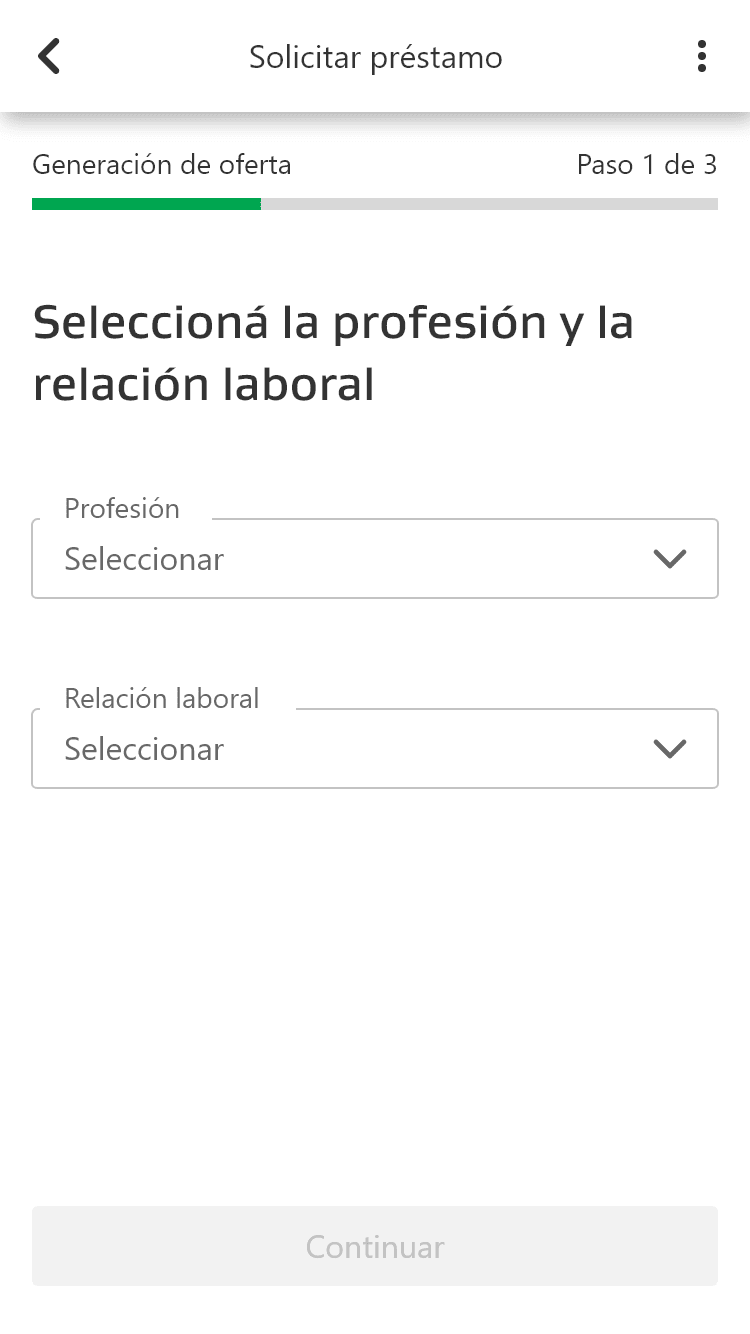
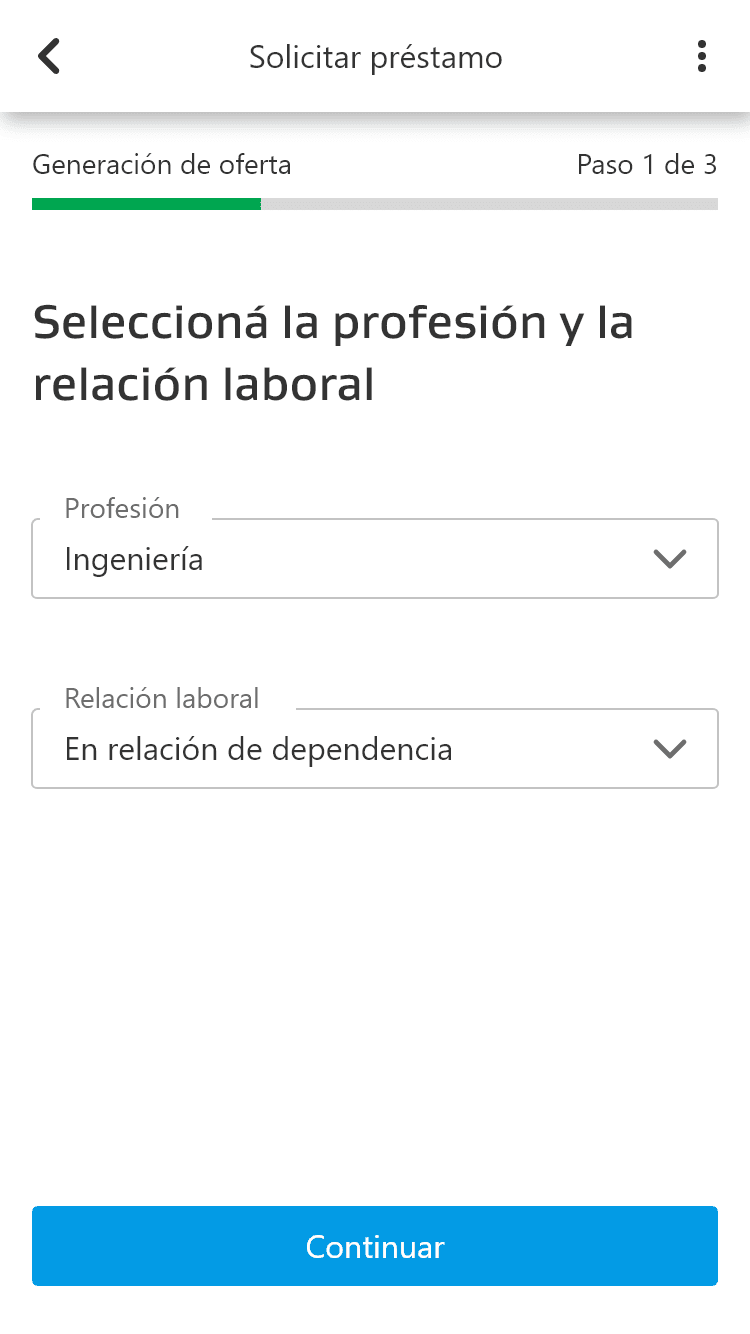
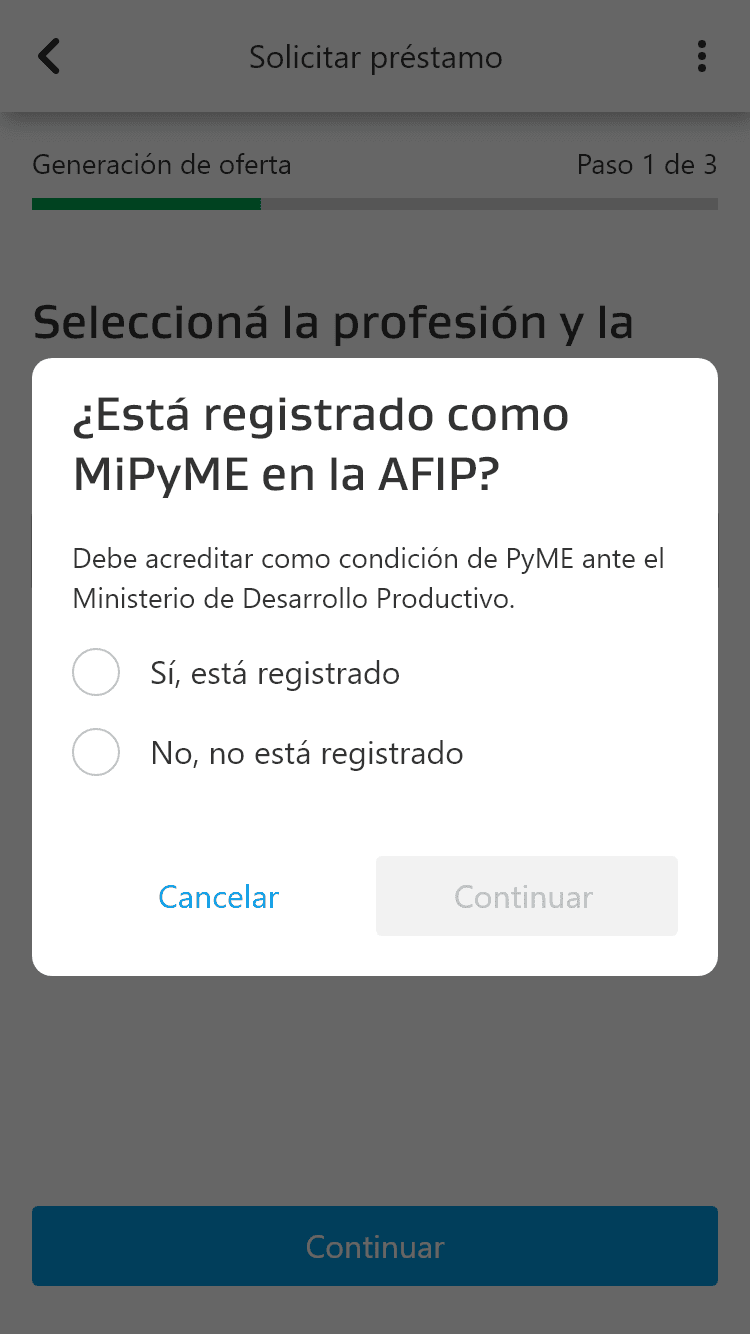
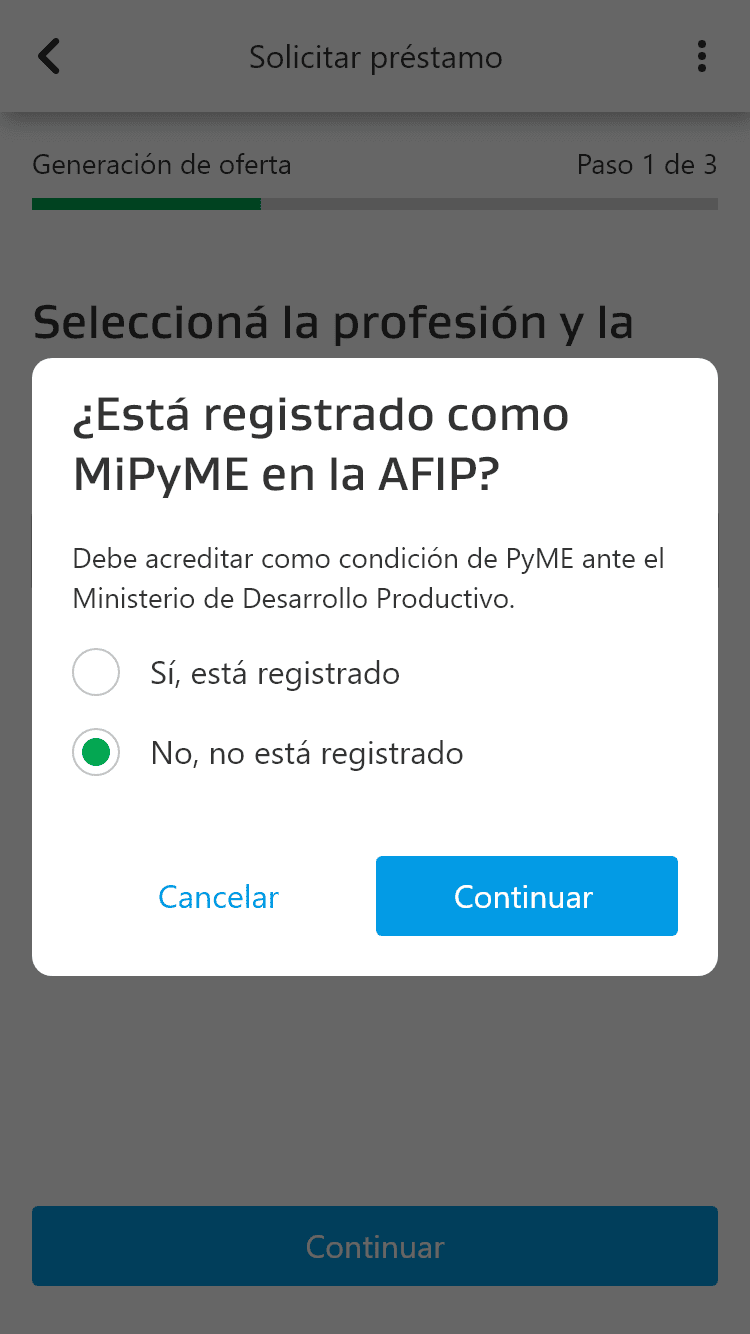
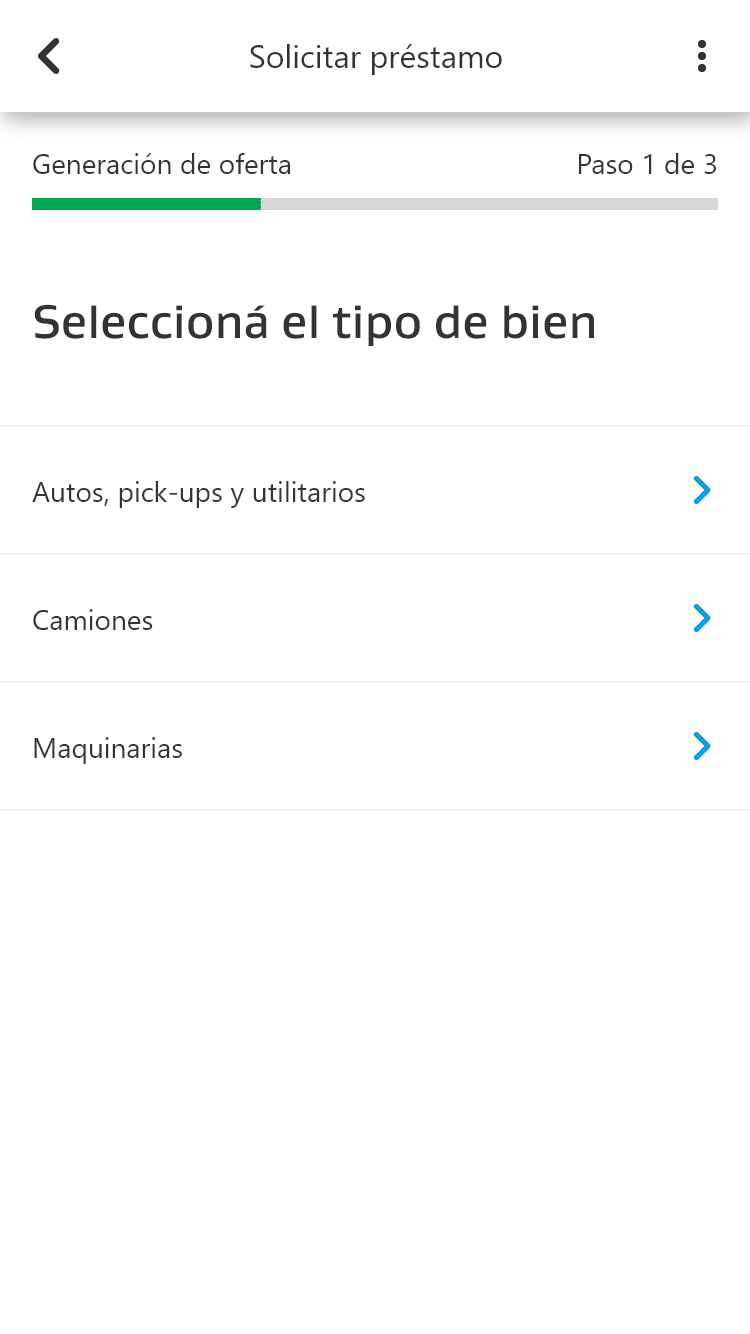
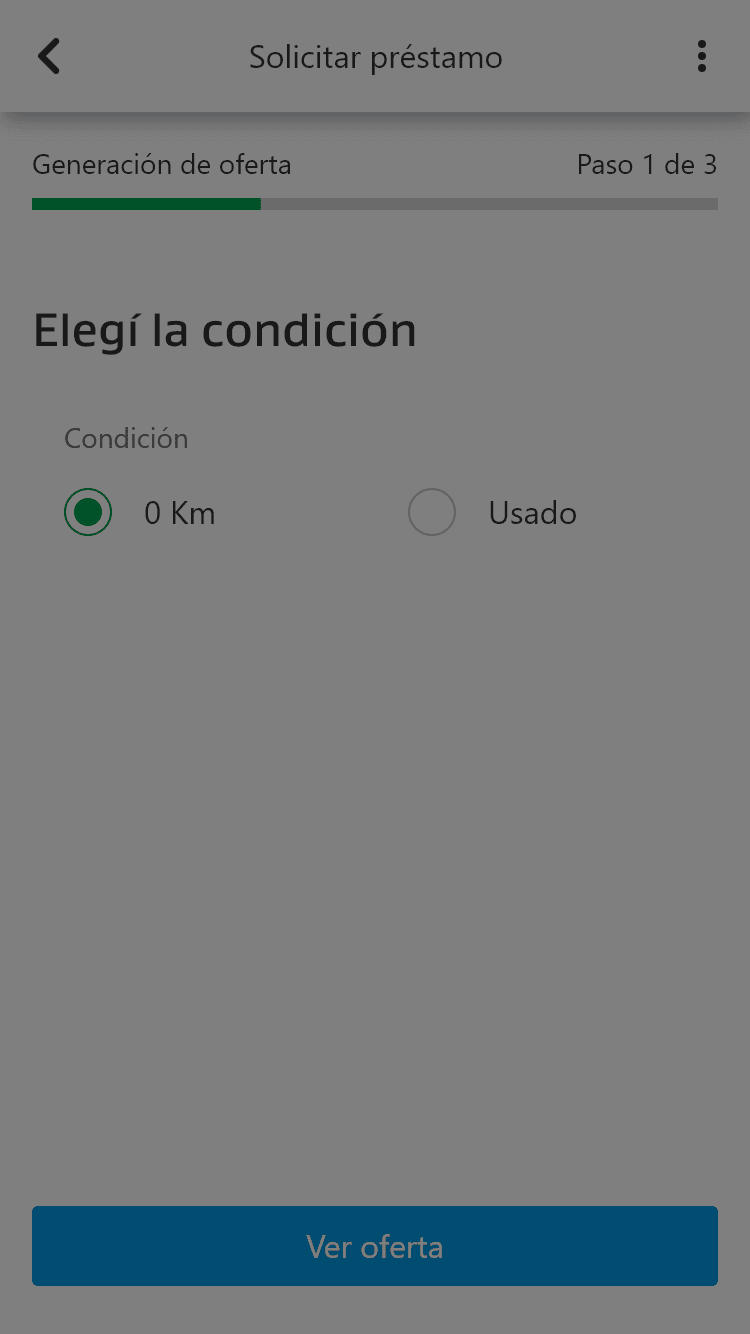
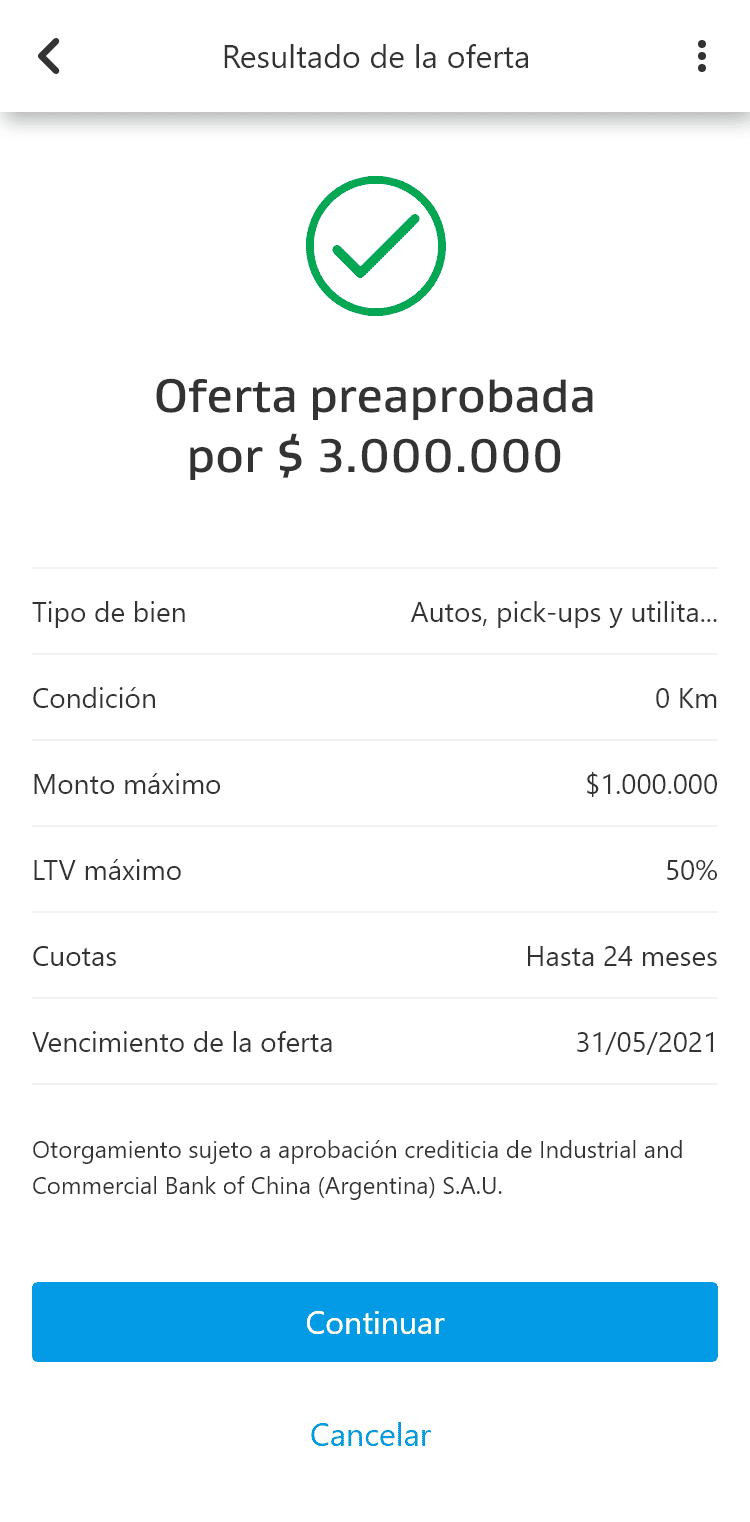
Once a client enters the dealership and requests financing for a vehicle or machinery (new or used) through a collateral loan, the dealer starts a Credit Evaluation in the app. This is the first of four stages.
The carousel shows the success case: when the customer exceeds credit expectations and the parametric filters, they receive an approved status.
There are also rejected or pending cases. If an operation remains pending, credit and operations analysts must review it in the back office. That process can take up to 48 business hours.
That covers the core of the mobile app. Once the user receives approval, they move on to the second stage: Customer onboarding.


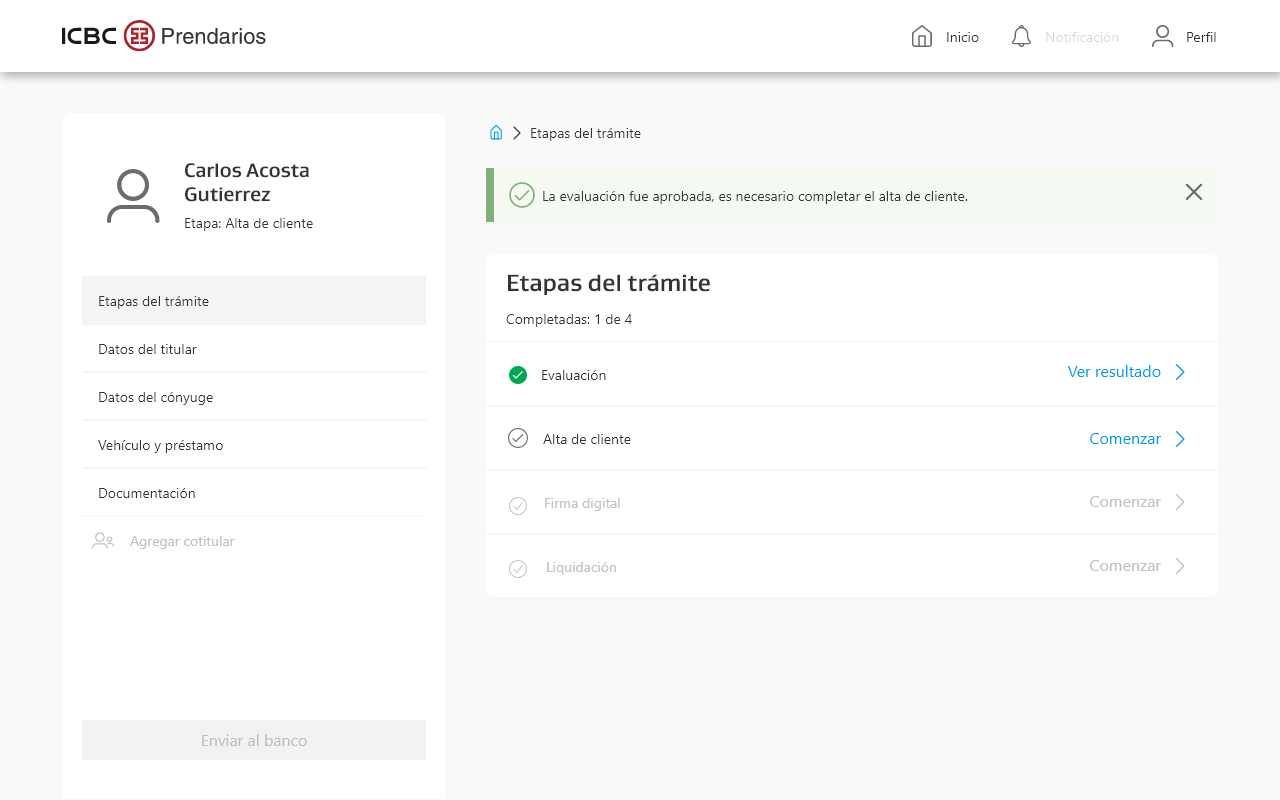
Stage 2 — Web app, customer onboarding
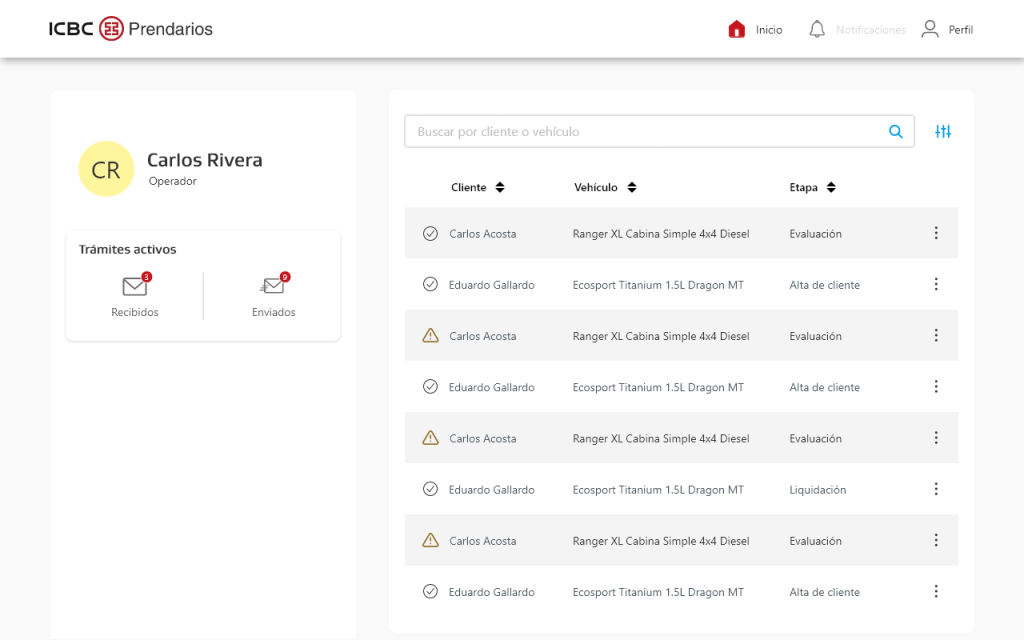
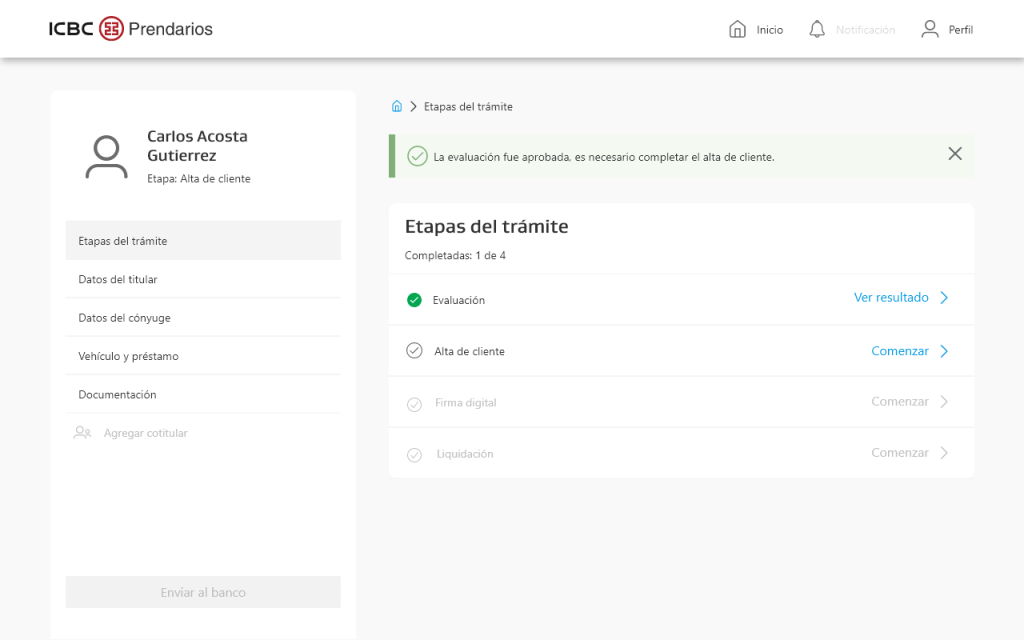
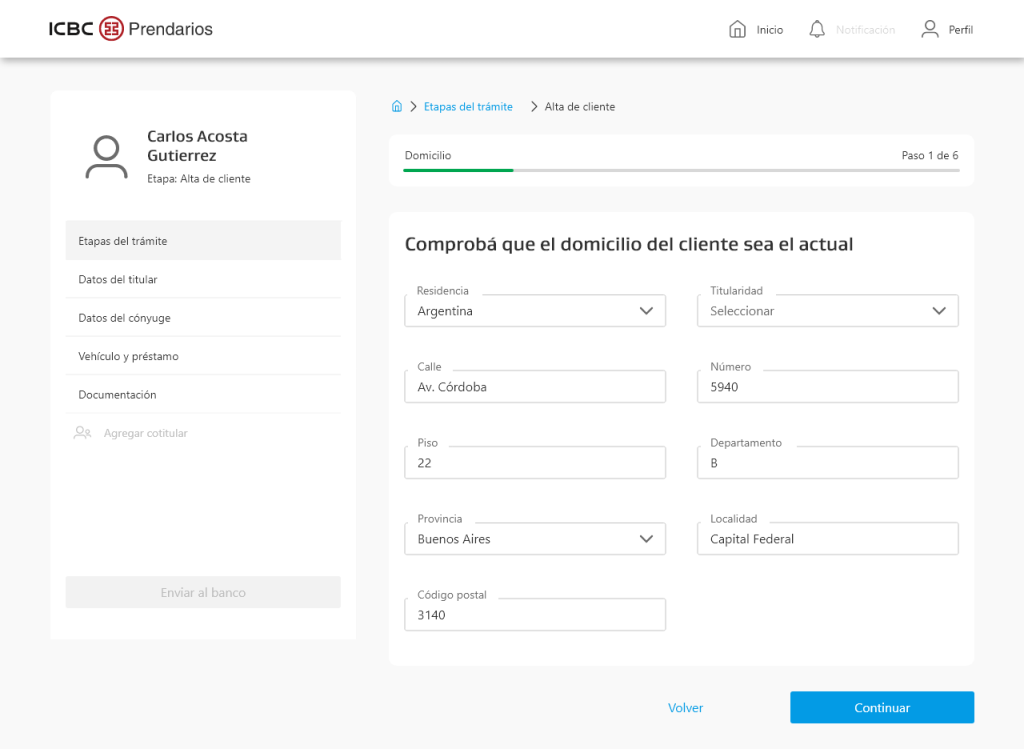
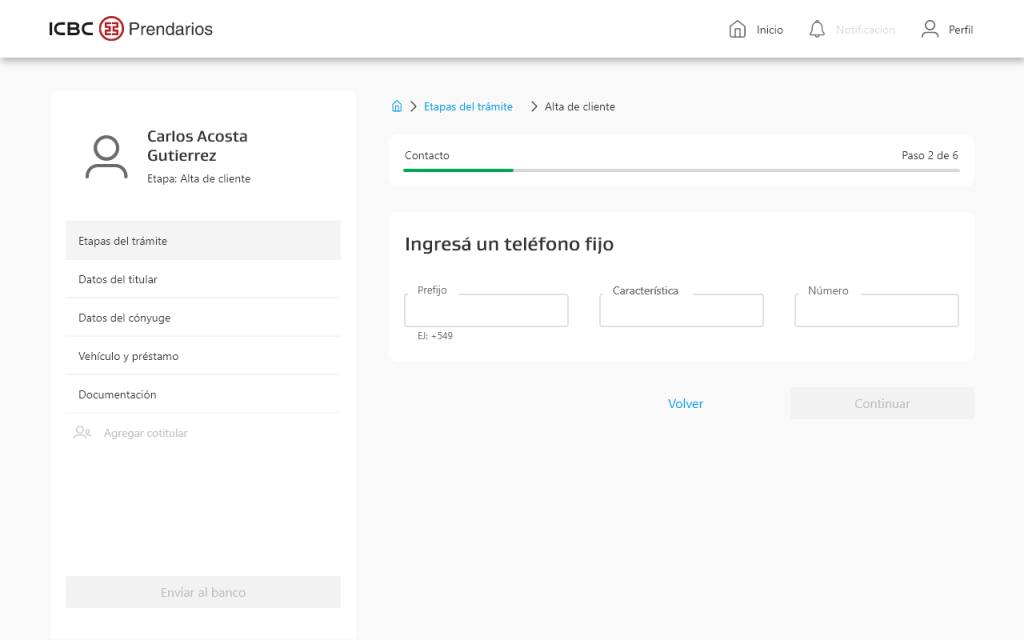
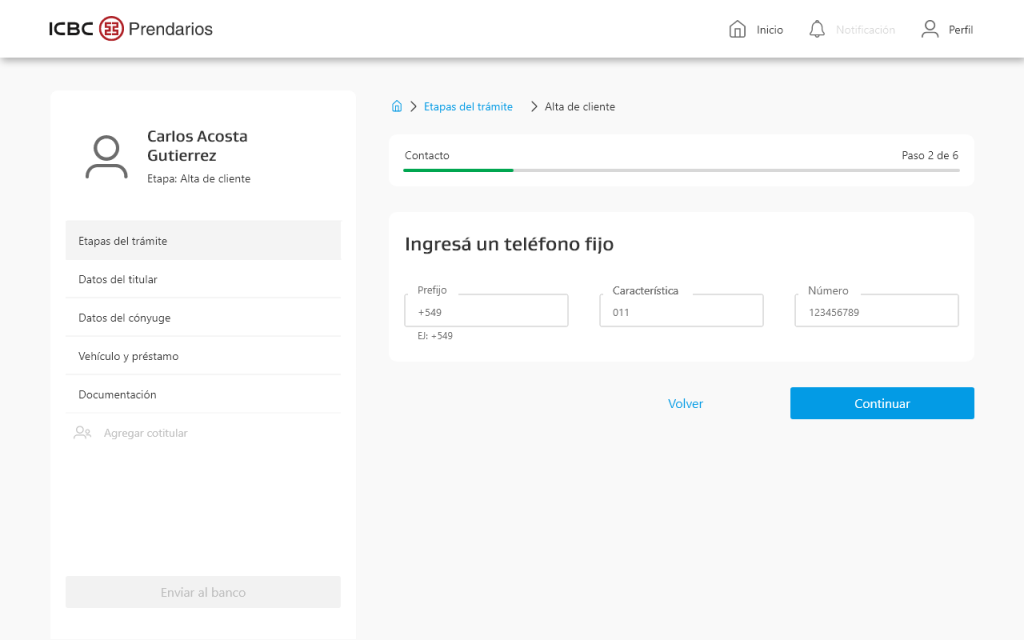
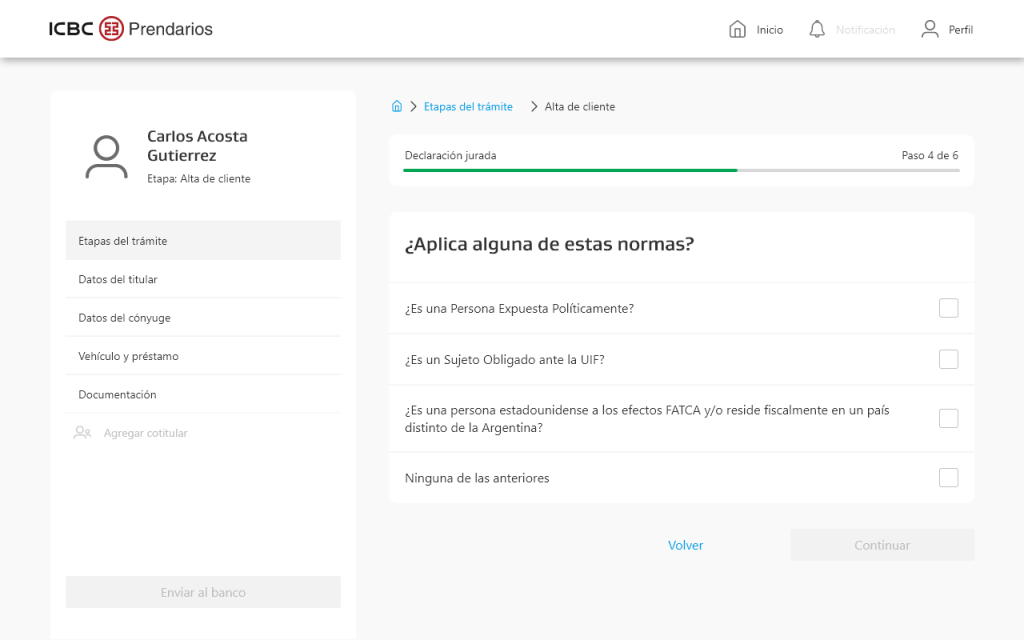
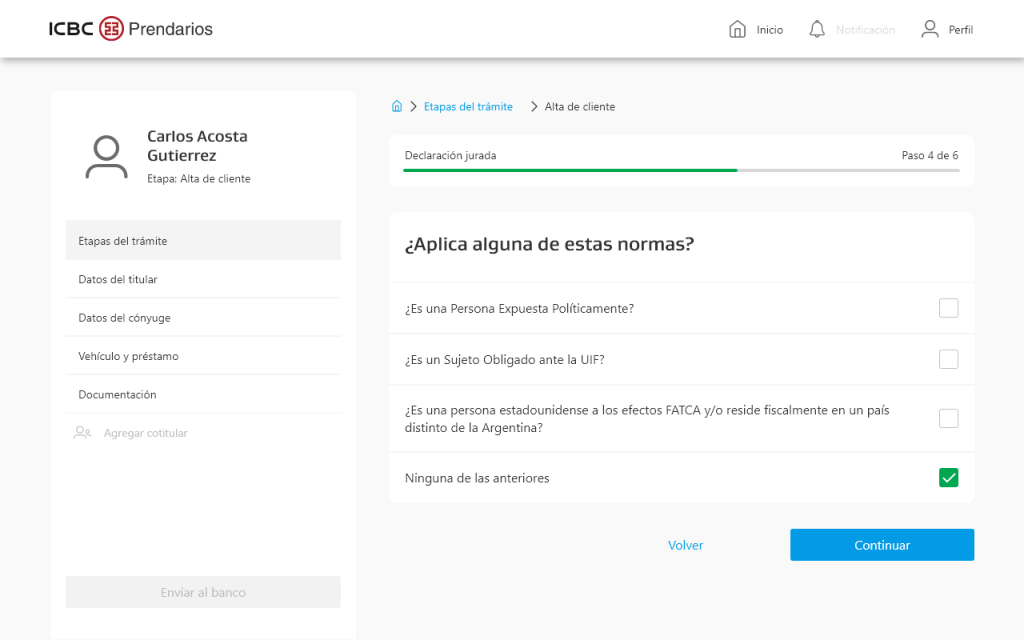
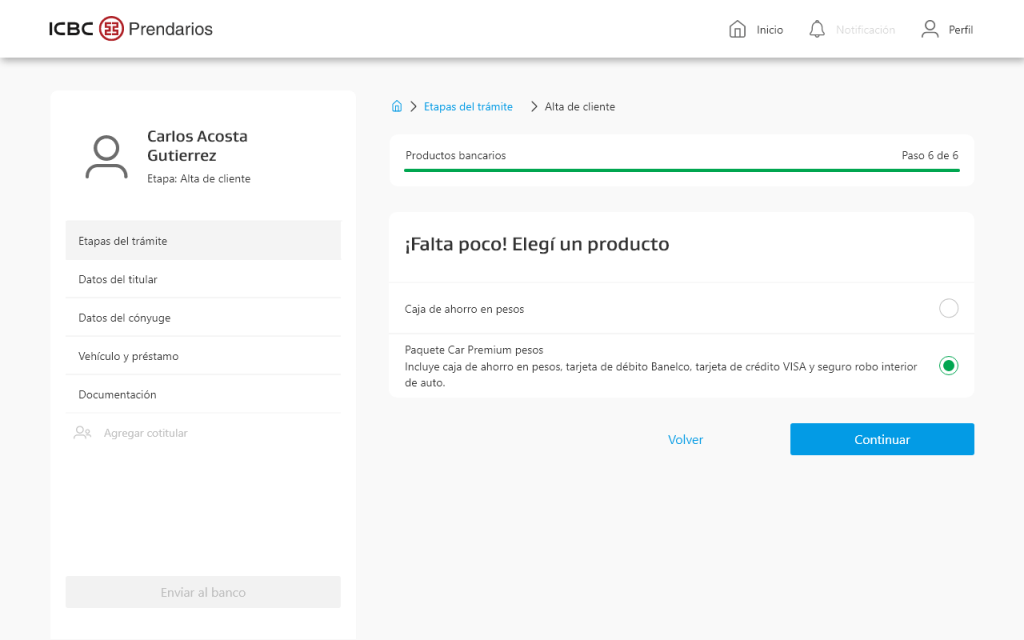
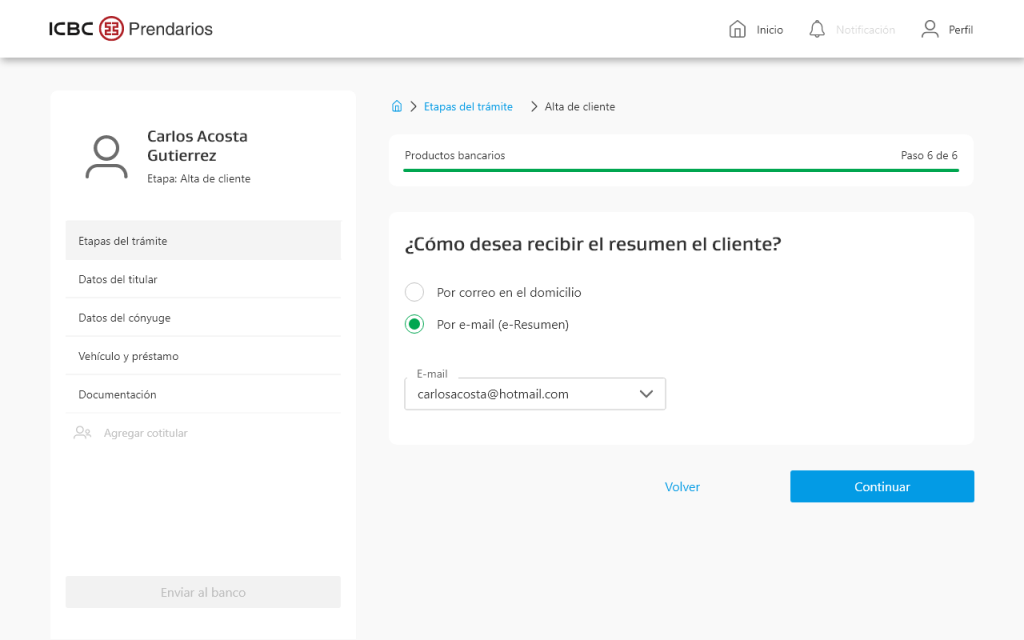
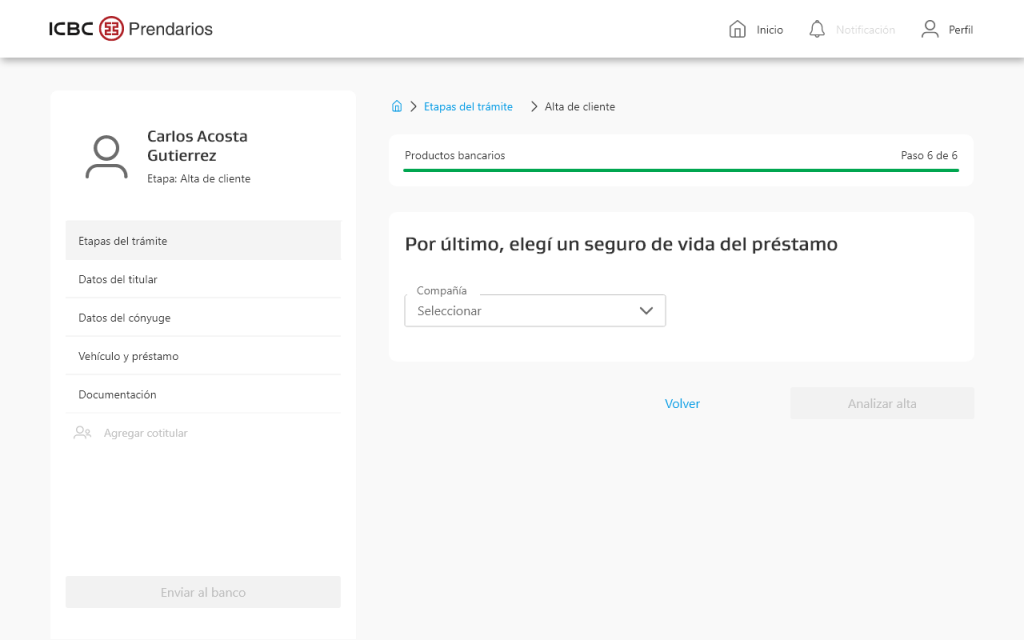
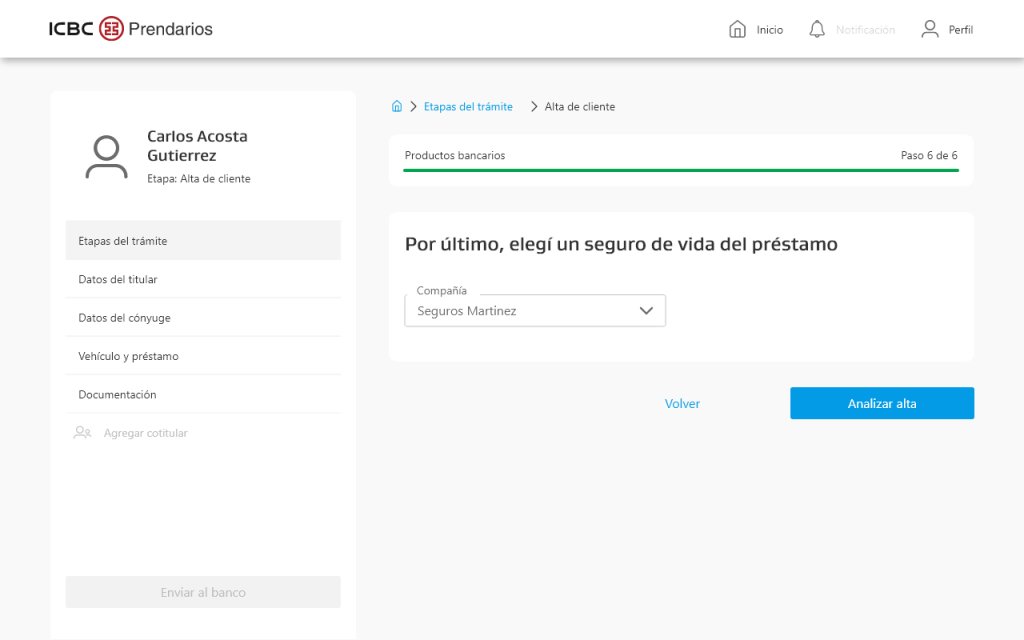
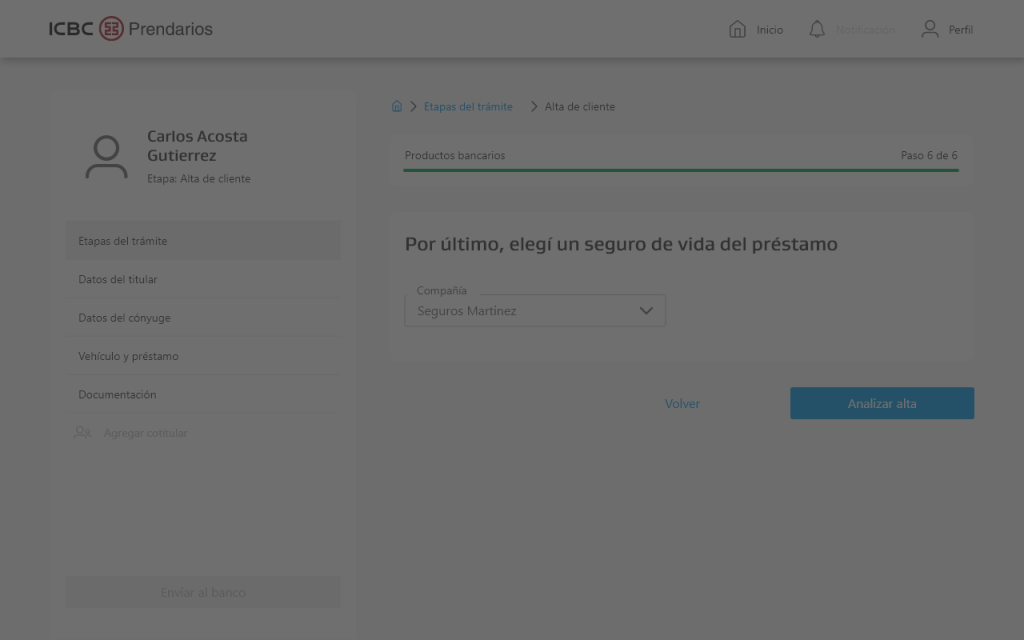
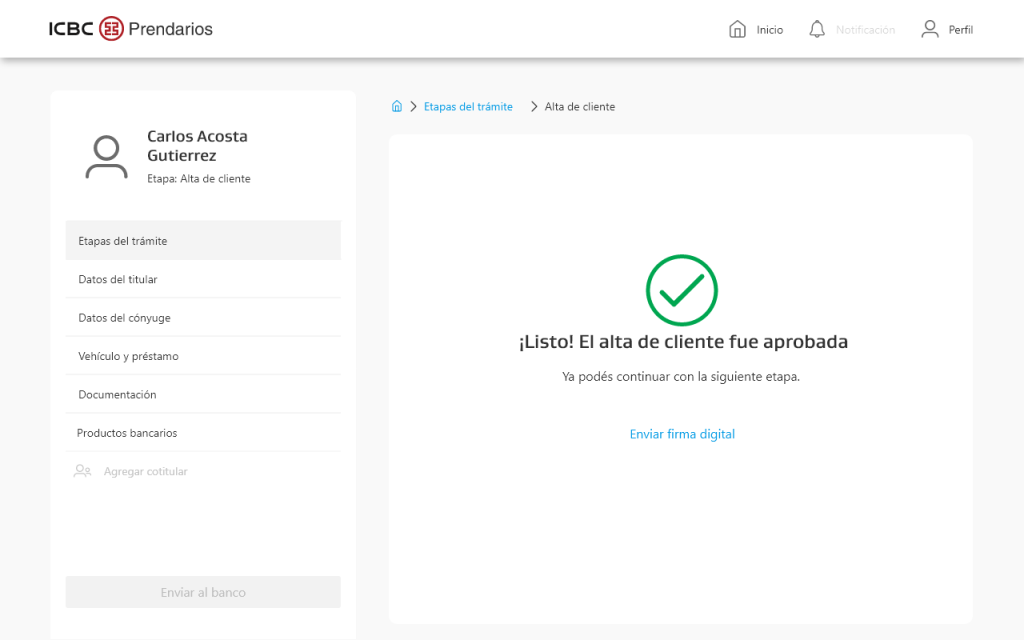
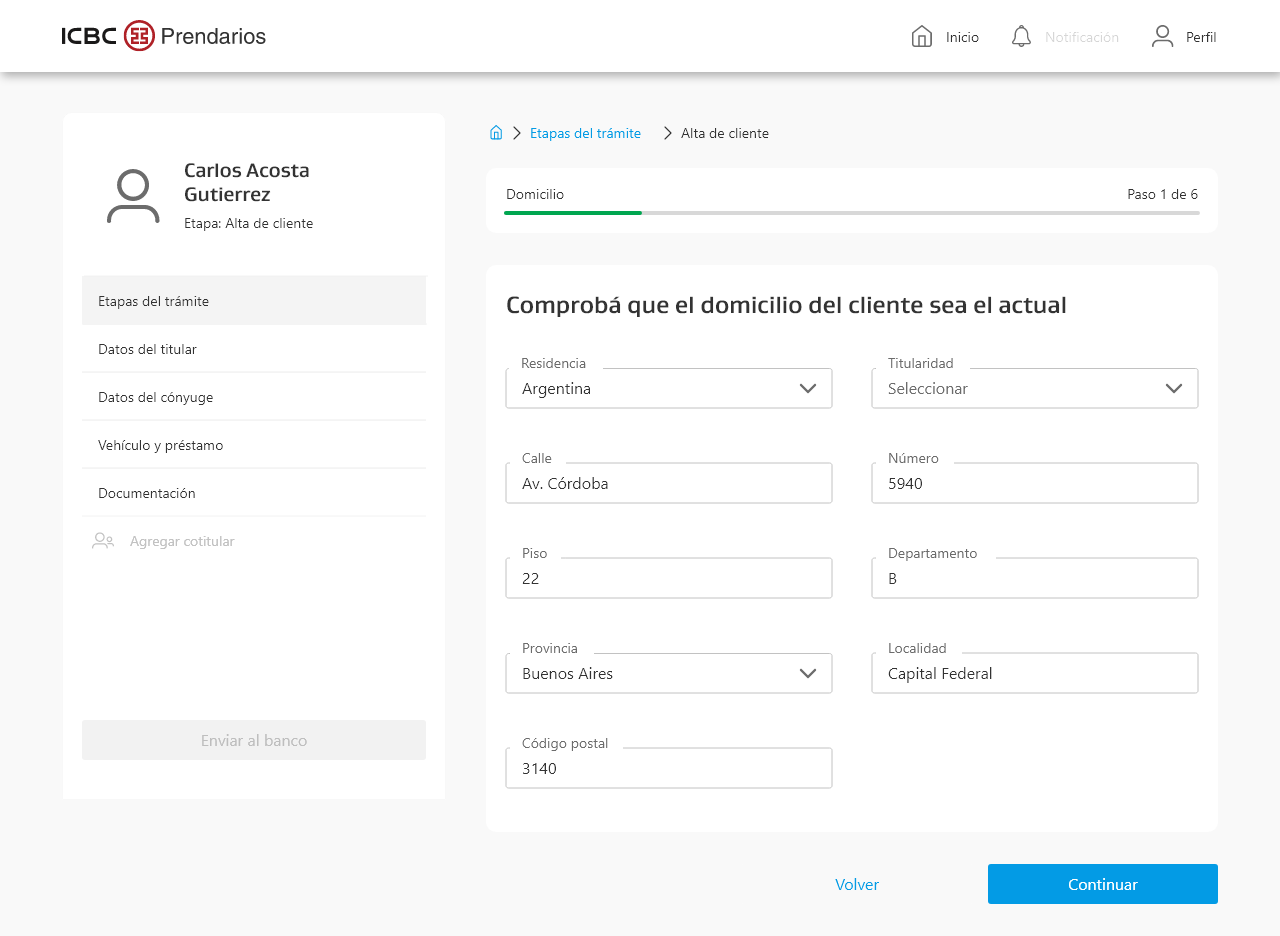
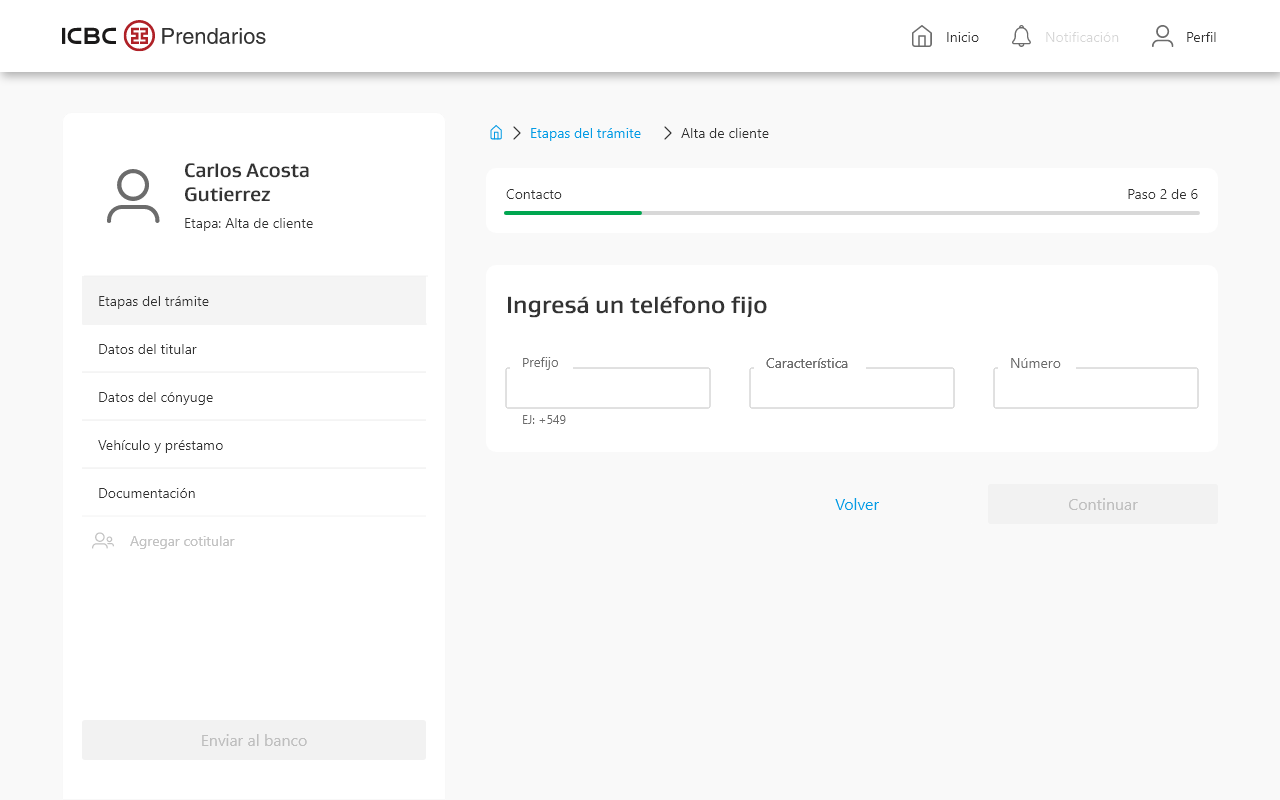
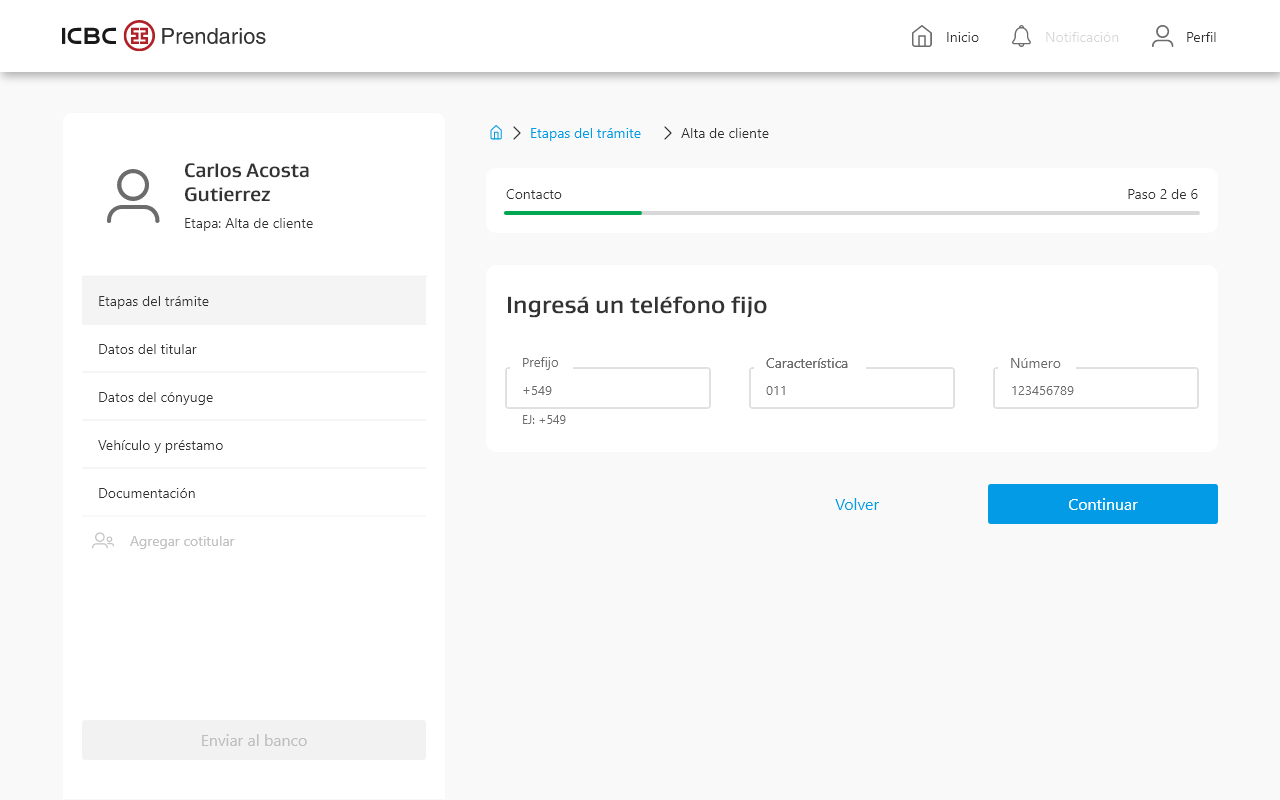
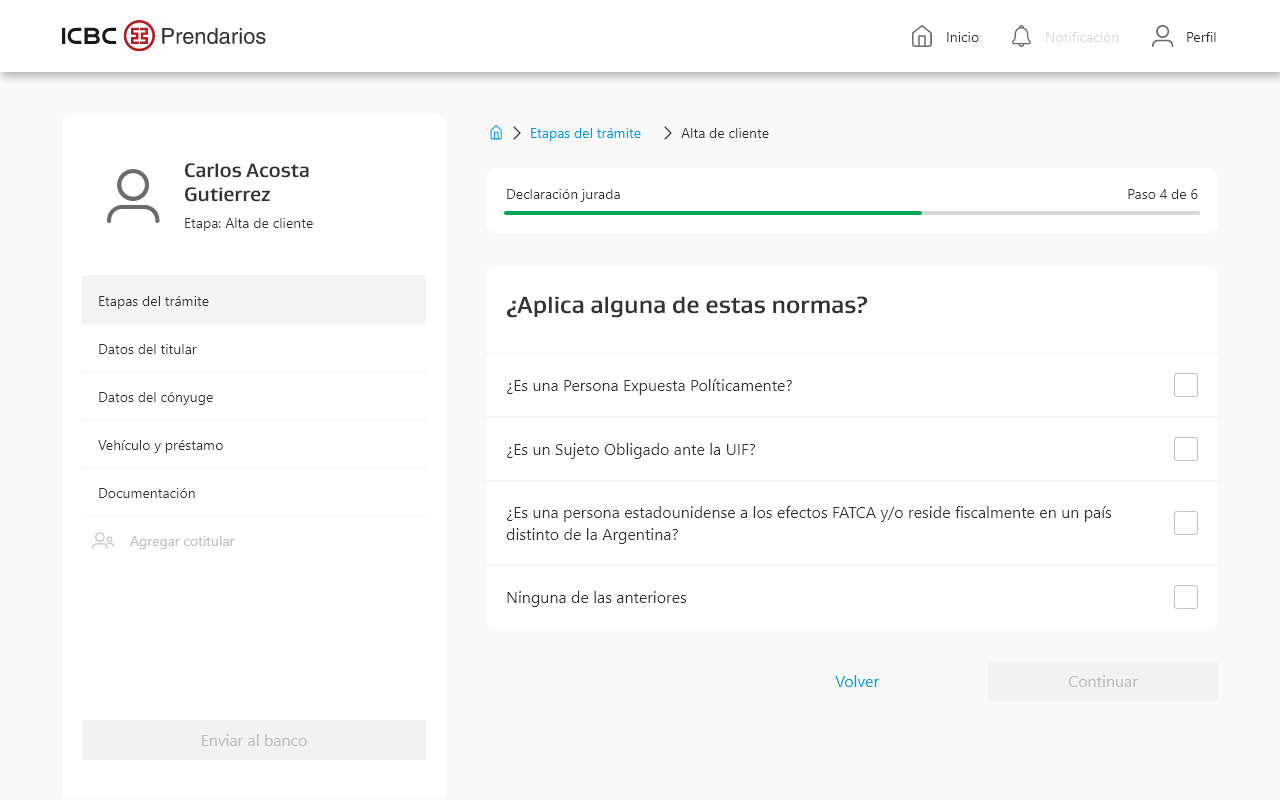
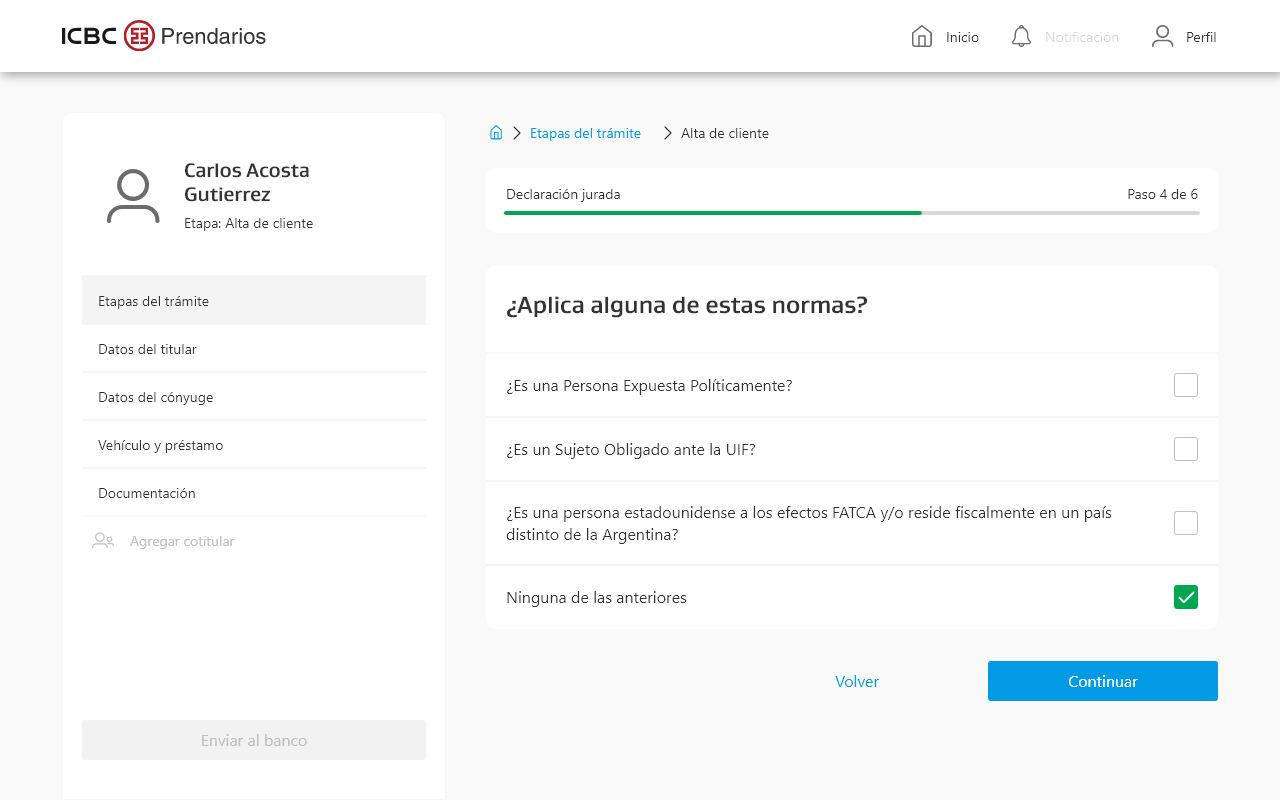
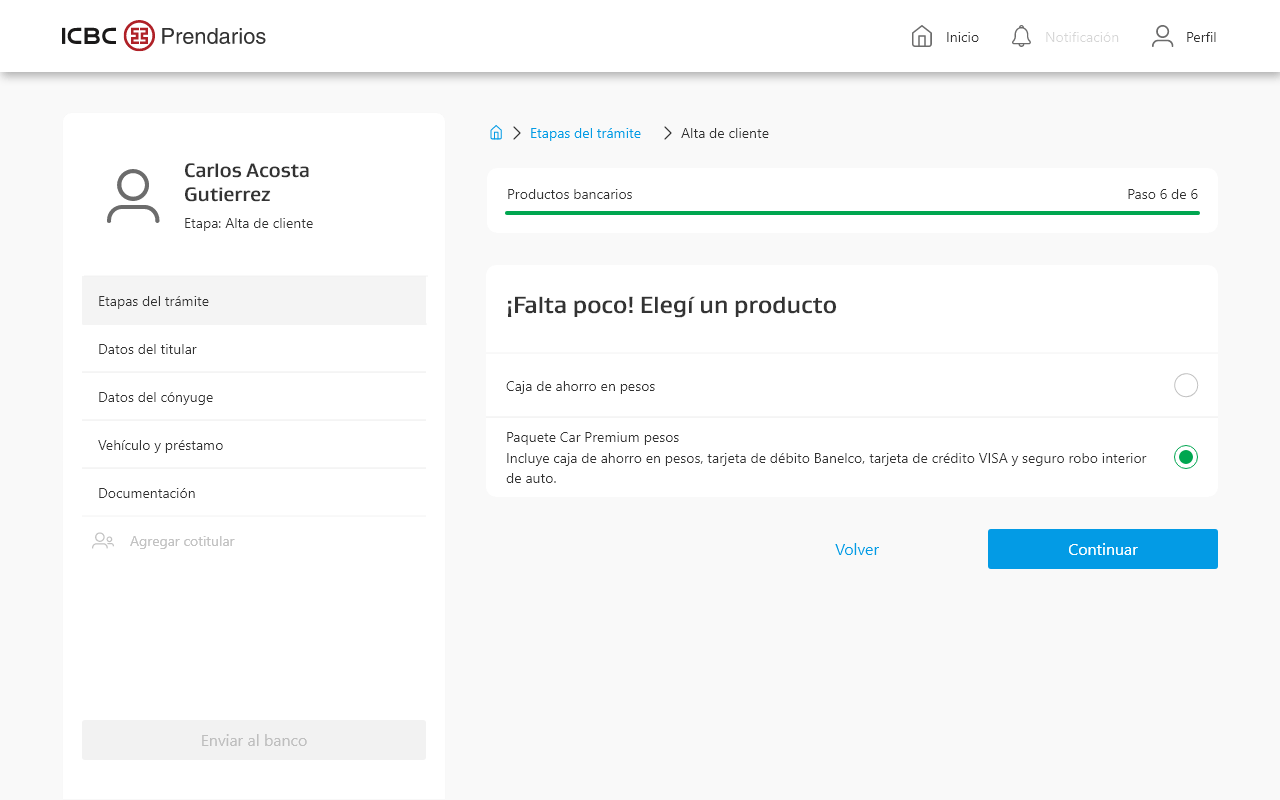
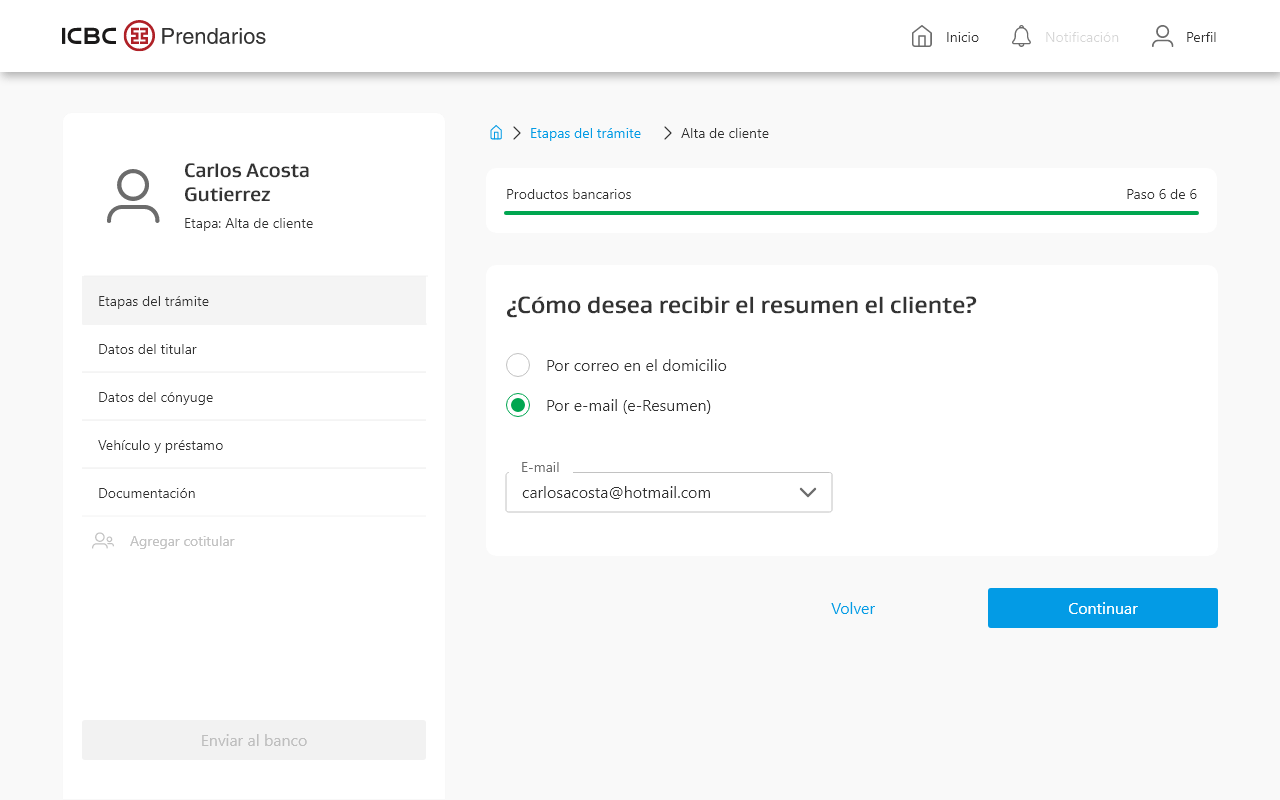
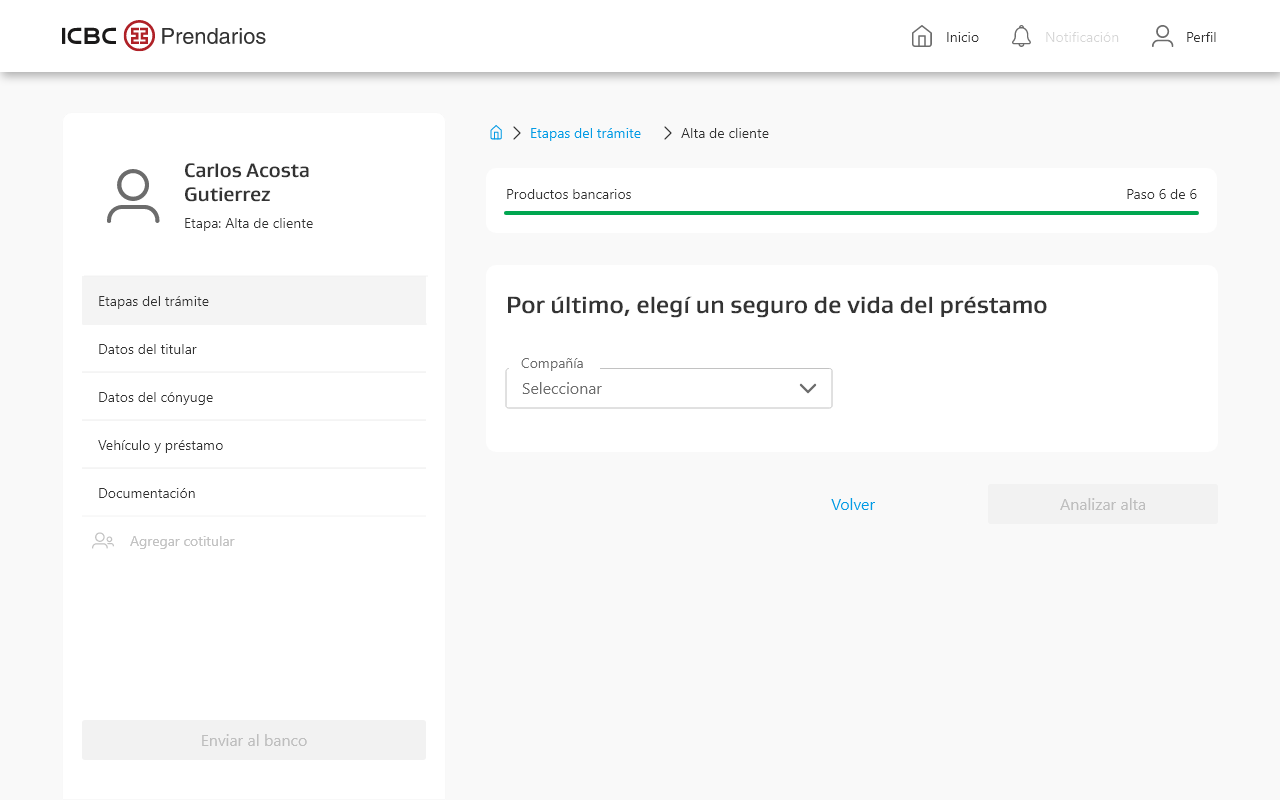
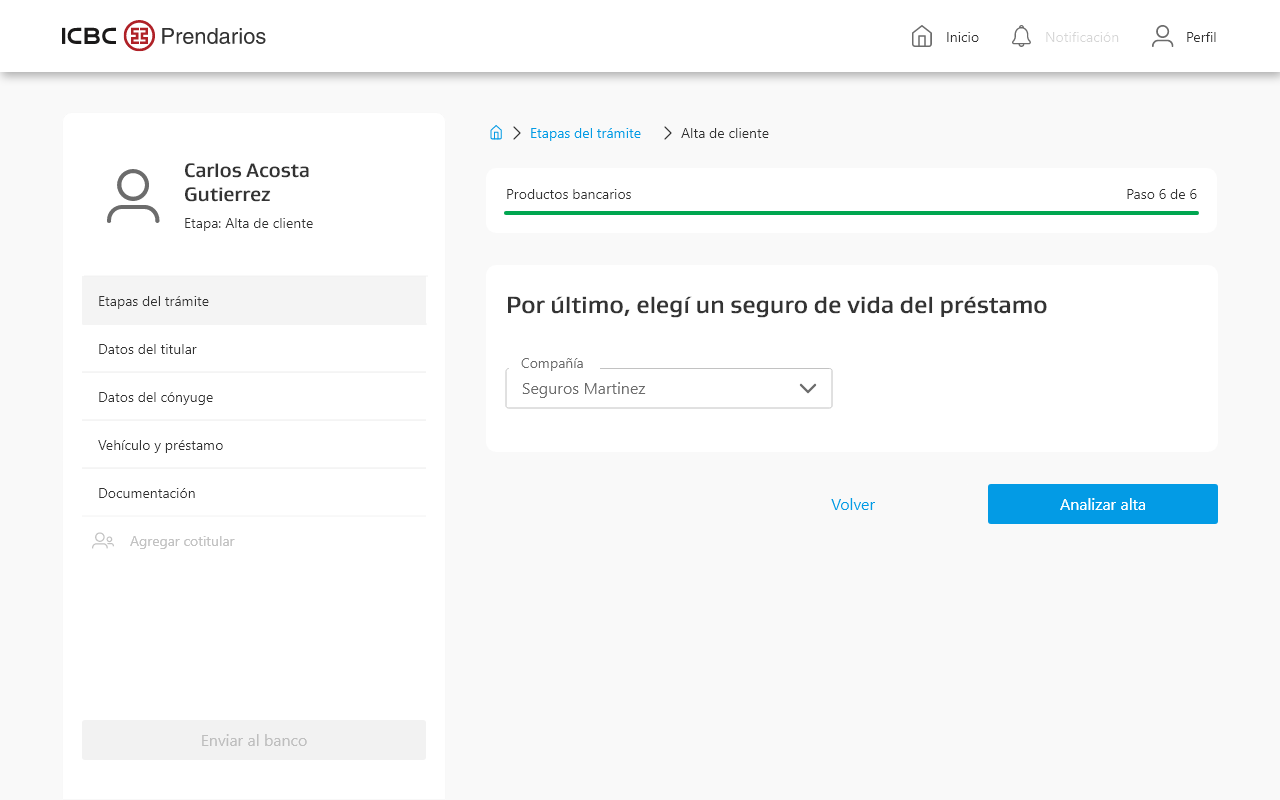
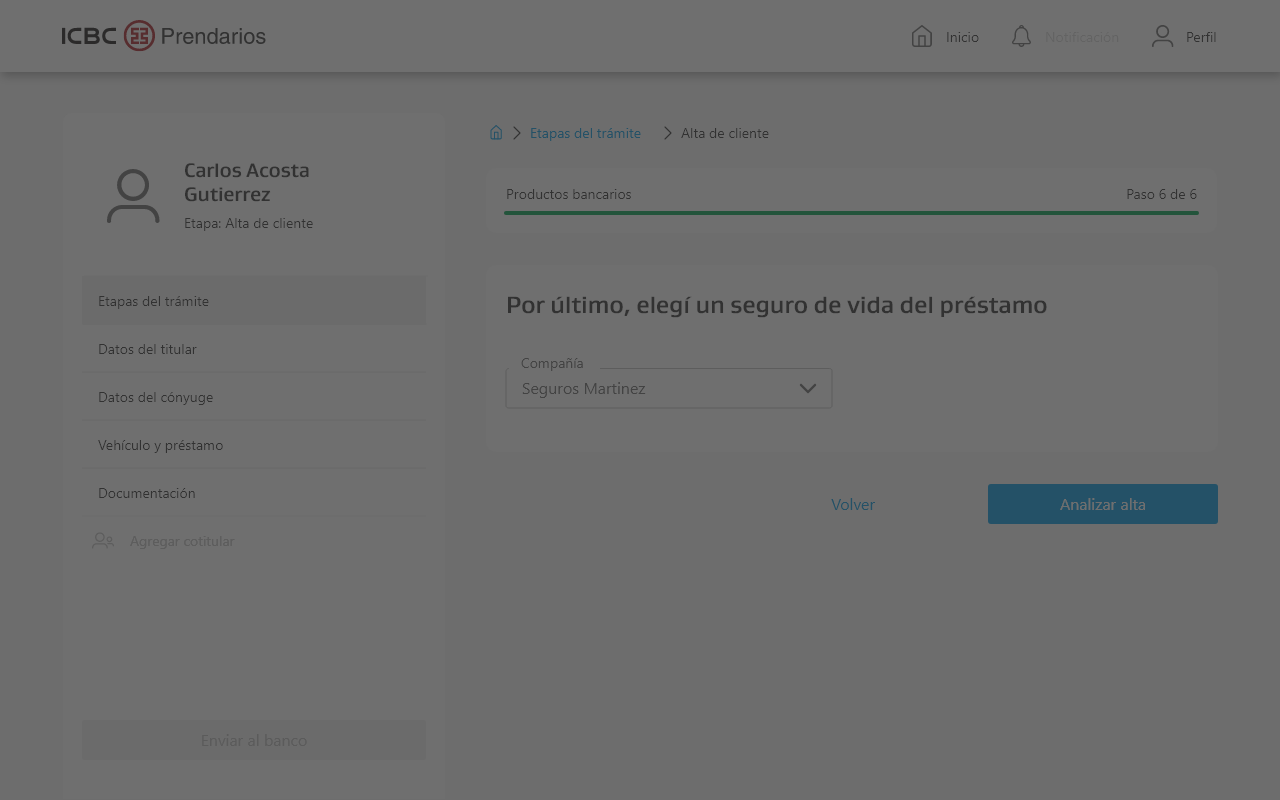
Next we reach the second stage of the process: client onboarding. If confirmation is immediate or arrives within two business days, the dealer starts collecting buyer-oriented vehicle data to register them with the bank. At the end of the process, if the user’s client is approved by the configured scoring parameters, they move on to the third stage. There can also be automatic rejections or pending cases that request additional information (a co-borrower or other supporting data).
Stage 3 — Digital signature
For the third stage, called digital signature, the user must complete minimal buyer data for the vehicle and digitally sign the contract to generate the collateral loan and accept the terms and conditions. At this point, in 95% of cases, the stage ends with approval through the scoring parameters, though some cases remained pending. In 0.1% of cases, they were rejected for unusual reasons.
Stage 4 — Settlement
Finally, in Settlement, the user requests the last pieces of data from their client and closes the case. From the product and operations back office, the legal collateral document is issued and archived at headquarters until the loan is paid off. Buyer and user complete the operation: the bank pays for the vehicle, and the buyer tracks the loan through online banking.
Facing the bank
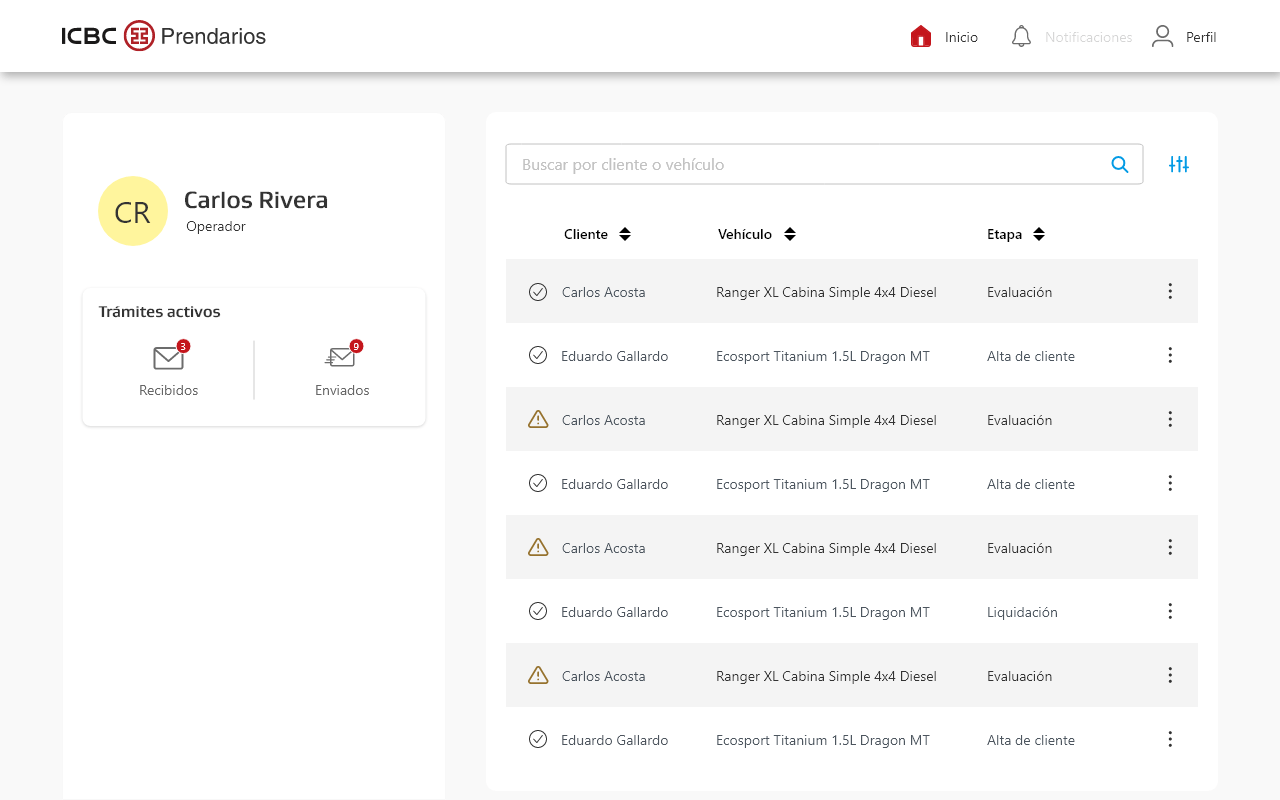
When parametrization leaves a case pending, the analyst steps in. The commercial area, for its part, feeds the entire system.
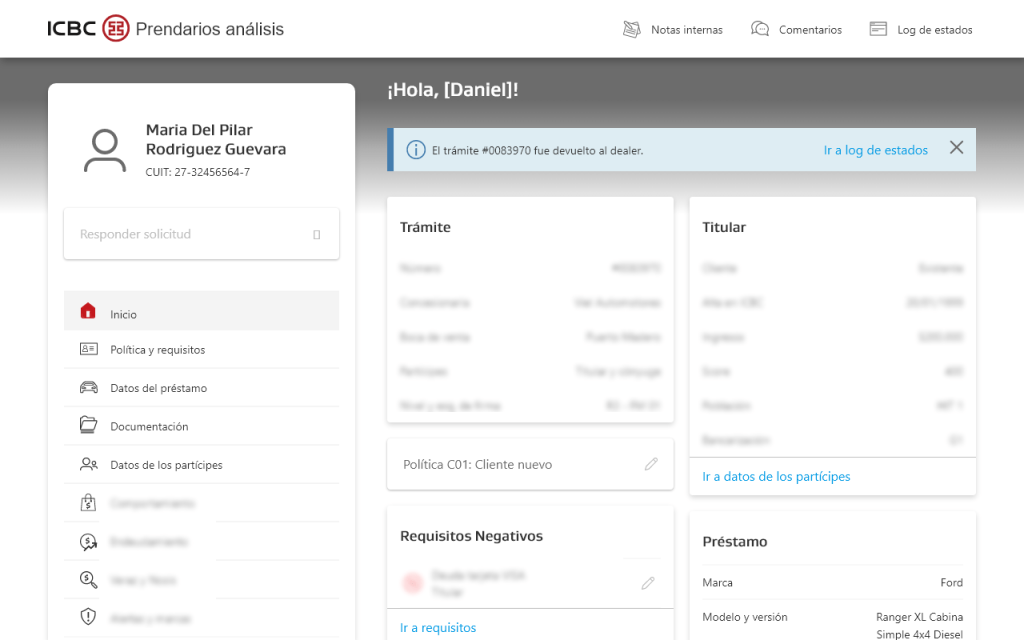
Credit and Operations backoffice
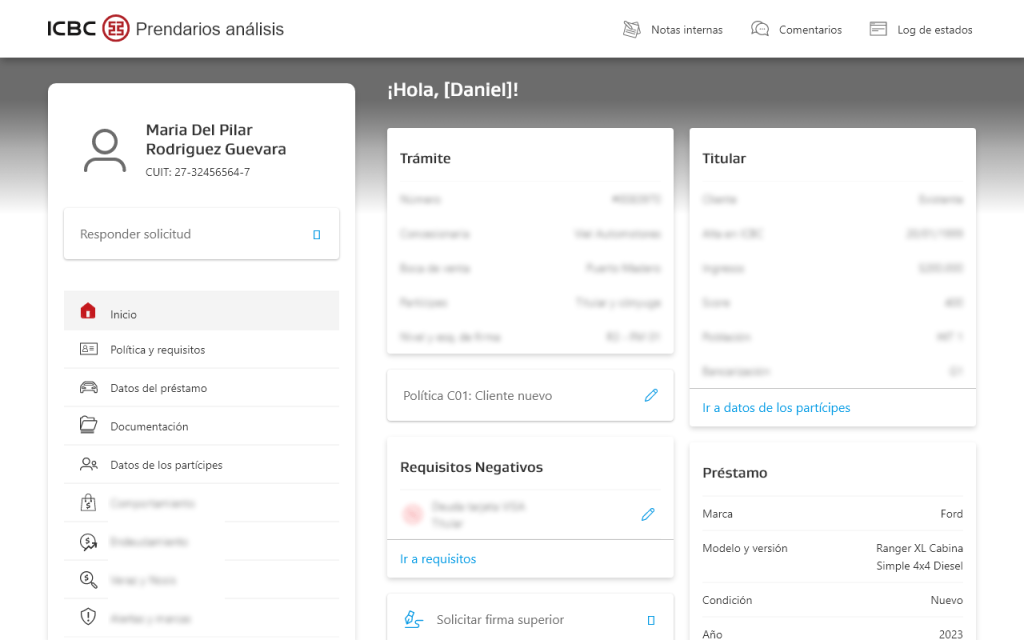
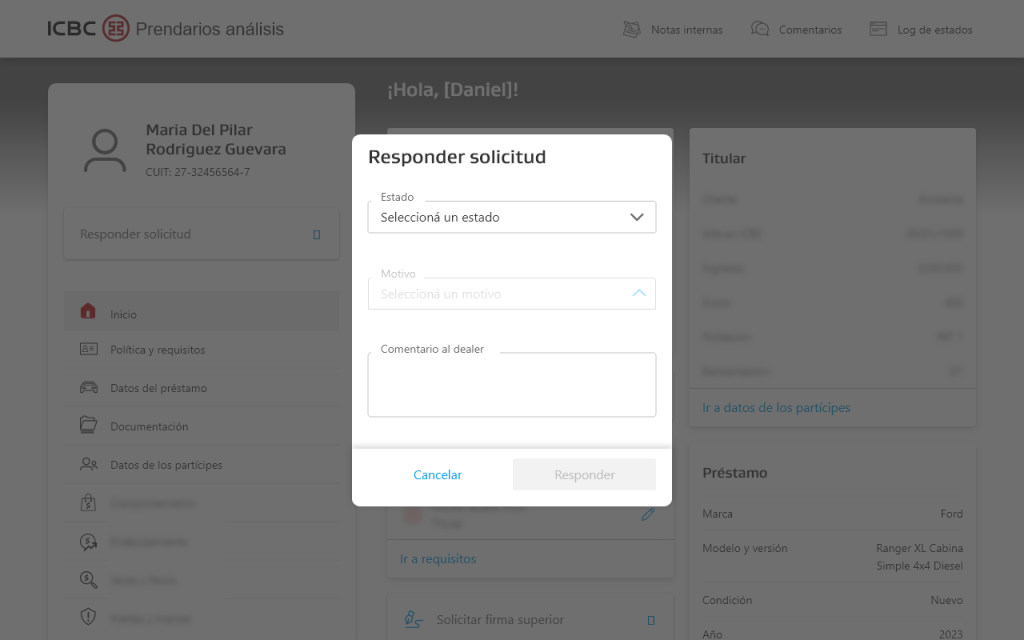
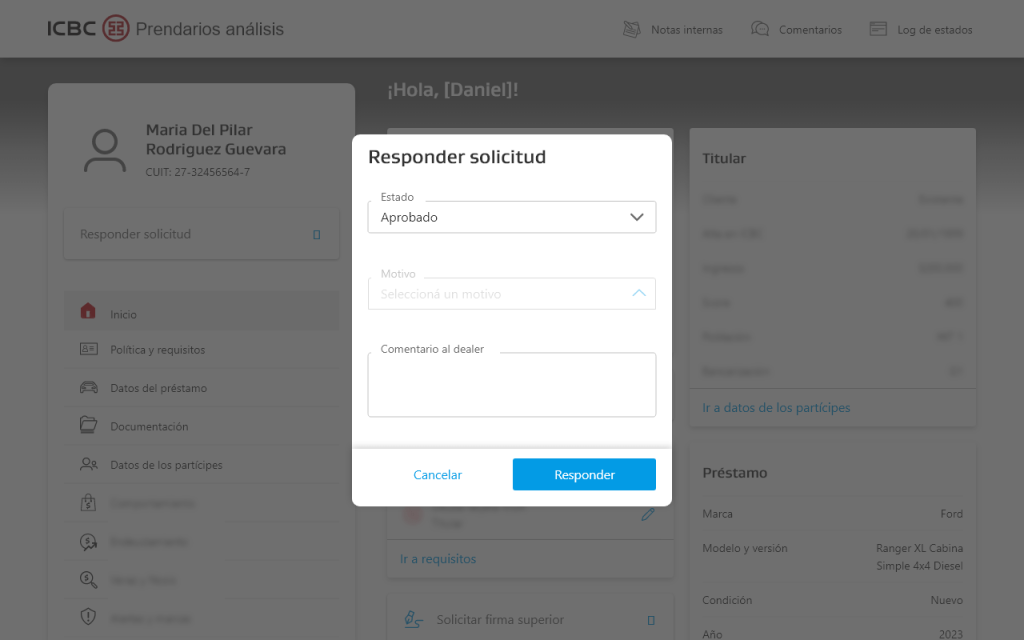
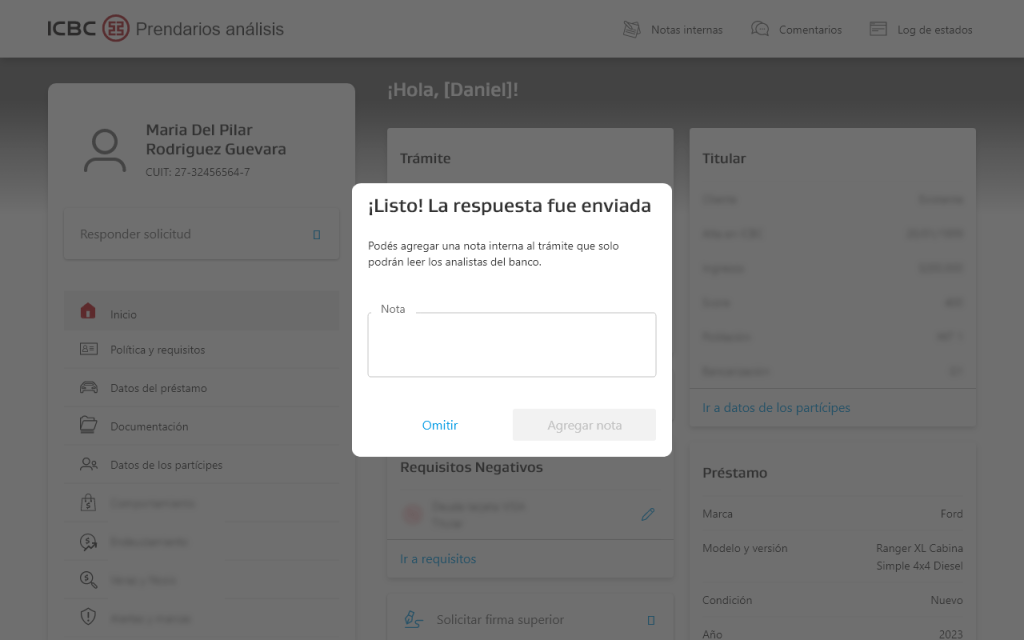
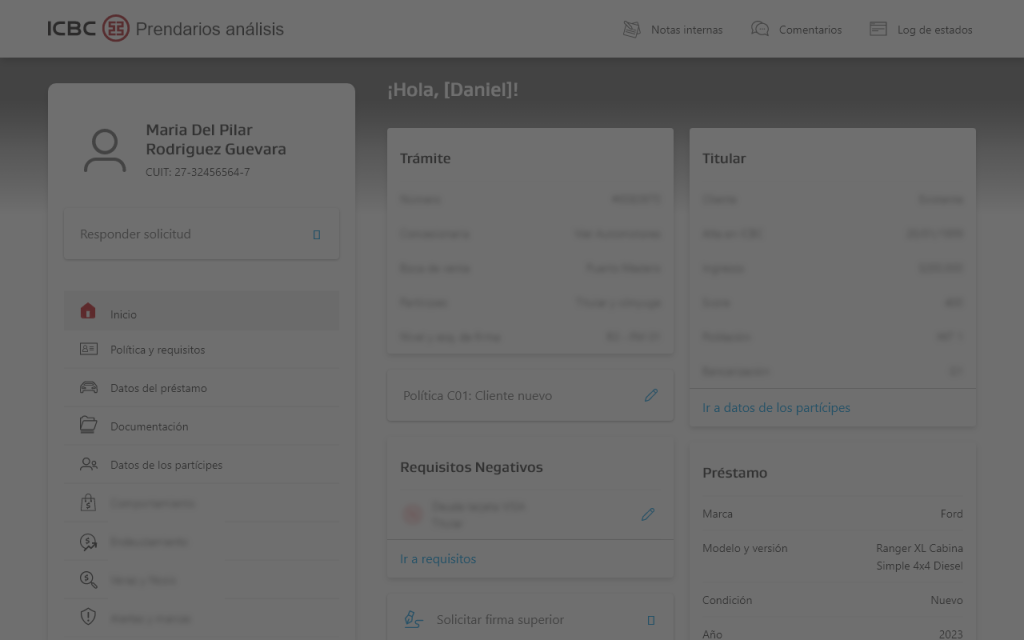
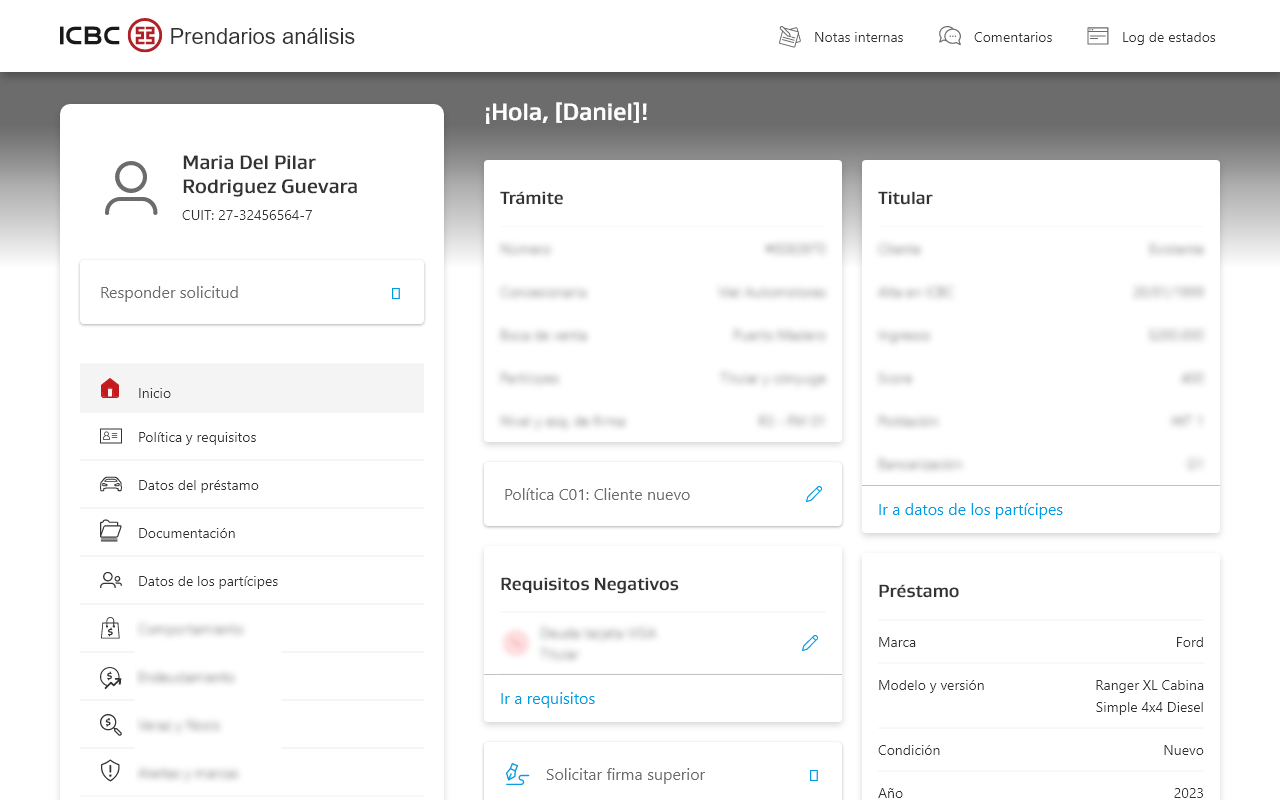
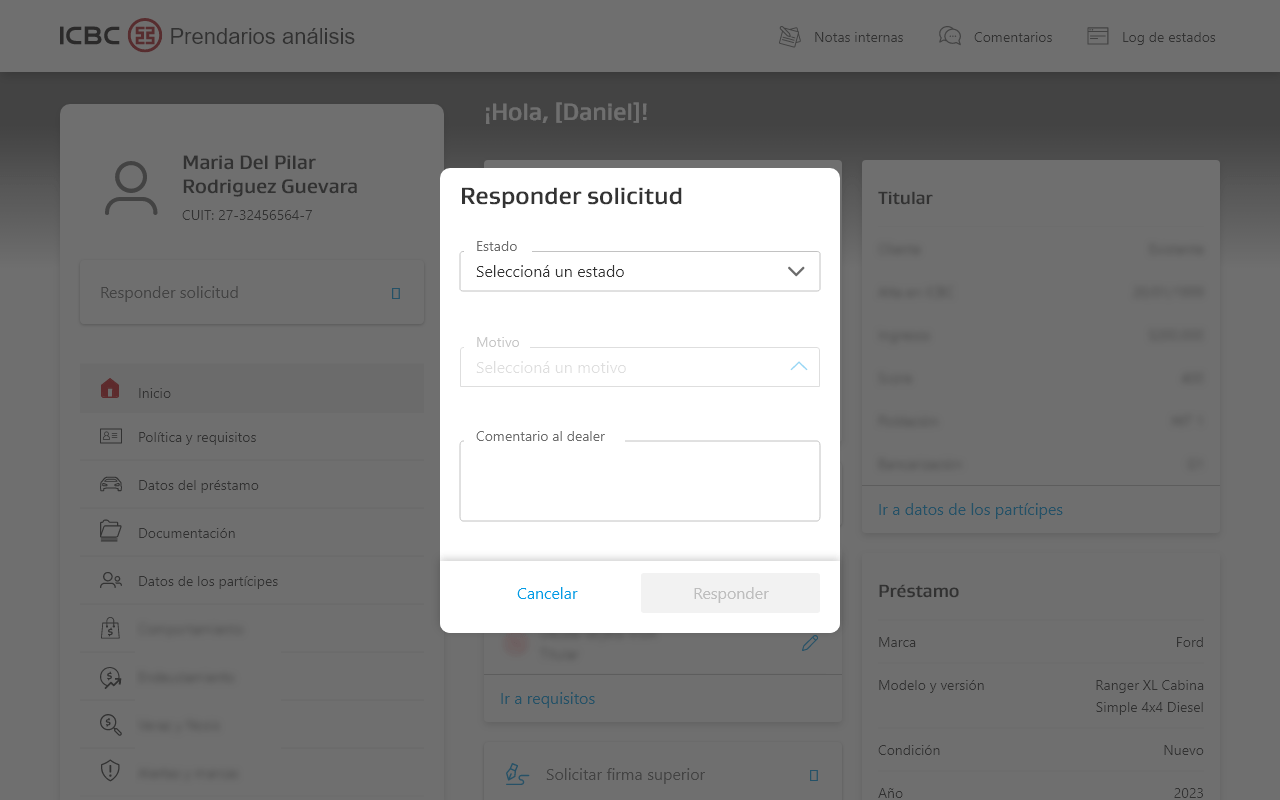
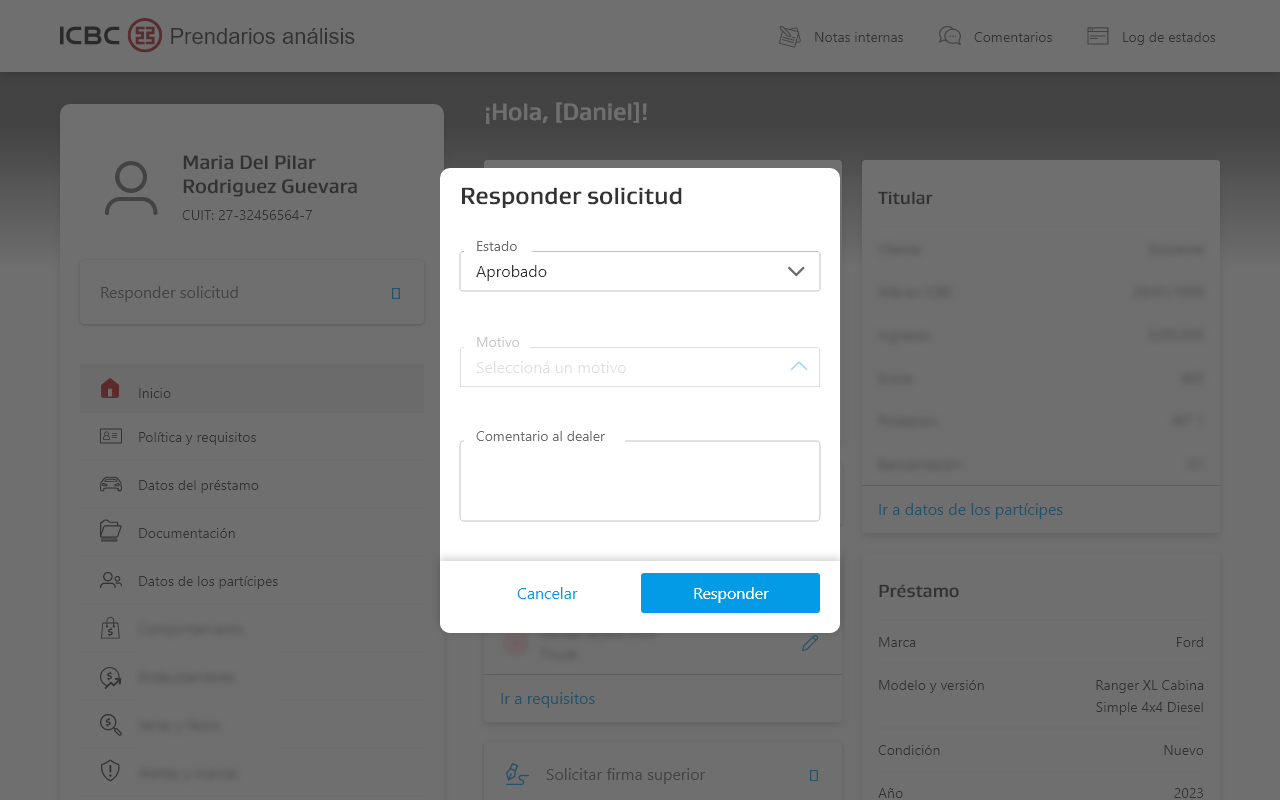
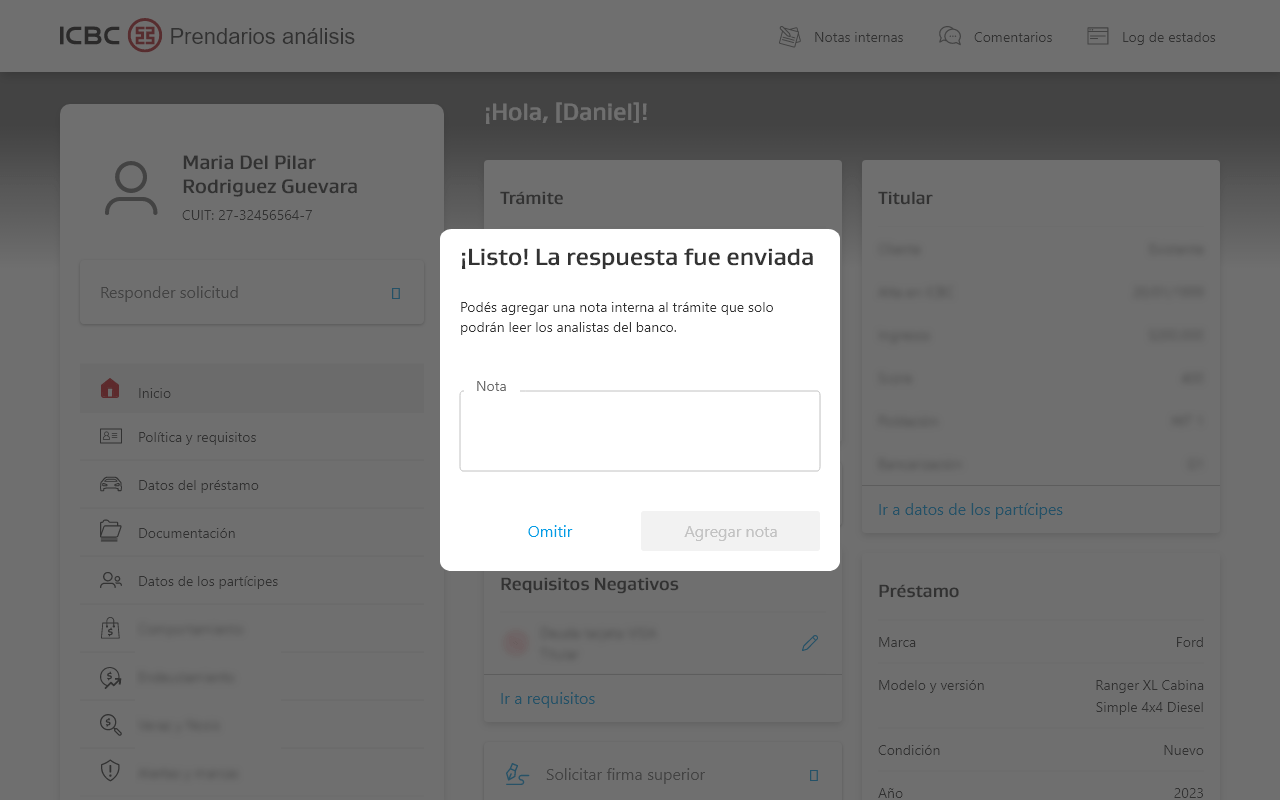
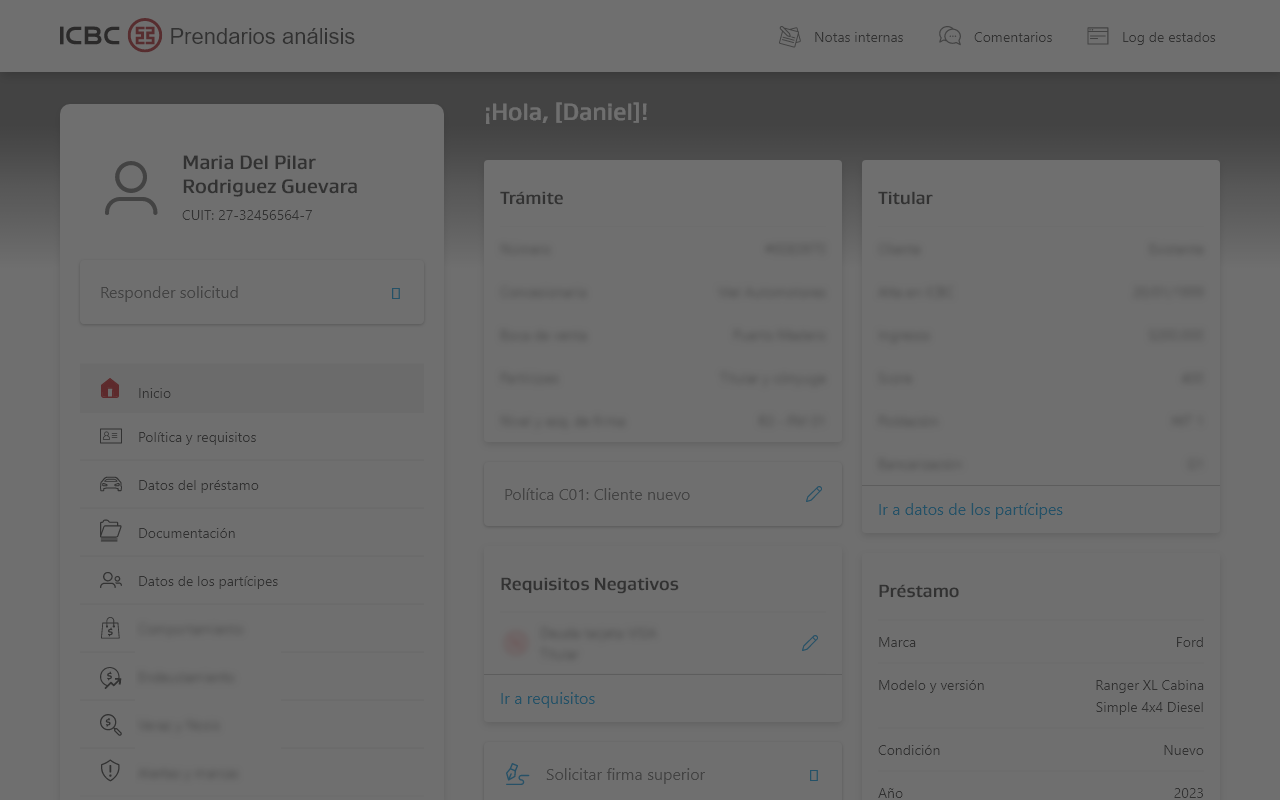
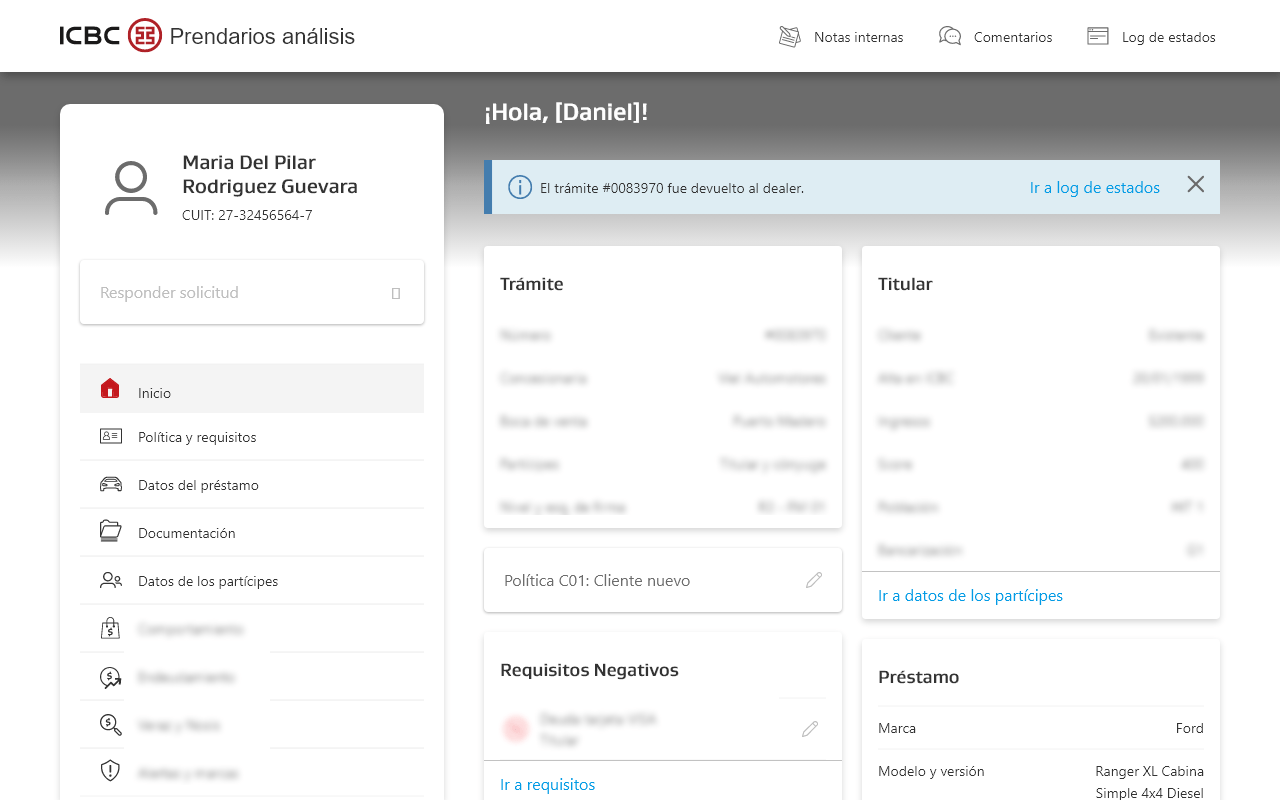
The risk analyst is the scoring parameters’ substitute player. When the logic detects that the client does not meet every requirement for automatic approval (Pending approval), the analyst enters the field.
Through a bank platform, you can open each case, view the dealer, the owner’s data, the vehicle, and complementary information. Each case is a digital file for approving the stage, requesting more information, or rejecting the operation.
This platform is the intermediary between the analyst and the parametric engine that analyzes every data point in the flows.
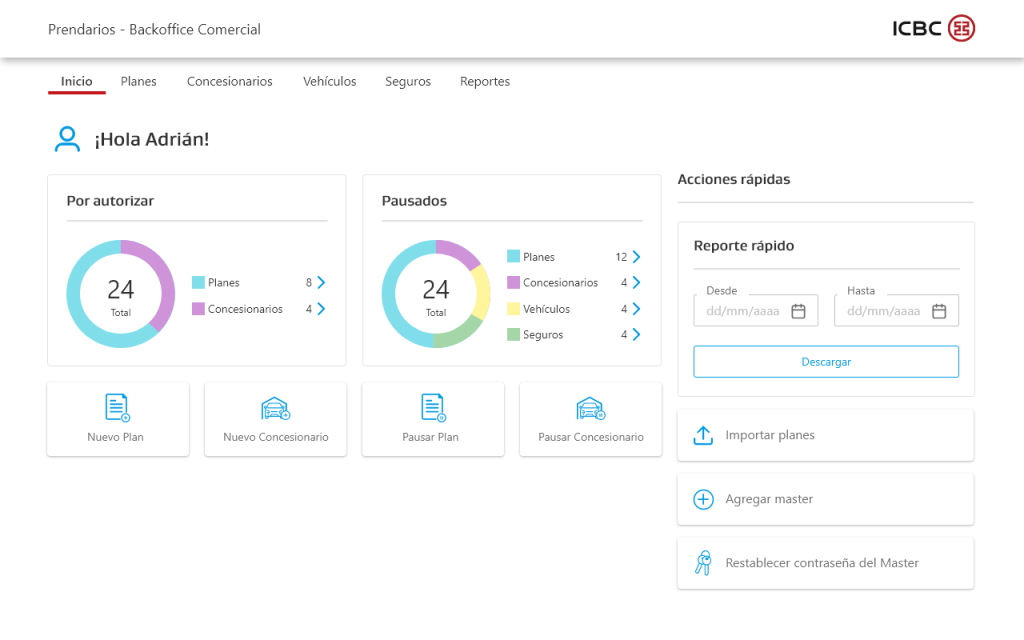
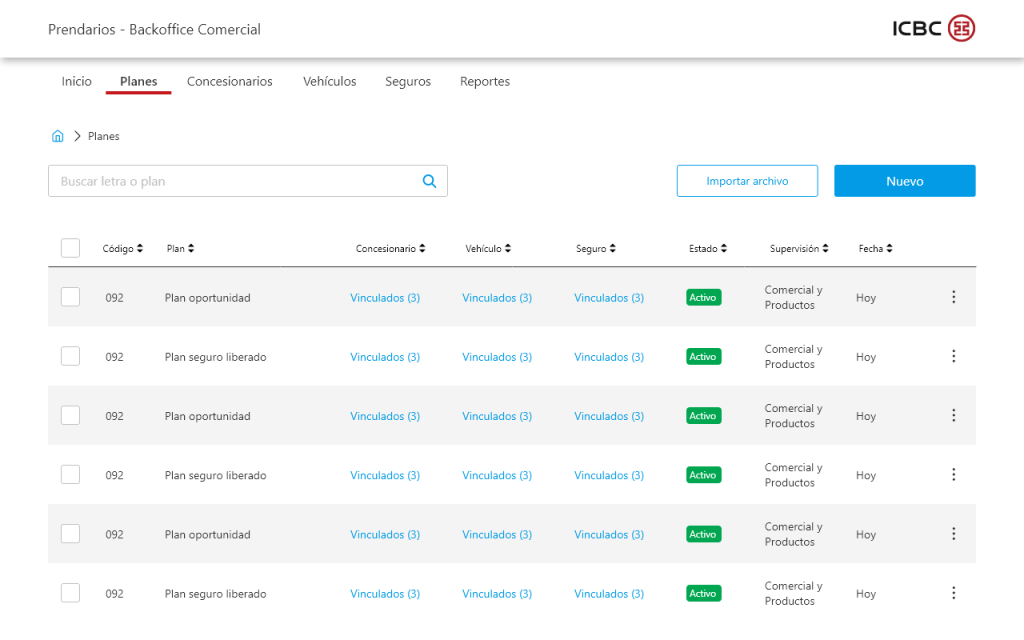
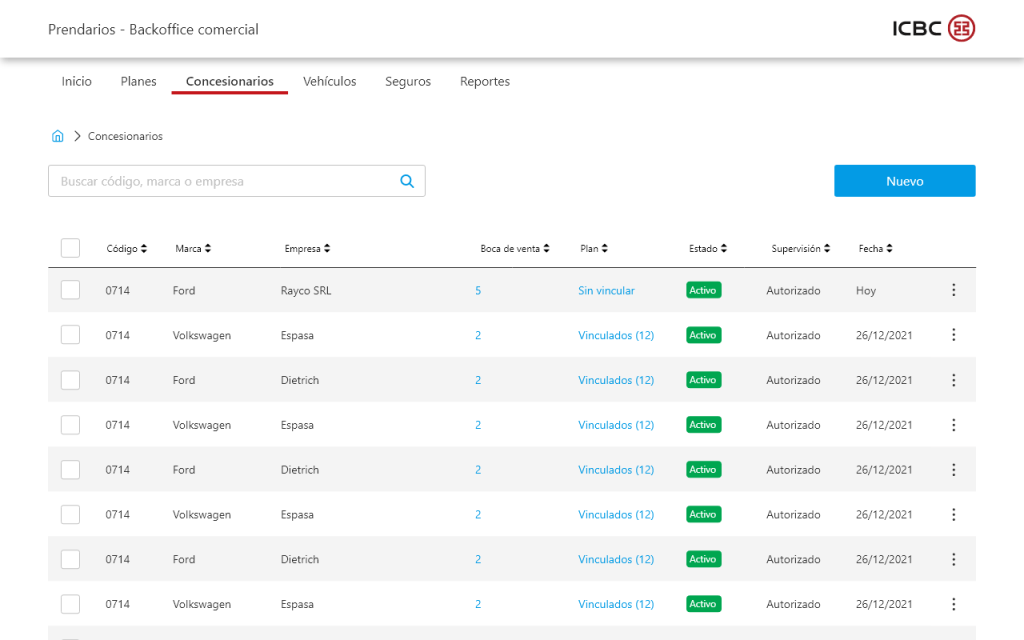
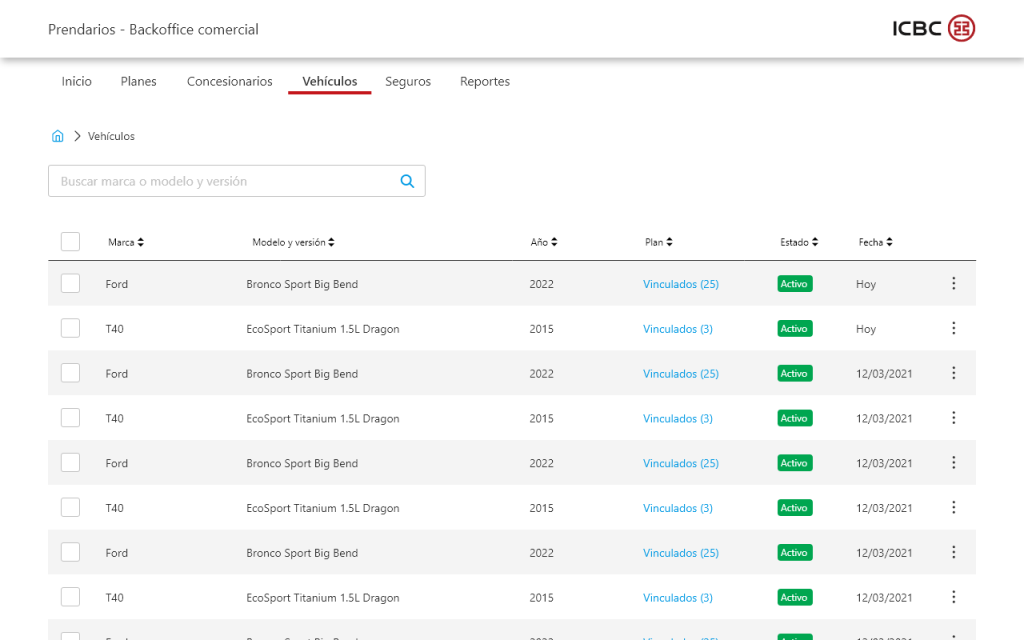
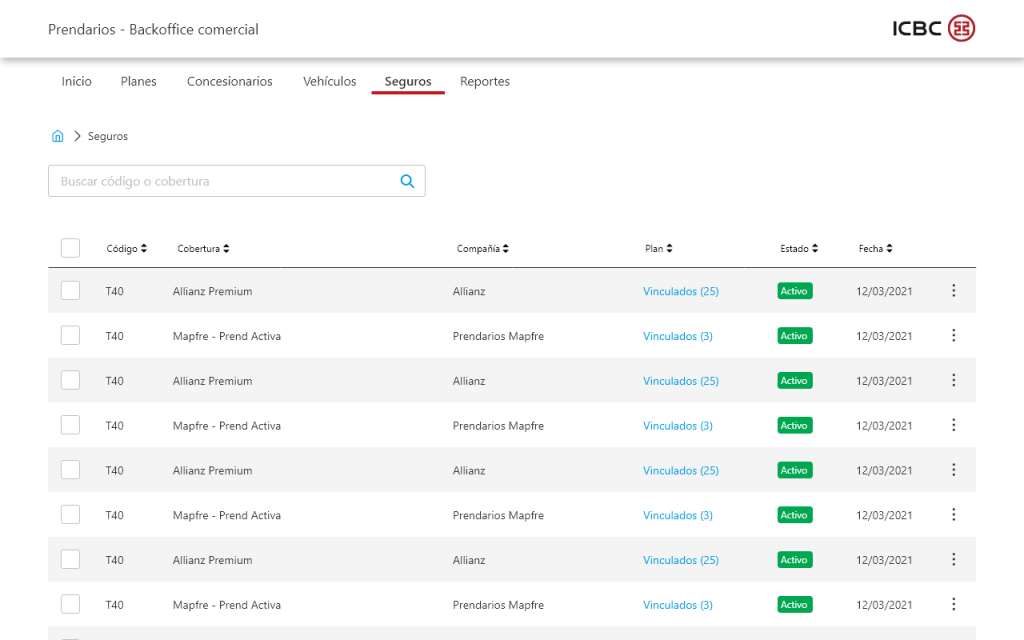
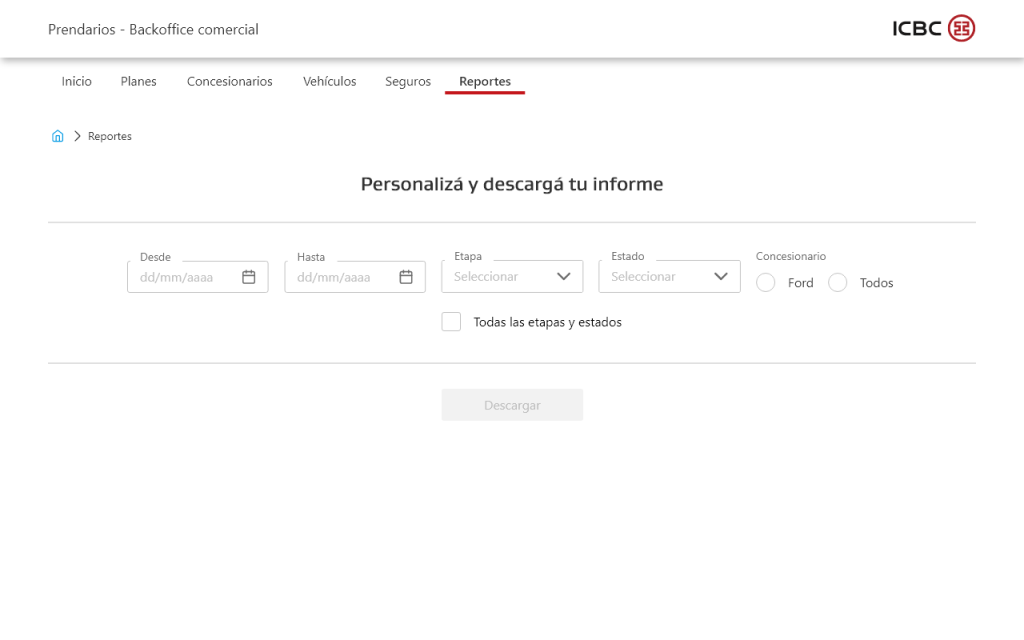
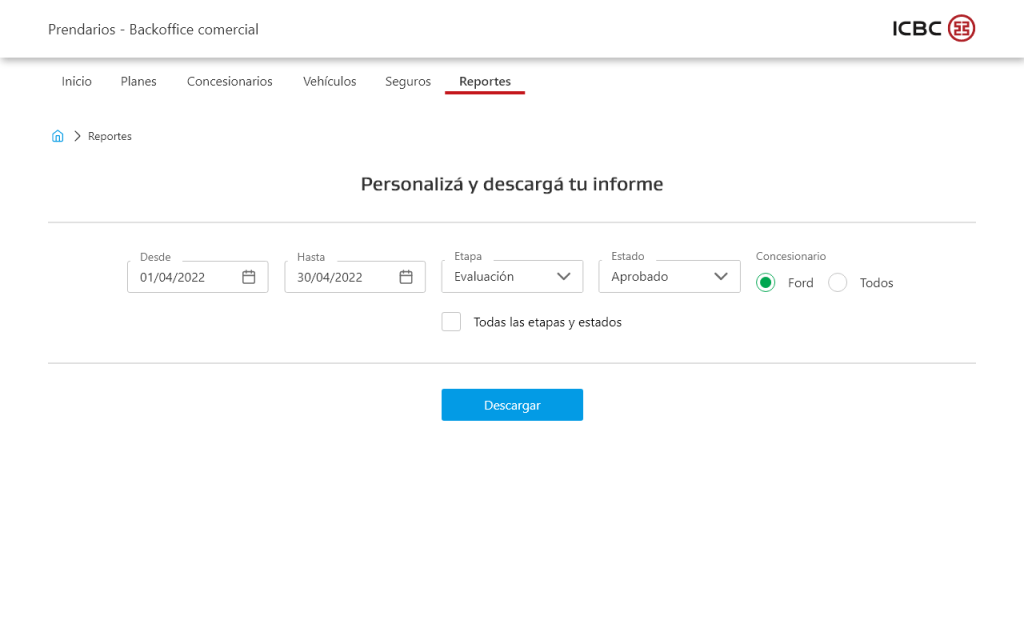
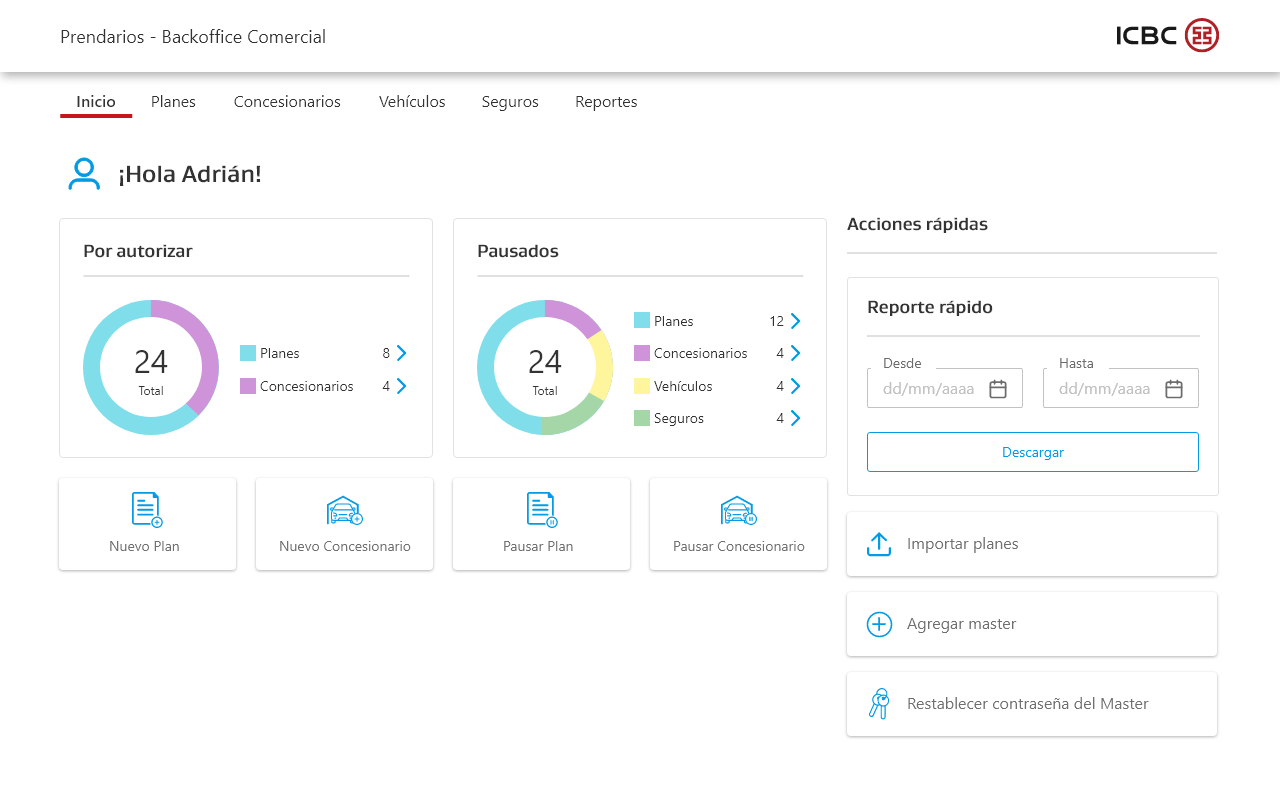
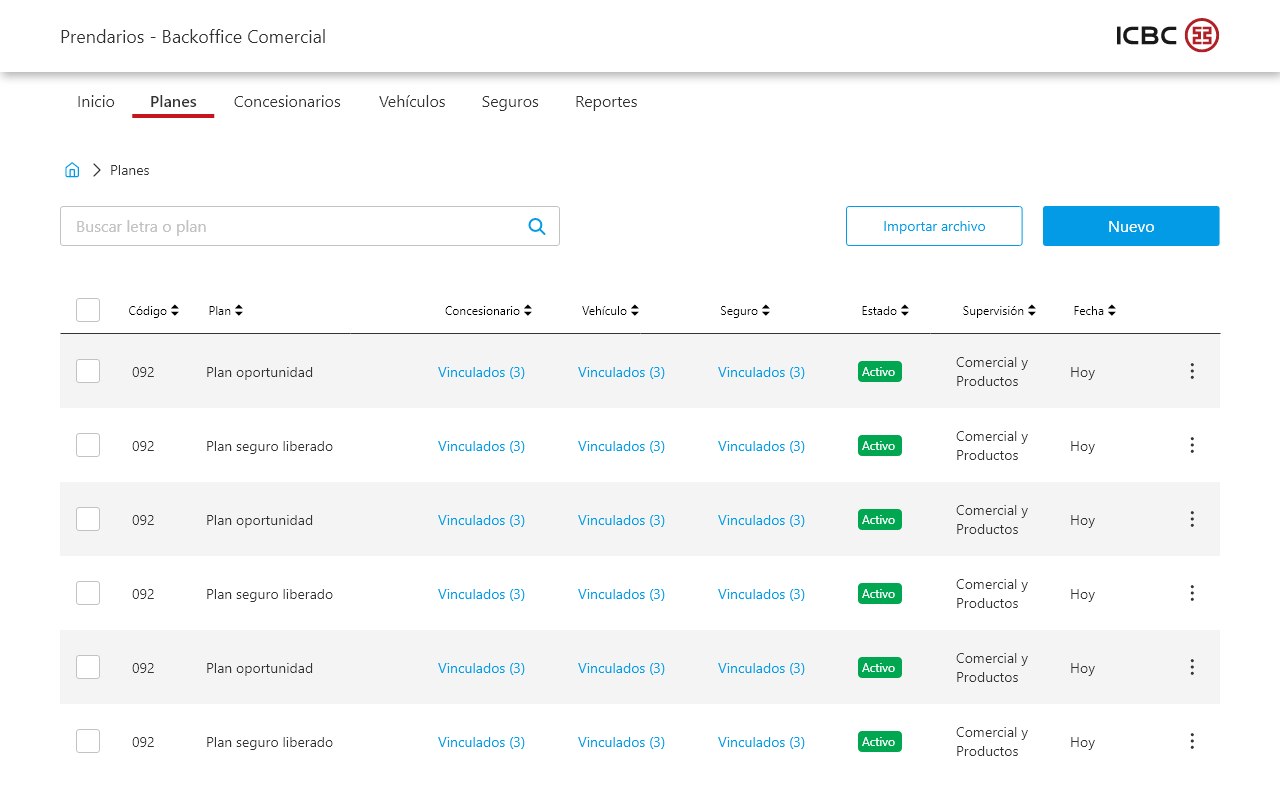
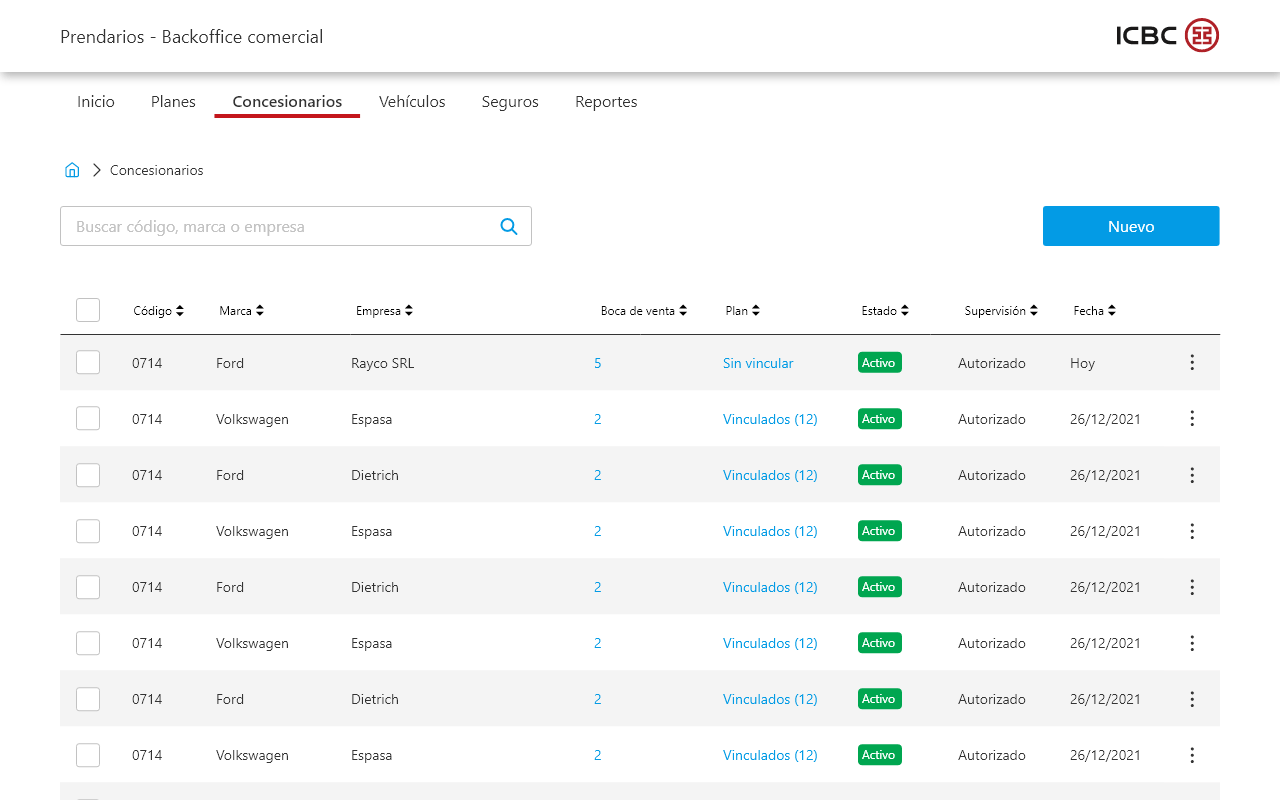
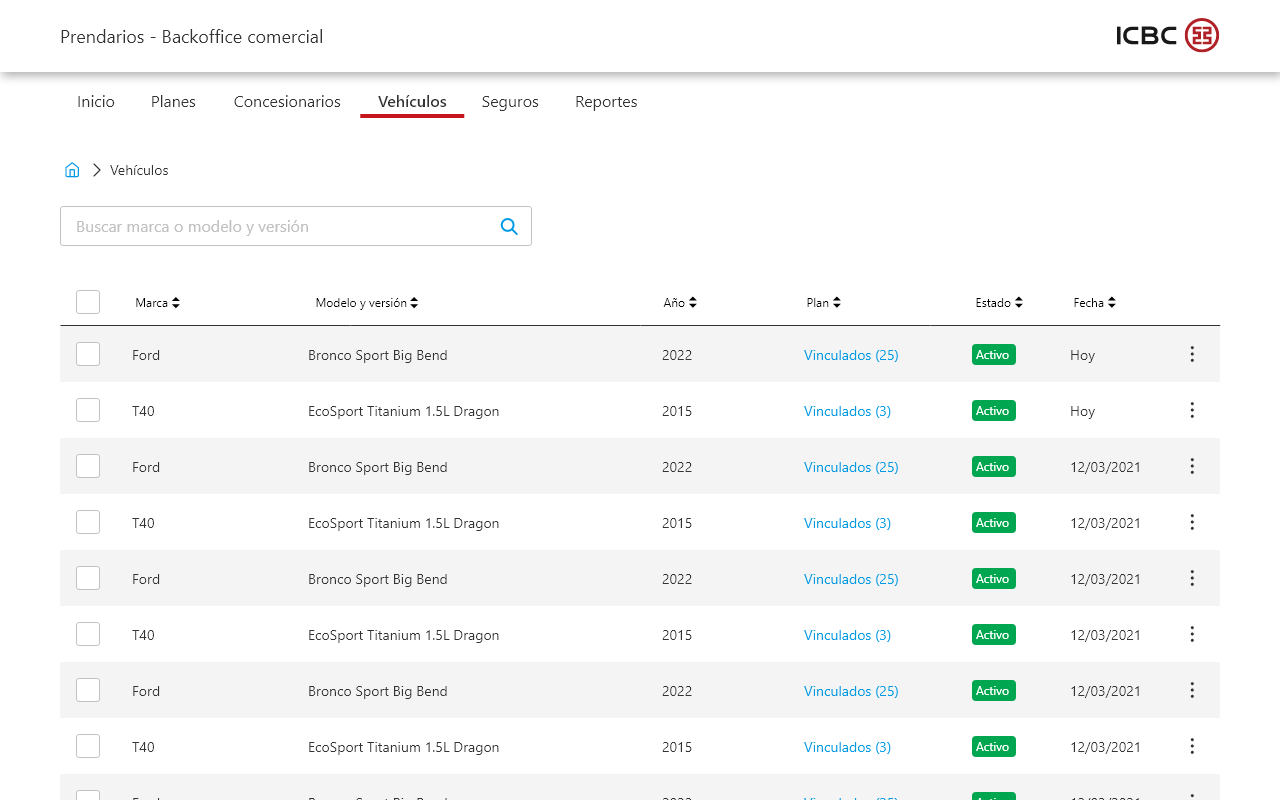
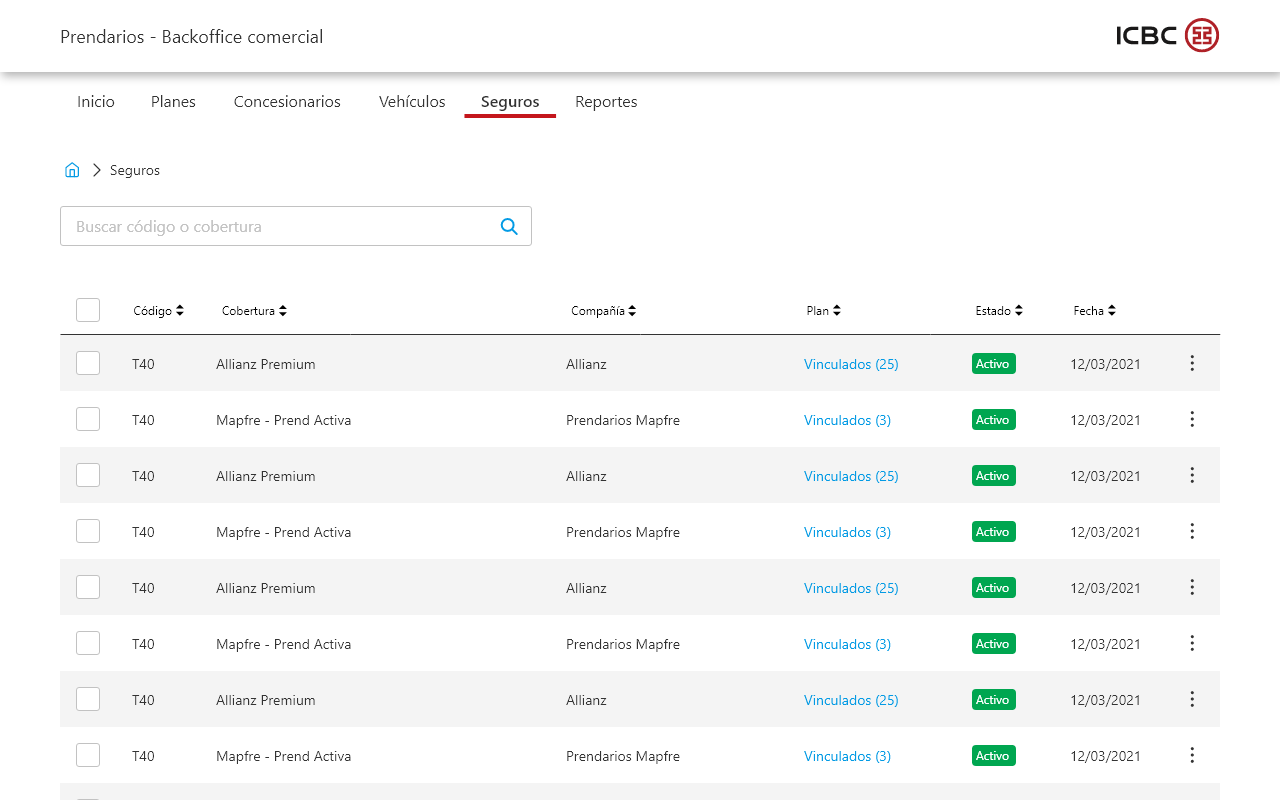
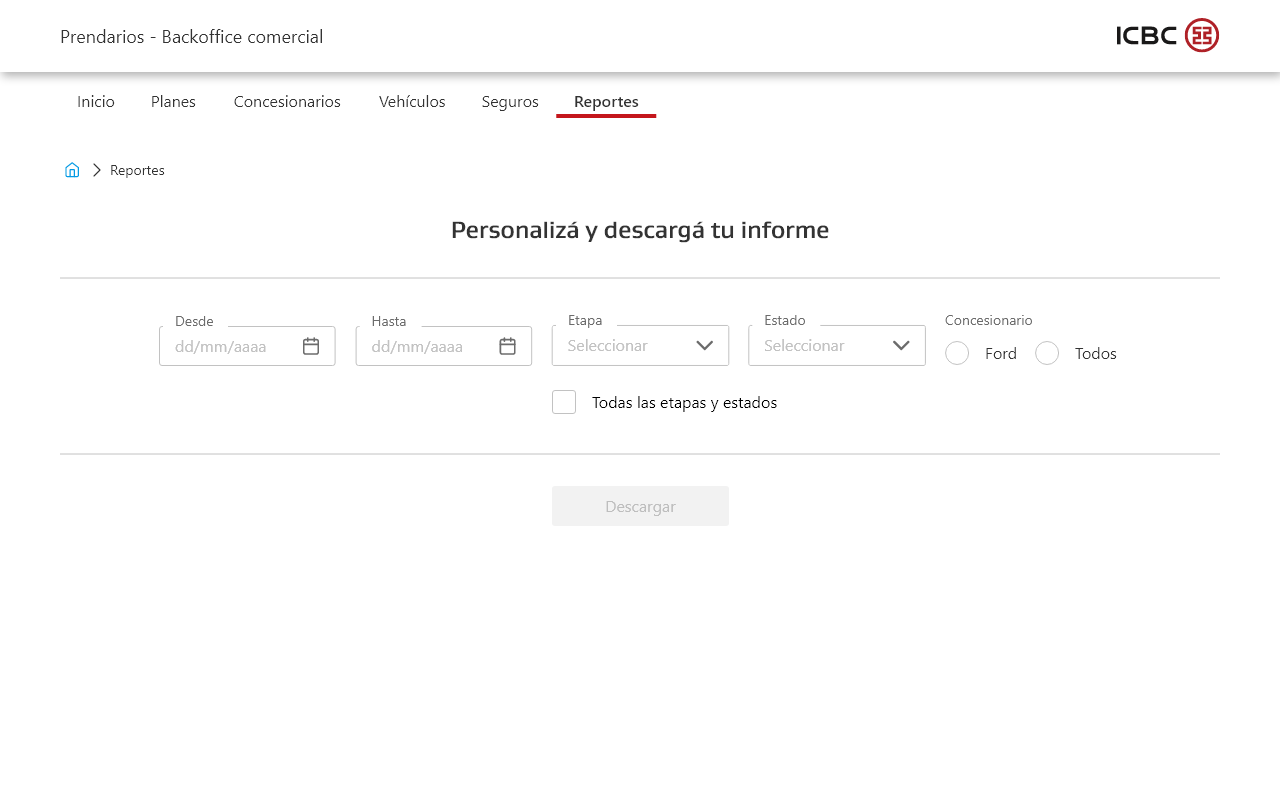
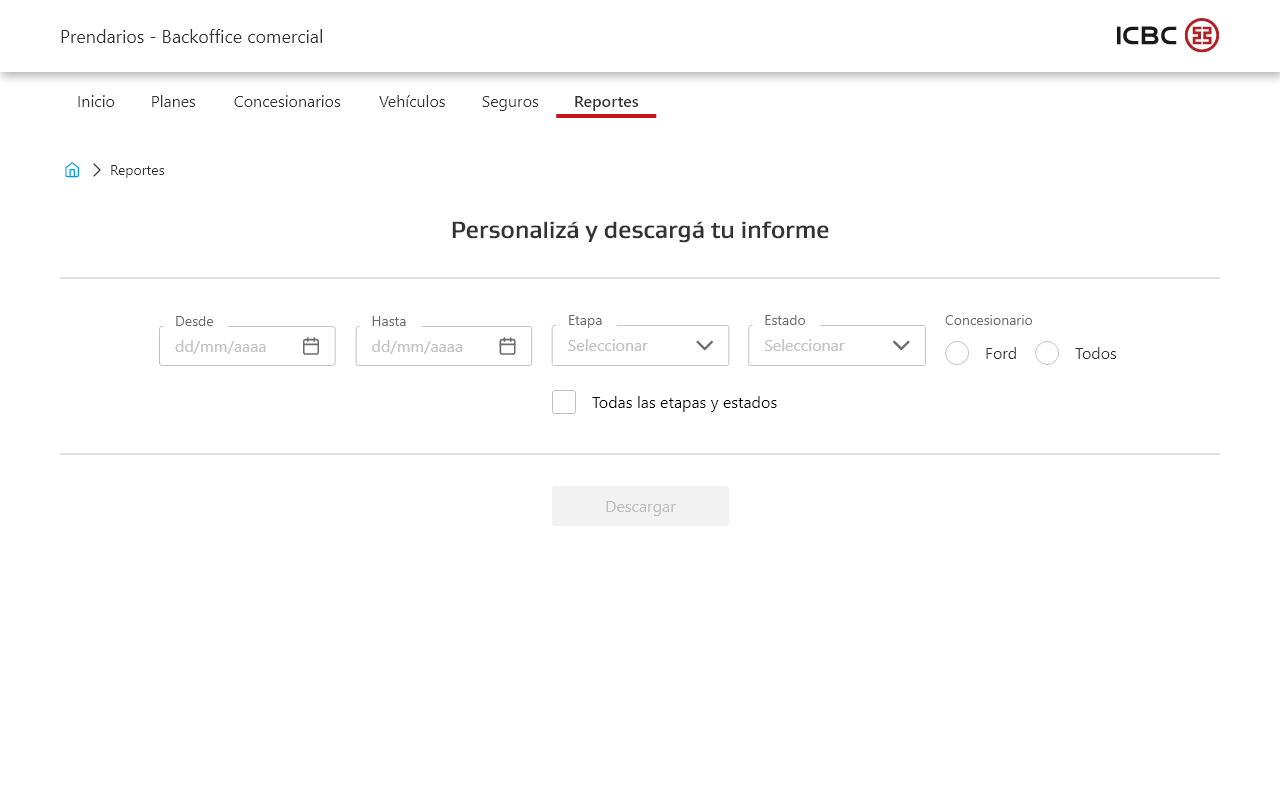
Commercial backoffice
If three platforms for a single system seemed enough, the Commercial Backoffice is the heart that feeds everything else.
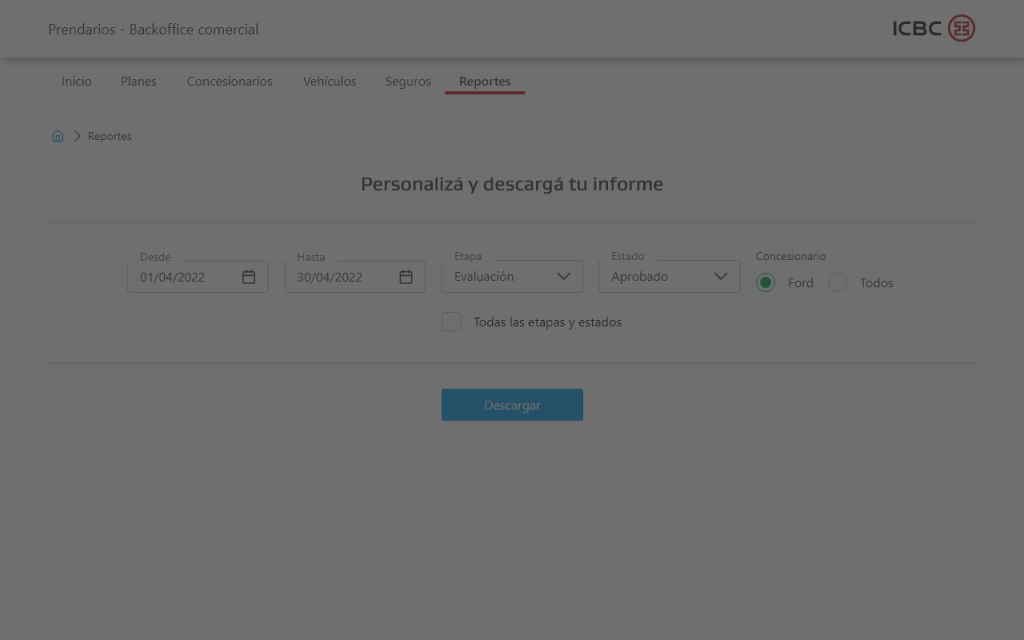
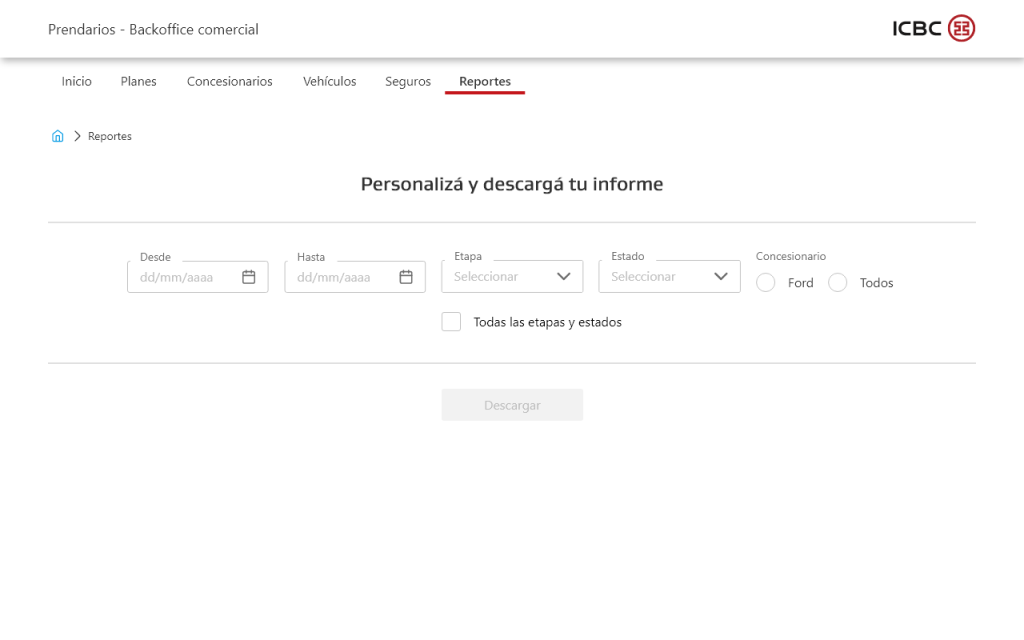
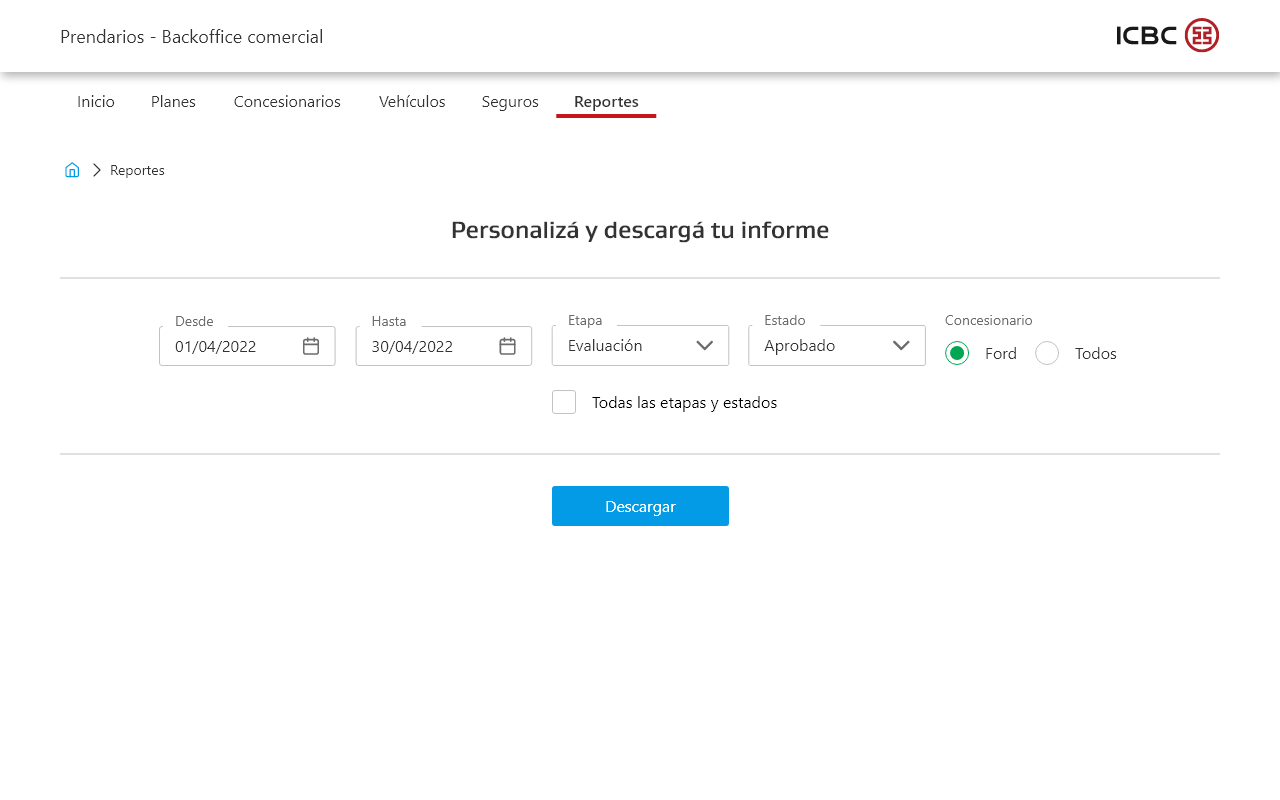
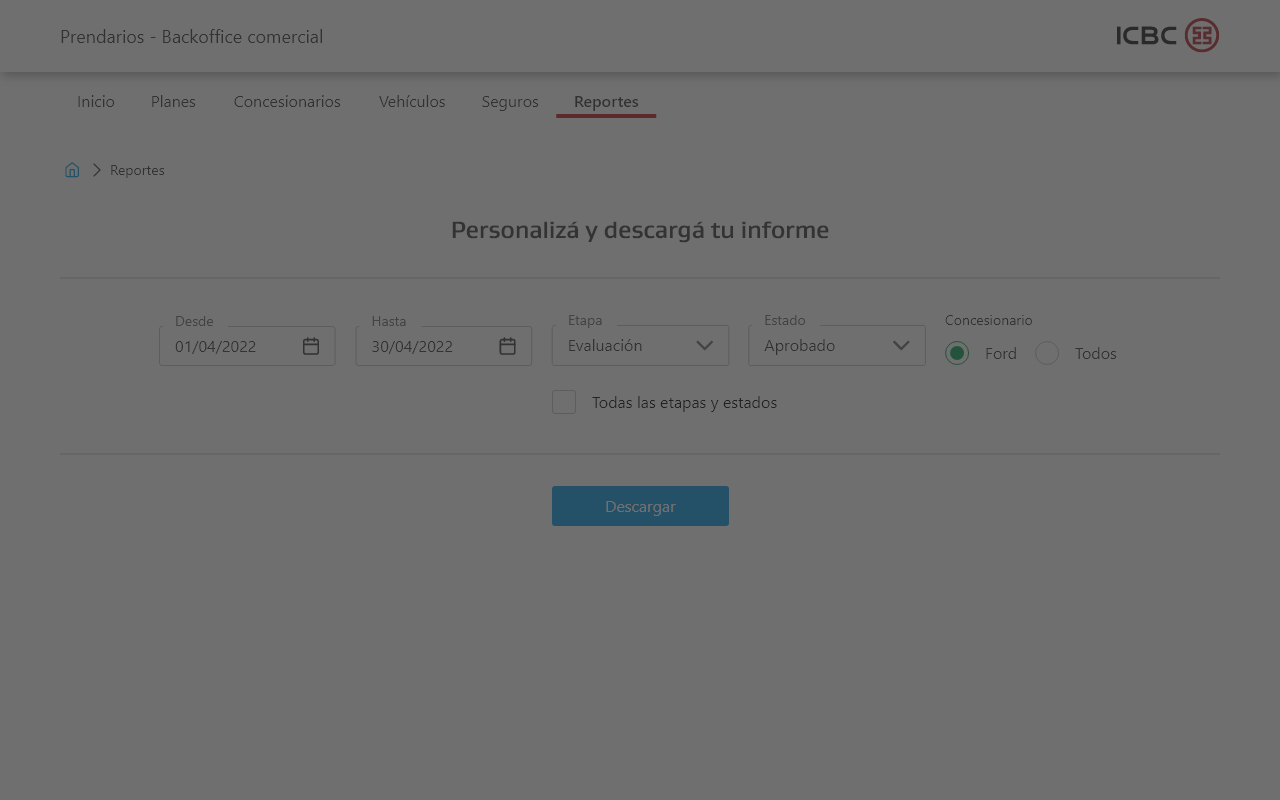
It incorporates, end to end, plans with automakers, dealerships, vehicles, insurance, cross-links, activations and deactivations, and a reporting module so commercial analysts can get information from the system in seconds.


04 — Outcomes
Metrics, conclusion, and learnings
A project with MVP testing (F&F), iterations, and go-live.
Conversion Rate
↑25%
Before: 15%. Through 2022, 25% TCR on procedures, stages, and completed operations.
Procesamiento
↑30%
Before: one business month. With the new experience, the process closes in 20 business days.
Satisfaction
3,5 / 5
Before: 2 according to NPS. Through 2022, 3.5 on a five-point scale.
Other metrics
There are other metrics that cannot be shared in this case, as they are sensitive data related to the bank’s business model.
Conclusion
After hard work and dedication, the collateral loan project at ICBC bank has been a notable success. Along this journey, we designed and developed four interconnected platforms: a mobile app, a web app, a product back office, and a commercial back office—aimed at improving user experience and operational efficiency.
Our strategy began with a deep understanding of the project context and user needs, which allowed us to identify the main challenges and design effective solutions.
The impact showed up as an improvement in conversion rate, customer satisfaction index, and operational efficiency. Success is not measured in metrics alone: it is also the bank’s ability to serve its customers more effectively.
Learnings
Five takeaways I keep from the project:
01
Research
Investing time in understanding users helps identify challenges and opportunities that would otherwise be overlooked.
02
Iteration
Testing and improving in response to feedback allowed us to refine the design continuously.
03
Collaboration
Working with development, customer experience, and business was essential to implementing the solutions.
04
Flexibility
Changing requirements forced us to adapt without losing direction.
05
Celebrate
Recognizing milestones kept the team cohesive. Thank you for reading!
Other cases
CECABA Digital Signature System
CECABA Digital Signature System

Design Ops — Full initiative
Design Ops — Full initiative
OPTI
OPTI
Cannect Mobile
Cannect Mobile
Cannect
Cannect
RUBI – GCBA
RUBI – GCBA
ICBC YOY UX Design Ops
ICBC YOY UX Design Ops

Traza